Most sewage spills in England may be illegal, new research suggests

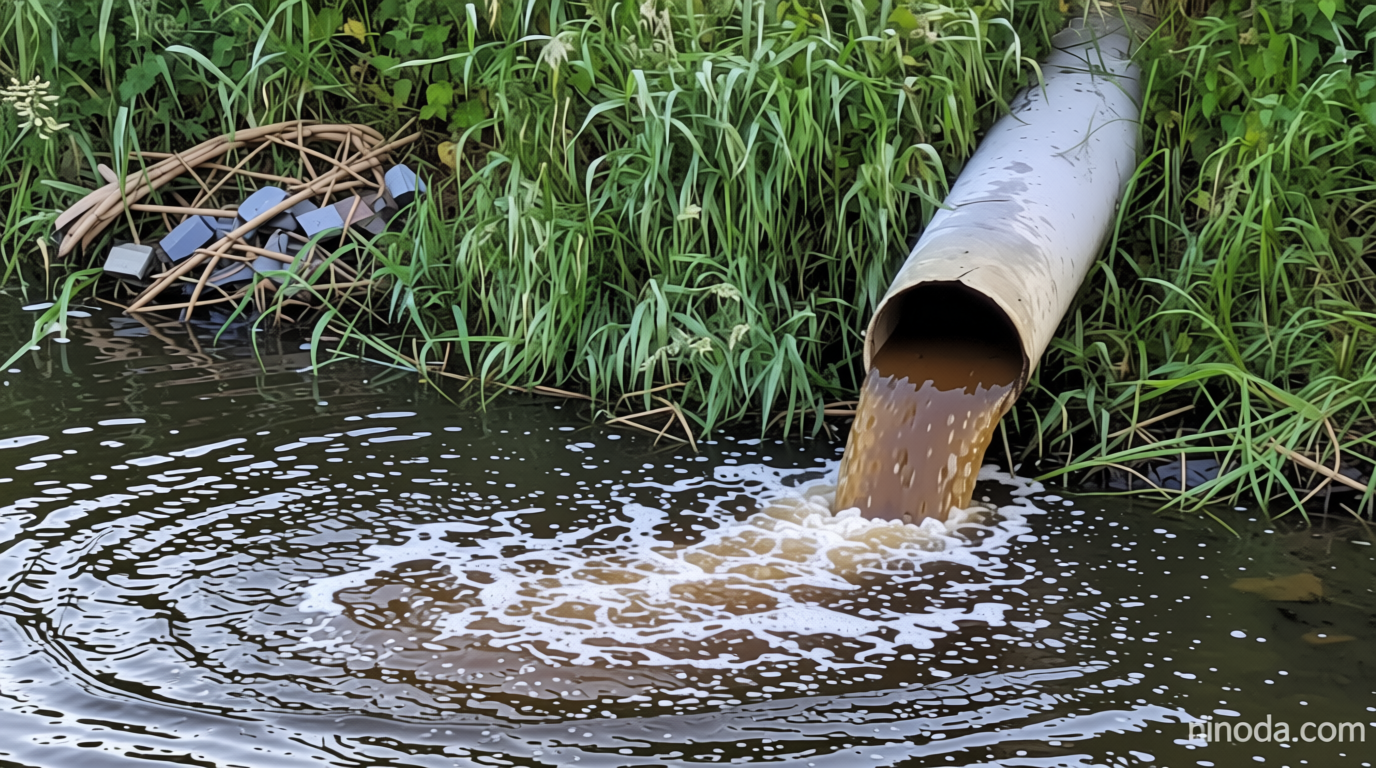
Hidden Court Documents Reveal Widespread Potential Illegality in England’s Sewage Discharges
Ninoda.com – A comprehensive examination of water company operations indicates that the majority of raw sewage entering England’s rivers and seas over the past two years may have violated existing regulations. While British legislation prohibits releasing untreated waste during typical weather patterns, the precise parameters defining “normal” conditions remained ambiguous until recently.
Professor Peter Hammond, a retired academic and environmental advocate, secured confidential court records that established a clear definition of heavy rainfall. His calculations demonstrate that sewage was being discharged during appropriate weather conditions for approximately 86 percent of the time, suggesting widespread regulatory breaches.
The Mechanism Behind England’s Sewage Crisis
Public frustration has intensified considerably over recent years regarding the volume of untreated waste flowing into English waterways. The fundamental problem stems from a combined drainage system where household waste and rainwater travel through identical pipe networks. When precipitation occurs, insufficient capacity within the infrastructure causes treatment facilities to become overwhelmed, forcing operators to release raw sewage directly into rivers, lakes, and coastal areas.
Until now, uncertainty surrounding rainfall thresholds has enabled water utilities to discharge waste routinely without facing penalties. Campaigners have long argued this regulatory gap permitted the industry to operate with minimal accountability.
Hammond’s Methodology and Findings
Earlier this year, an Environment Agency source provided Hammond with previously unpublished documents from a 2021 legal action against Southern Water concerning illegal discharges. These records contained a definition of “heavy rain” that had not been publicly available. Supporting internal EA paperwork confirmed that water companies are permitted to release sewage when rainfall exceeds normal weather conditions.
Hammond applied this definition to examine spill data from more than 350 storm overflow outlets throughout England. His analysis encompassed the largest sewage treatment facilities alongside representative samples of smaller outlets, covering all nine regional water companies that serve over 30 million residents.
The results revealed that roughly 86 percent of sewage discharge hours occurred without heavy rain, meaning those releases could potentially constitute illegal activity. Every English water company performed poorly in Hammond’s assessment, with even the top-performing utility showing a potential illegality rate exceeding 70 percent across the two-year period.
“It’s totally outrageous, both from the point of the water companies who are exploiting the weak regulation but also from the Environment Agency’s point of view, where they’ve not been doing their job properly,” Prof Hammond told BBC News.
Industry and Regulator Responses
Both the Environment Agency and water companies dismissed Hammond’s conclusions, maintaining that they are actively implementing measures to decrease spill frequencies. The EA argued that the “heavy rain” definition Hammond utilized applied exclusively to Southern Water locations, noting that various English regions experience different rainfall patterns requiring distinct thresholds.
Hammond countered that he conducted additional analyses incorporating regional rainfall variations, finding that the results remained largely unchanged. This occurred because the majority of discharges happened during periods of relatively light precipitation.
Broader Regulatory Concerns
This is not the first instance where the Environment Agency’s enforcement approach has faced scrutiny. In 2024, the Office for Environmental Protection—an independent governmental body—determined that the EA was failing to apply legislation correctly regarding legal sewage discharge timing. The OEP concluded that the agency was permitting water companies to release waste during “normal” weather rather than the “exceptional circumstances” mandated by law.
Following the OEP’s assessment, the EA published updated guidance last year clarifying that discharges should not occur during typical weather conditions. However, in correspondence with the BBC, the EA declined to confirm that spills should exclusively happen during “exceptional circumstances,” stating it would “always take” various factors into consideration.
Hammond, who campaigns with Windrush Against Sewage Pollution and has authored multiple reports examining water company spill statistics, noted that his research has been referenced in parliamentary discussions and Ofwat’s enforcement actions. The findings add to mounting pressure for stronger oversight of England’s struggling water sector.