Scottish Labour at a crossroads again as Sarwar jumps ship

Sarwar’s Departure Signals New Chapter for Scottish Labour
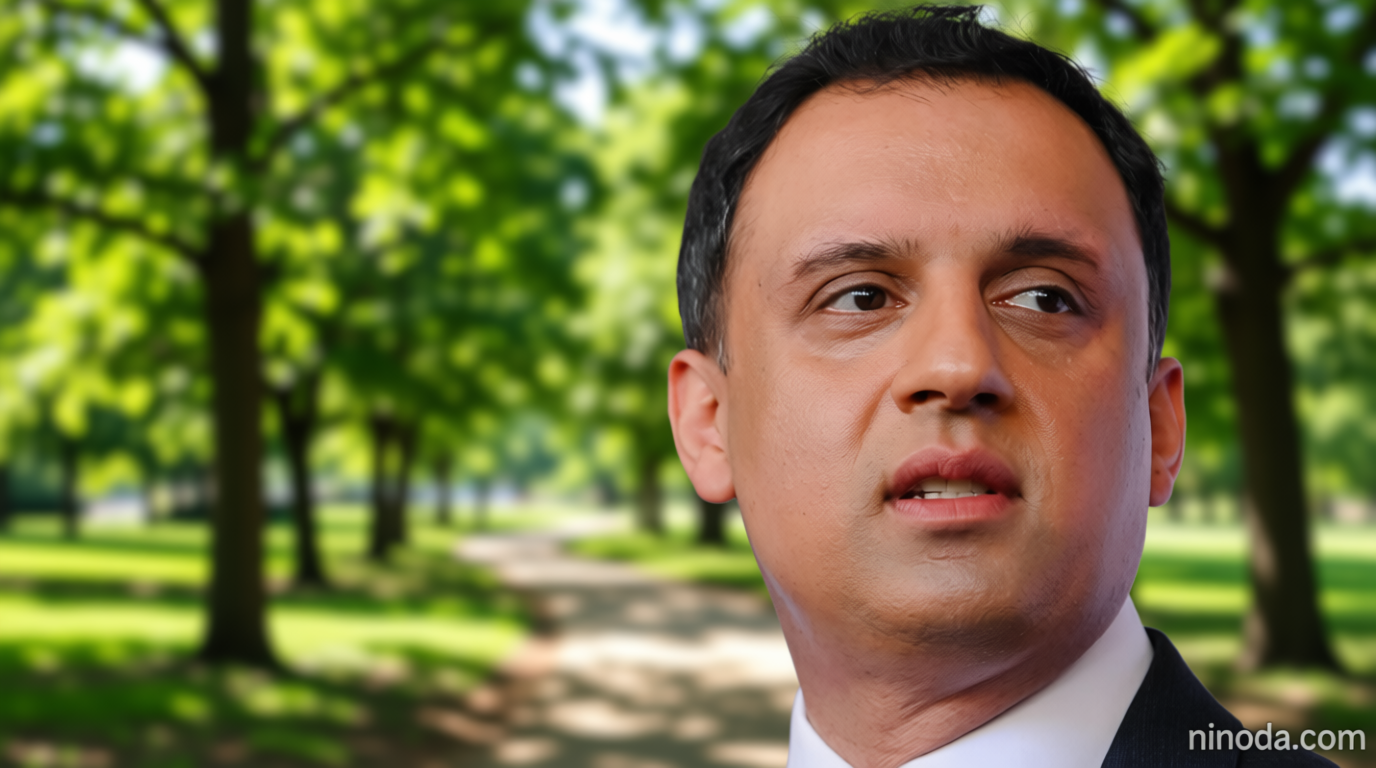
Ninoda.com – Scottish Labour’s leadership has undergone a sudden transformation as Anas Sarwar announces his resignation from the party helm to accept a ministerial position within Andy Burnham’s administration. The political shift comes as a surprise to many observers, particularly given Sarwar’s recent public declarations about his commitment to the role.
A Leader’s Swift Exit
Sarwar had never concealed his ambitions for elevated political positions. Mere weeks before this announcement, he presented himself to Scottish electors as a potential successor to John Swinney in the first ministerial post. That bid ended in disappointment, with the SNP securing their fifth straight term in power while Labour suffered its poorest performance at Holyrood since devolution began.
Although criticism has been directed at the UK government under Sir Keir Starmer for the broader electoral outcome, internal discussions within Scottish Labour have intensified regarding Sarwar’s strategic approach. Questions have also emerged concerning the campaign efforts of co-directors Jackie Baillie and Douglas Alexander.
Despite Sarwar’s earlier assurance that he would remain in leadership to provide stability, his rapid departure has generated considerable debate among party members. Some interpret the move as a consolation prize following the Holyrood setback, despite Labour’s ability to outperform the SNP in Scotland during the UK general election two years prior.
Treason or Reward?
Complicating the narrative is Sarwar’s position as the initial senior Labour politician to publicly urge Starmer’s resignation—a decision that weakened the then-prime minister and ultimately benefited Andy Burnham. Critics view the ministerial appointment as recompense for what they perceive as disloyalty.
The prime minister’s cabinet already features several individuals who opposed Starmer, making Sarwar’s selection somewhat predictable. However, concerns about hypocrisy have surfaced regarding Sarwar’s acceptance of a Lords appointment to facilitate his government role. He had previously committed to declining a peerage, and both he and Burnham have advocated for replacing the House of Lords with a senate representing nations and regions.
By appointing another life peer within his first few days in office, is the new PM not sending out a completely contradictory signal?
Supporters counter that Sarwar represents an ally in Burnham’s mission to transform British political structures and can now champion reform from inside the system. With his experience as a devolved parliament leader and former Westminster MP, Sarwar may prove instrumental in advancing Burnham’s vision for decentralizing authority to cities and local communities—a strategy potentially linked to economic expansion.
Searching for Number Eleven
Scottish Labour now faces another pivotal moment. Sarwar becomes the tenth leader since the Scottish Parliament’s establishment, and the party must identify its eleventh. Deputy leader Jackie Baillie assumes temporary responsibility, having filled this role previously on multiple occasions. Though she has consistently declined leadership opportunities in the past, she is expected to maintain this pattern.
More probable contenders include MSP Michael Marra and Monica Lennon, who would likely succeed Sarwar at Holyrood—provided electoral regulations permit her participation. The requirement that candidates hold MSP status presents a timing challenge, as Lennon cannot assume her parliamentary seat until September when the Scottish Parliament reconvenes.
It seems probable that the Scottish Executive Committee would welcome Lennon’s candidacy if she wishes to compete. Additional names circulating include MSPs Daniel Johnson and Paul Sweeney.
Internal deliberations about the 2026 Holyrood campaign’s shortcomings and necessary reforms are already underway, and these discussions will inevitably shape any leadership contest. The selection of a new leader involves not only personal qualities but also the party’s policy direction and potential separation from the UK Labour organization. Some members may also reconsider their stance on another independence referendum—substantial questions for a party once dominant in Scottish politics and eager to reclaim power at Holyrood.
With seventeen MSPs currently representing Scottish Labour, the path forward requires careful navigation as the party seeks to rebuild and redefine its purpose.