CJP protest: The youth movement India’s Modi didn’t see coming

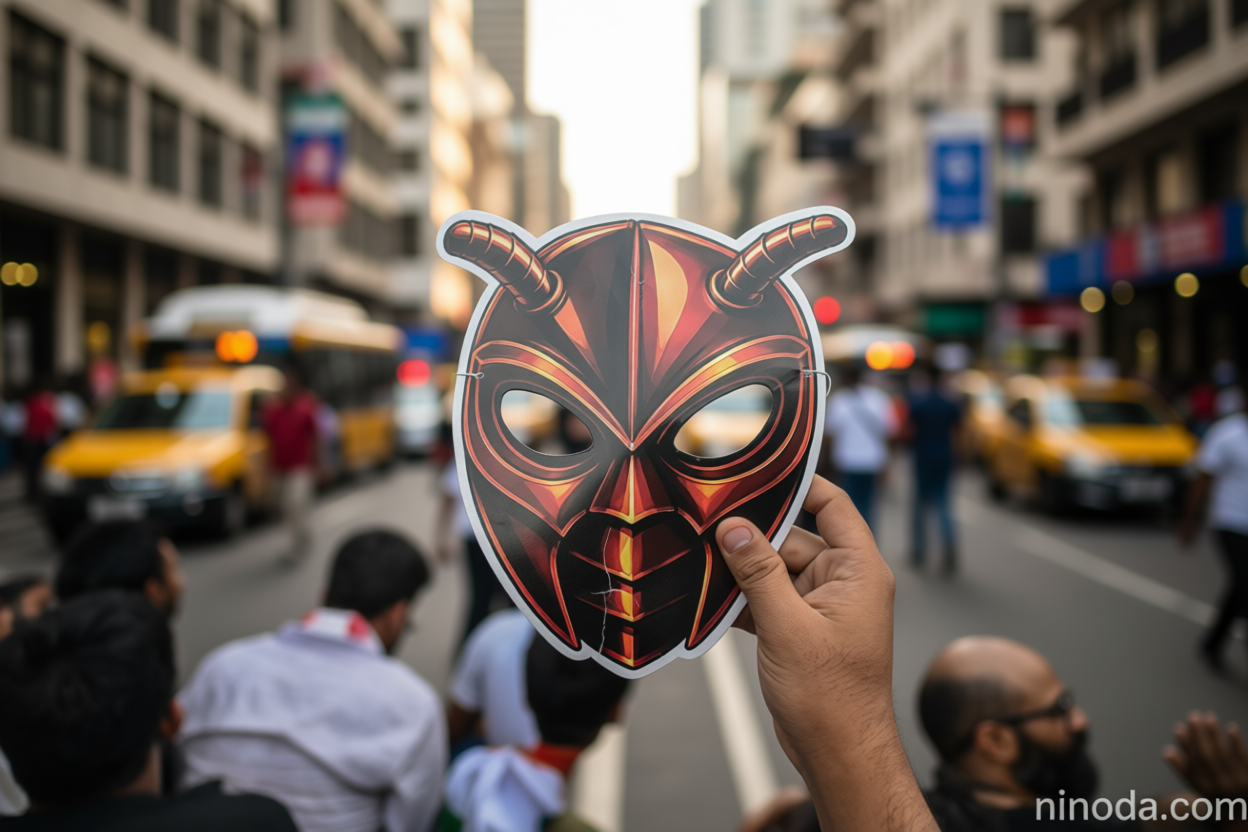
A Youth-Led Wave Sweeps India: The Cockroach Janta Party’s Rise
Ninoda.com – What began as a simple concern has erupted into one of India’s most significant student mobilizations in recent memory. For countless young citizens, the question is straightforward: if the examinations that shape their destinies cannot be relied upon, what foundation remains? This anxiety has now propelled tens of thousands of young men and women onto the streets, with many attempting to reach India’s parliament on Monday. Law enforcement agencies responded forcefully, deploying tear gas and conducting baton charges against the demonstrators. In the days following that confrontation, thousands more have continued their demonstrations across the capital.
From Anger to Action
The Cockroach Janta Party, or CJP, emerged from widespread frustration over recurring examination paper leaks. The movement has rapidly grown into the largest student gathering India has witnessed in years. Its primary objectives include comprehensive education reforms and the resignation of Education Minister Dharmendra Pradhan. At the heart of this campaign stands activist Sonam Wangchuk, who endured a 26-day hunger strike to support the cause. During his fast, Wangchuk lost approximately 11 kilograms, or 24 pounds. Although he concluded his fast late on Thursday, student organizers have declared that demonstrations will persist until all demands are satisfied.
“The exam and education system cuts across caste, class and gender to quite a large degree,” Yamini Aiyar, Senior Visiting Fellow at Brown University, told the BBC. “The core constituency coming to these protests doesn’t represent a singular interest group.”
A Movement Beyond Ideology
Historical precedents suggest both caution and hope. Student activism has occasionally reshaped Indian politics in dramatic ways. The Nav Nirman agitation in Gujarat, for instance, helped catalyze veteran socialist leader Jayaprakash Narayan’s movement against former prime minister Indira Gandhi during the 1970s. Yet not all such movements have maintained their momentum; many have burst onto the scene before gradually fading.
What distinguishes the CJP from previous demonstrations is not merely its size but the character of its grievances. Unlike numerous major protests against Prime Minister Narendra Modi’s administration over the past decade—whether concerning citizenship legislation, farm laws, or other controversial policies—this movement transcends ideological boundaries. It is also not anchored in the concerns of any single community or social stratum. Rather, it challenges whether the government can still ensure fairness within an examination framework that millions of young Indians consider their primary pathway to social advancement.
“This movement centres on administrative failure,” Rahul Verma, a fellow at the Centre for Policy Research, a Delhi-based think tank, told the BBC. “The state’s inability to conduct examinations fairly and prevent paper leaks makes it a very different kind of political challenge to the BJP.”
Why This Matters for Governance
According to Verma, this distinction fundamentally alters the political landscape. Previous protests were largely driven by ideology or specific policy disagreements. This one, however, questions the BJP’s capacity to govern effectively. “They must recalibrate their strategy,” Verma observes. He notes that many participants are not inherent opponents of the ruling party. Instead, they are “aspirational young Indians and their parents who see these exams as a path to upward mobility.”
Because the central grievance concerns governance rather than ideology, the BJP faces difficulty in mobilizing its base or deploying the counter-narratives that proved effective against earlier protest movements. An injured teenage protester was photographed resting in her mother’s lap at Jantar Mantar, a day after thousands marched on parliament over exam paper leaks in Delhi—evidence of the movement’s broad appeal across age groups.
The Digital-to-Street Connection
Monday’s demonstrations appeared to validate this assessment. For the previous two weeks, comparisons with the 2011 anti-corruption movement had focused primarily on the CJP’s remarkable online presence. Skeptics wondered whether digital enthusiasm could translate into physical demonstrations. Monday’s turnout suggested it could.
Joyojeet Pal, a professor at the University of Michigan who researches technology and society, describes social media as “a tinderbox waiting to explode with the next thing,” noting that its speed and reach are propelled by emotion. Long-simmering frustration regarding the state’s lack of accountability created conditions for this “implosion,” he explained to the BBC, adding that social media architecture makes such eruptions likely to happen again.
“The exam and education system cuts across caste, class and gender to quite a large degree,” Yamini Aiyar, Senior Visiting Fellow at Brown University, told the BBC. “The core constituency coming to these protests doesn’t represent a singular interest group.”
The critical question now is whether this online surge has evolved into something more permanent. The movement’s ability to sustain momentum beyond initial excitement will determine whether it becomes a lasting force in Indian politics or another temporary wave of youthful energy.