I thought the Lockerbie bombing was a closed case until I started asking questions

Ninoda.com – “`html
A Personal Journey Through the Lockerbie Mystery
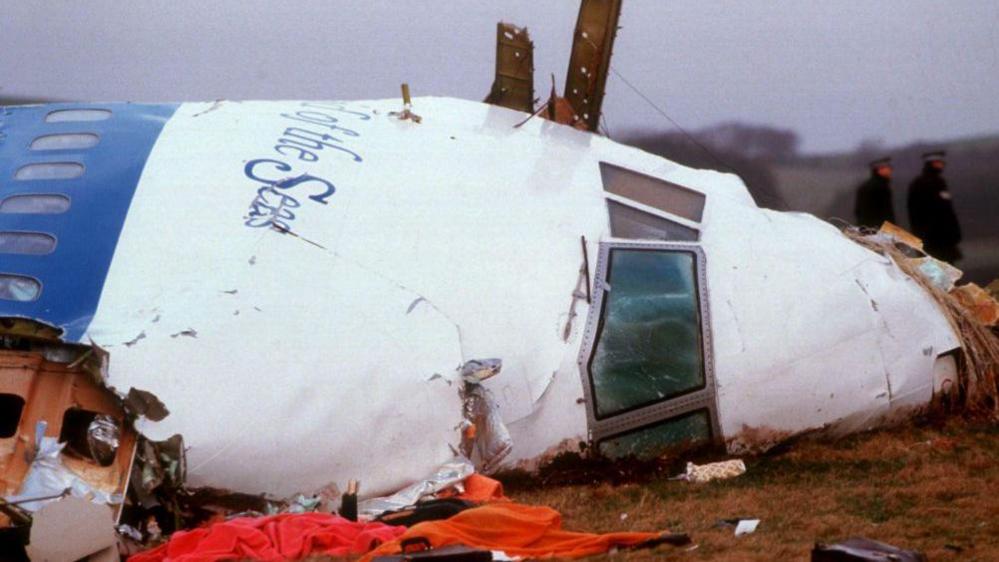
When Pan Am Flight 103 tore apart above the Scottish village of Lockerbie on December 21, 1988, I had barely reached my first birthday. The catastrophe claimed every soul aboard—259 passengers and crew—alongside eleven residents on the ground below. By the time Libyan intelligence operative Abdelbaset al-Megrahi received his conviction in 2001, I was navigating my teenage years. His subsequent passing led me to believe the chapter was closed.
That assumption proved premature. The investigation continues to evolve, and this year brings another development: Abu Agila Masud, a figure suspected of constructing the explosive device responsible for the disaster, faces trial in Washington DC.
Seeking Answers Through Fresh Eyes
Participating in a Radio 4 Intrigue podcast series provided me with an opportunity to examine this intricate case with renewed perspective. Each layer I uncovered revealed greater complexity, leaving me uncertain at times about what to accept as fact.
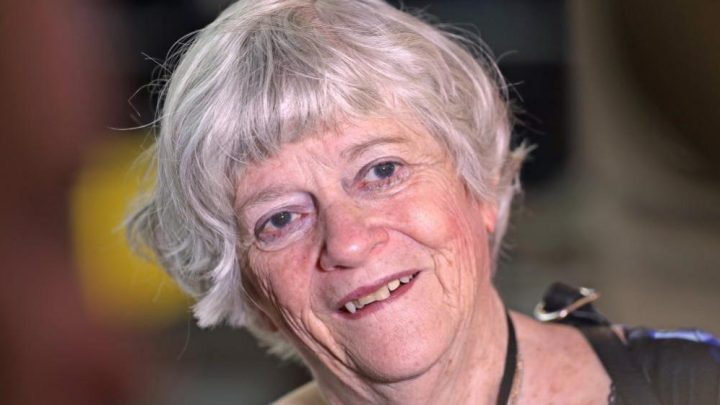
Jim Swire approaches the situation with considerably more certainty—and his conclusions diverge sharply from official accounts. Flora, Swire’s daughter, perished in the tragedy. Yet he maintains that those responsible escaped accountability for what he considers mass murder. Despite Megrahi’s conviction, Swire became friends with the Libyan officer, maintaining that relationship until Megrahi’s death in 2012.
“The burning issue was to get to the truth,” he explains. “Always has been, always will be and I will not shut up about what I know to be true.”
Questioning the Official Narrative
Swire’s persistence elevated him to prominence, though many families of victims disagree that Megrahi’s conviction represented a miscarriage of justice. The bomber’s own appeals either collapsed or were withdrawn. For Swire, the most straightforward explanation points to Iran rather than Libya as the mastermind behind the attack.
The timing supports this theory. Five months before the Lockerbie disaster, an Iranian commercial aircraft carrying 290 passengers was destroyed by a United States battleship. Iran vowed retaliation, and months later Pan Am Flight 103 detonated en route to New York.
Swire also highlights Iran’s historical reliance on proxy militant organizations—a strategy they continue today. Prior to the bombing, German authorities dismantled a PFLP-GC militant cell operating from Frankfurt. Officers arrested suspects and confiscated explosive mechanisms hidden within radio cassette players, engineered to activate at high altitude.
The device that destroyed Pan Am 103 operated on the same principle, concealed inside a samsonite briefcase. This parallel leads Swire to conclude the bomb was loaded in Frankfurt rather than Malta, as the court determined.
“Discovering the truth became my way of handling the consequences of the grief reaction,” Swire reflects. “And it was very tough for other people to understand that but that’s just the way I’m made, I suppose.”
Expanding Doubts
For Swire, these revelations represent merely the surface of deeper problems. He challenges numerous pieces of evidence introduced during the 2001 proceedings, undermines witness credibility, and harbors serious concerns regarding intelligence organizations including MI5, MI6, and the CIA.
When combined with his overwhelming loss, Swire emerges as a formidable advocate for what he perceives as a truth withheld from him.
Dick Marquise, who directed the FBI’s Lockerbie investigation team, acknowledges that early in the case he considered the PFLP-GC the primary suspect. However, extensive inquiry failed to produce conclusive proof.
“There was not one shred of evidence that could be taken to court and get a conviction,” he states. “You couldn’t do it. There was nothing.”
Yet Swire is not alone in challenging the established version of events. Former CIA operative John Holt shares the conviction that Iran orchestrated the bombing. During the 1980s, Holt collaborated with Libyan intelligence sources and served as handler for Abdul Majid Giaka, a double agent whose testimony proved crucial to the Lockerbie investigation.
Holt now characterizes Giaka as a “BS artist” motivated primarily by financial gain, alleging that the agent supplied fabricated narratives to the CIA in exchange for payment.
“I didn’t think much of him at all,” Holt remarks. “He gave”
“`