Saudi Arabia, Turkey and Pakistan sign defence pact

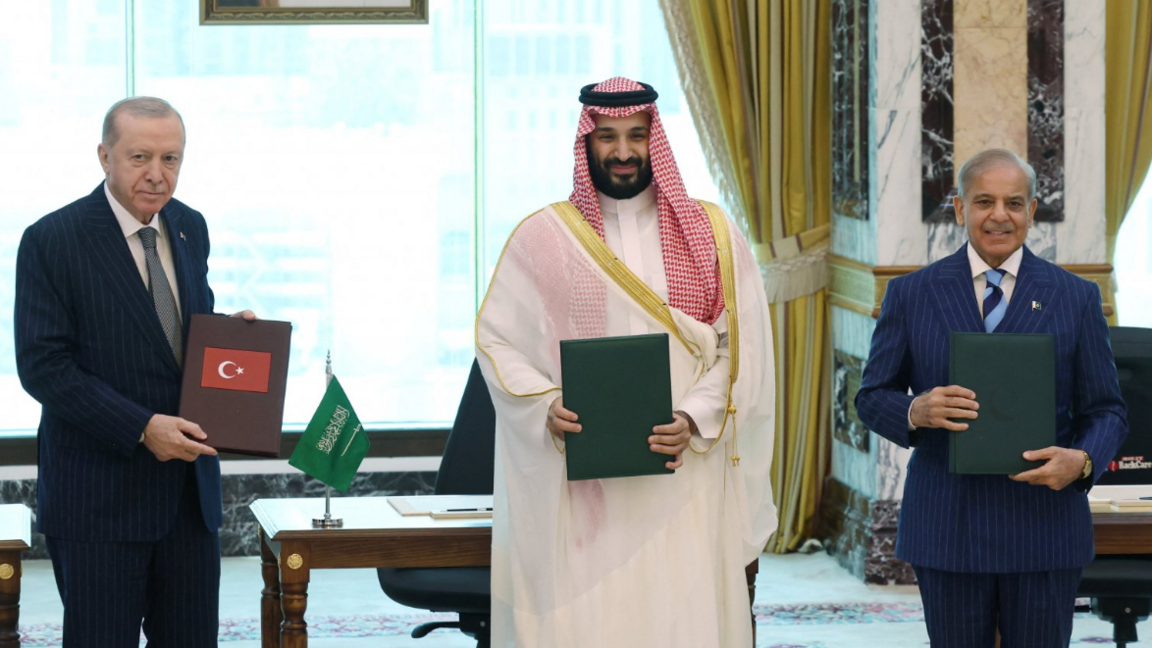
Table of Contents
Mecca Agreement: Three Muslim Nations Forge Mutual Defence Alliance
Ninoda.com – Leaders from Turkey, Saudi Arabia, and Pakistan convened in Mecca to formalize a comprehensive defence partnership. Turkish President Recep Tayyip Erdogan, Saudi Crown Prince Mohammed bin Salman, and Pakistani Prime Minister Shehbaz Sharif witnessed the signing ceremony, establishing a framework where hostility directed at one member nation would trigger collective response from all three.
Core Principles of the Pact
The newly christened Mecca Joint Defence Agreement unites three of the globe’s most influential Muslim states under shared security guarantees. According to the official declaration, the arrangement “aims to strengthen collective deterrence against any act of aggression, and stipulates that any armed attack against any one of the three States shall be regarded as an attack against them all.” The document additionally commits all parties to “enhancement of all aspects of defence co-operation among the three States.”
The pact was “purely defensive in nature,” a Turkish official told Reuters news agency, clarifying the alliance’s intentions.
While the agreement pledges mutual support, it deliberately avoids specifying exact obligations for each signatory. This flexibility allows for nuanced responses depending on circumstances.
Regional Security Concerns Drive Agreement
The timing reflects heightened regional tensions stemming from the ongoing conflict between the United States and Iran. This confrontation has pulled Saudi Arabia into the fray while simultaneously disrupting critical maritime routes including the Strait of Hormuz and the Red Sea—vital arteries for global oil transportation.
Saudi Arabia and Pakistan had previously established a bilateral defence arrangement last year. The current trilateral expansion builds upon that foundation, bringing together nations with complementary strengths and strategic interests.
Saudi Arabia’s Security Calculus
For Riyadh, the alliance provides additional layers of protection amid a rapidly shifting regional landscape. Following American and Israeli military operations against Iran on February 28, Tehran and its proxies launched unprecedented strikes against Saudi targets and Gulf state shipping lanes—developments that would have seemed improbable just months earlier.
Yemen’s Iran-aligned Houthi movement, which dominates northwestern territories, recently declared a maritime embargo targeting Saudi Arabia. The rebels have focused their attacks on Saudi airports, petroleum infrastructure, and commercial vessels navigating the Red Sea waters.
Saudi officials remain mindful of Israeli strikes on Doha last year that eliminated senior Hamas leadership. Research from the Centre for Strategic and International Studies documented how Gulf nations recalibrated their defence postures in response to these developments. This new agreement represents one of several strategic adjustments by Riyadh.
Pakistan’s Strategic Positioning
Islamabad gains distinct advantages from the arrangement. Open conflict with India erupted in May 2025 after years of simmering tensions, though full-scale war was ultimately averted. Access to Saudi Arabia’s economic resources and Turkey’s military-industrial capacity offers Islamabad valuable backing.
The timing coincides with Pakistan’s expanding diplomatic footprint. The nation has served as a mediator between Washington and Tehran while hosting crucial ceasefire discussions, elevating its regional standing—a development this pact reinforces significantly.
Turkey’s Industrial Opportunities
Ankara pursues different objectives through the alliance. Burcu Ozcelik of the London-based Royal United Services Institute noted that the arrangement creates pathways for Turkey’s substantial defence manufacturing sector through “joint production, technology partnerships, procurement and greater military interoperability.”
Implementation Challenges Ahead
While mutual defence concepts appear straightforward theoretically, practical application presents considerable complexity. Questions remain about specific scenarios: Would Turkey need to participate in Yemen operations if Saudi Arabia re-engages the Houthis in full-scale conflict? Must Saudi Arabia enter war against India should Pakistani tensions resurface?
Each situation demands intricate calculations and diplomatic precision to prevent unintended escalation. Uncertainty will characterize the alliance’s operational framework.
Nevertheless, the primary objective remains deterrence. The knowledge that aggression against any member carries consequences from two additional regional powers should substantially increase the potential costs for potential adversaries, even if it cannot guarantee complete prevention of hostilities.
Related coverage: Saudi Arabia’s dilemma as it tries to stay out of US-Iran war | Saudi Arabia joins US in strikes on Iran-backed militias in Iraq
Related Reading
Frequently Asked Questions
What is Saudi Arabia Turkey and Pakistan sign?
Saudi Arabia Turkey and Pakistan sign is the main topic of this guide. The article explains the context, practical details, and next steps readers should understand.
Why does Saudi Arabia Turkey and Pakistan sign matter?
Saudi Arabia Turkey and Pakistan sign matters because readers are looking for a useful answer, not just a short summary. Good content should match search intent and help them decide what to do next.