Trump asks Supreme Court to allow ballroom work to continue

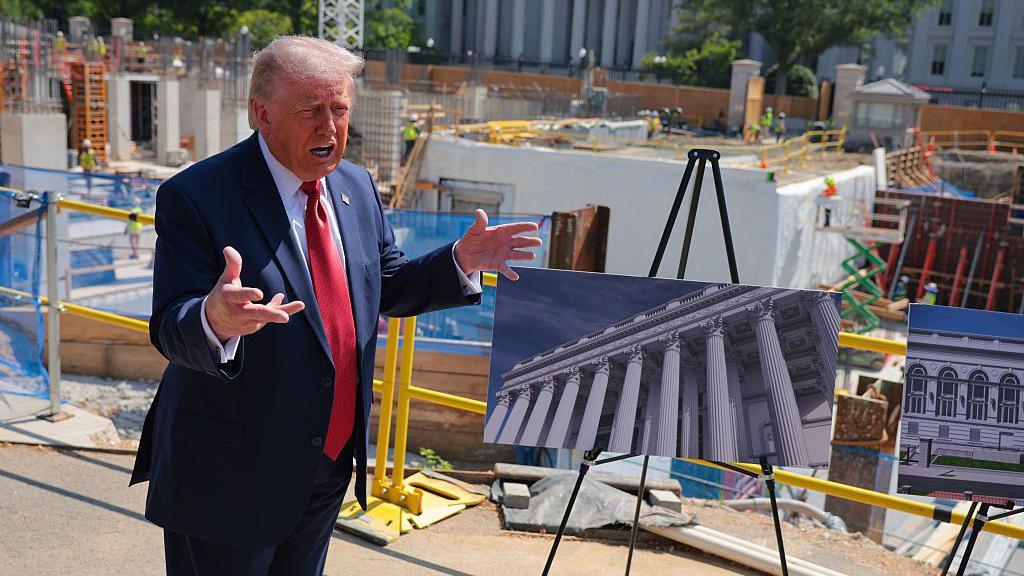
Table of Contents
Supreme Court Urged to Suspend White House Ballroom Construction Halt
Ninoda.com – President Donald Trump has petitioned the nation’s highest court to permit ongoing work on a $400 million ballroom addition to the White House, bypassing the need for congressional authorization. The emergency request arrives shortly after an appellate court mandated a pause in building activities pending legislative approval. This legal maneuver represents one of the administration’s most significant attempts to accelerate major infrastructure projects without waiting for traditional oversight mechanisms to complete their review process.
This development follows a legal victory secured by the National Trust for Historic Preservation, which initiated proceedings against the current administration last year. The appellate ruling upheld an earlier decision that required construction to cease until Congress grants its consent. Legal experts note that this case could establish important precedents regarding executive authority over federal building projects and the balance of power between branches of government.
Solicitor General’s Emergency Filing
US Solicitor General D. John Sauer submitted the latest court documents, requesting that building operations resume while the administration pursues an appeal against what he characterized as a “dangerous” injunction. According to Sauer’s Friday filing, the project has reached 65 percent completion, and halting work now would constitute “construction-by-injunction.” The timing of this emergency petition suggests the administration’s concern about potential delays that could significantly impact the project timeline and budget.
“With the dangerous injunction poised to take effect for the first time on August 21, its stop-work mandate is even more flagrantly inequitable, if not impossible,” he wrote in the court submission.
The appellate court’s decision will not become final until August 21, at which point all ballroom construction must halt unless the Supreme Court intervenes. Sauer further argued that compelling the president to seek congressional approval would grant the legislative branch “dangerous leverage” over executive operations. This argument highlights the broader constitutional questions at stake in this ongoing legal battle.
“Forcing the president to come hat-in-hand to Congress so the people’s house is safe gives the legislature dangerous leverage,” Sauer stated in his filing.
Legal Battle Origins
Chief Justice John Roberts has directed the National Trust for Historic Preservation to submit its response by noon on Tuesday. The controversy traces back to October, when the administration demolished the White House’s East Wing to commence construction without seeking congressional permission. This initial decision sparked immediate legal challenges from preservation groups and congressional members who questioned the administration’s authority to proceed without proper authorization.
Following the demolition, the Trust launched a lawsuit contending that the project violated legal requirements by beginning without proper review. This review process encompasses public commentary and approval from organizations including the National Capital Planning Commission. The preservation organization has maintained that these oversight mechanisms exist to protect historic properties and ensure transparency in federal decision-making.
“The administration’s transparent efforts to evade the rule of law, frustrate judicial review and limit the availability of meaningful relief in the courts must stop here,” the Trust declared in a statement.
In response to the emergency application, the preservation organization accused the White House of “refusing to listen” to prior judicial decisions while “actively attempting to outrun the courts by accelerating construction of the ballroom.” This characterization suggests a pattern of behavior that the Trust believes requires immediate judicial intervention to prevent further erosion of established legal protections.
Security and Funding Arguments
Trump and his legal team have maintained that the ballroom serves multiple purposes beyond hosting large gatherings. The expansion incorporates military infrastructure, including bomb shelters and medical treatment facilities, which the president has consistently described as essential for national security. These security features, they argue, justify the accelerated timeline and reduced oversight requirements for the overall project.
The administration has also emphasized that the entire project receives funding exclusively through private corporate donations rather than taxpayer dollars, thereby eliminating the necessity for congressional approval under their interpretation. This funding model has been central to the administration’s legal strategy, as it attempts to distinguish this project from other federal construction initiatives that typically require legislative authorization.
Broader Washington Transformation
The ballroom initiative represents a larger effort by Trump to reshape Washington’s urban landscape. Additional projects include renovating the Lincoln Memorial Reflecting Pool and constructing an “Arc de Trump” modeled after Paris’s Arc de Triomphe. These ambitious plans have drawn both support and criticism from various stakeholders in the nation’s capital.
All of these undertakings have faced accusations of circumventing mandatory review procedures and public comment periods—charges that the president continues to deny. The cumulative effect of these projects could significantly alter the visual and functional character of Washington’s most iconic spaces.
Frequently Asked Questions
What is the deadline for the Supreme Court to make a decision? The appellate court’s decision becomes final on August 21, at which point construction must halt unless the Supreme Court grants a stay. The Court typically has several weeks to consider emergency petitions.
How much has already been spent on the ballroom project? The total project cost is approximately $400 million, with construction currently at 65 percent completion. All funding comes from private corporate donations rather than federal taxpayer funds.
What would happen if the Supreme Court denies the petition? If denied, all ballroom construction would immediately cease on August 21. The administration would then need to either seek congressional approval or wait for the appellate decision to be fully implemented before resuming work.
Who initiated the original lawsuit against the construction? The National Trust for Historic Preservation filed the initial lawsuit in late 2024, arguing that the administration violated legal requirements by beginning construction without proper review and public comment periods.