Infantino could have stood up for the World Cup – but he said ‘chill, relax’

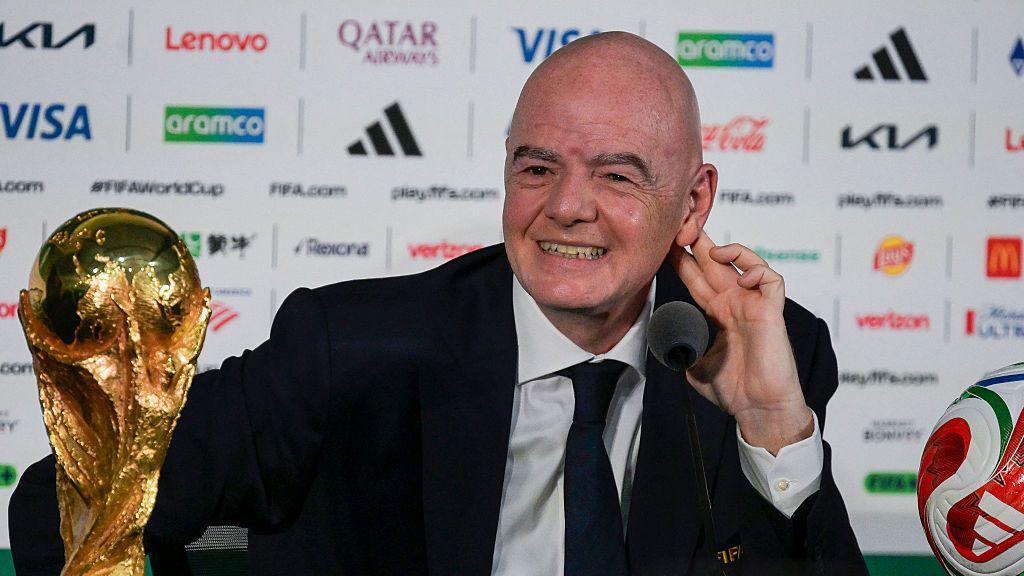
Infantino Could Have Stood Up for World Cup, But Chose to ‘Chill, Relax’
FIFA President’s Response to World Cup Tensions
Ninoda.com – As the 2026 World Cup approached, FIFA President Gianni Infantino faced mounting pressure over the event’s logistical and political challenges. Despite the chaos, he urged stakeholders to “chill, relax,” a phrase that sparked debate about whether he had truly stood up for the tournament’s integrity. BBC sports editor Dan Roan challenged him directly during a press conference, asking if he had lost control over the unfolding issues.
Infantino’s calm reply—“Just, you know, chill, relax”—felt like a dismissal of the escalating controversies. His tone suggested the problems were manageable, even as teams grappled with visa restrictions, travel disruptions, and unexpected detentions. Yet, critics argued that his willingness to downplay these concerns risked undermining FIFA’s authority.
Global Politics and the World Cup’s Challenges
The 2026 World Cup, set to be hosted by the United States, Canada, and Mexico, became a battleground for international tensions. Somali referee Omar Artan was detained for over 11 hours in Chicago, accused of connections to terror groups. Meanwhile, Iran’s team was forced to relocate its base to Mexico, causing confusion for fans and staff. These incidents highlighted how political decisions could disrupt the smooth operation of the world’s most prestigious football event.
Infantino could have stood up to defend the World Cup’s neutrality, but his remarks instead leaned into the idea that such challenges were inevitable. He framed the situation as a natural consequence of global politics, emphasizing FIFA’s need to adapt rather than resist. “Chill, relax,” he repeated, suggesting that the organisation should accept its role as a facilitator rather than a leader in resolving conflicts.
Controversies and Consequences
Infantino’s choice to remain composed came under scrutiny as teams faced tangible consequences. Iran’s squad, for example, was restricted to playing only three group games due to visa limitations, forcing them to travel back and forth within tight timeframes. Iraq’s Aymen Hussein, a key player, also encountered delays at the airport, raising concerns about the tournament’s logistical efficiency.
Artan, whose career had reached a peak with his selection for the World Cup, returned to Somalia heartbroken. His detention, while not officially linked to security threats, created a ripple effect across the football community. Infantino could have stood up by addressing the referee’s situation more directly, but instead, he focused on broader political parallels, distancing FIFA from immediate criticism.
Political Parallels and FIFA’s Strategy
Infantino’s deflection strategy drew comparisons to historical FIFA challenges. He referenced the 1966 World Cup in England, where the UK government nearly barred North Korea over fears of diplomatic fallout. “Would it be normal for FIFA to dictate who enters Britain?” he asked, using the past as a precedent to justify his current stance. This argument positioned FIFA as a pragmatic entity, adapting to the realities of global politics rather than confronting them.
Infantino could have stood up by highlighting the diplomatic efforts required to host the World Cup, but his response instead framed the situation as a necessary compromise. “Chill, relax,” he repeated, suggesting that the organisation should accept its limitations and focus on moving forward. Critics, however, questioned whether this approach prioritised political harmony over the sport’s integrity.
Public Perception and Long-Term Implications
While Infantino’s remarks aimed to ease tensions, they also raised questions about FIFA’s responsiveness. Fans and media alike wondered if the organisation had lost its grip on the event it was meant to celebrate. The phrase “chill, relax” became a symbol of perceived indifference, as if the World Cup’s challenges were trivial compared to larger geopolitical issues.
Infantino could have stood up by offering more concrete solutions, but his emphasis on calmness left some feeling that the problems were being swept under the rug. The controversy underscored the delicate balance FIFA must maintain between hosting a global event and navigating the complexities of international relations. As the World Cup progressed, the impact of these decisions would continue to shape its legacy.
Legacy of a Calm Approach
With the 2026 World Cup now underway, the debate over Infantino’s response persists. His insistence on “chill, relax” has been both praised for its diplomatic tone and criticised for its lack of urgency. The keyword “Infantino could have stood up” appears repeatedly in discussions about the event, reinforcing its relevance in the narrative of leadership and adaptability.