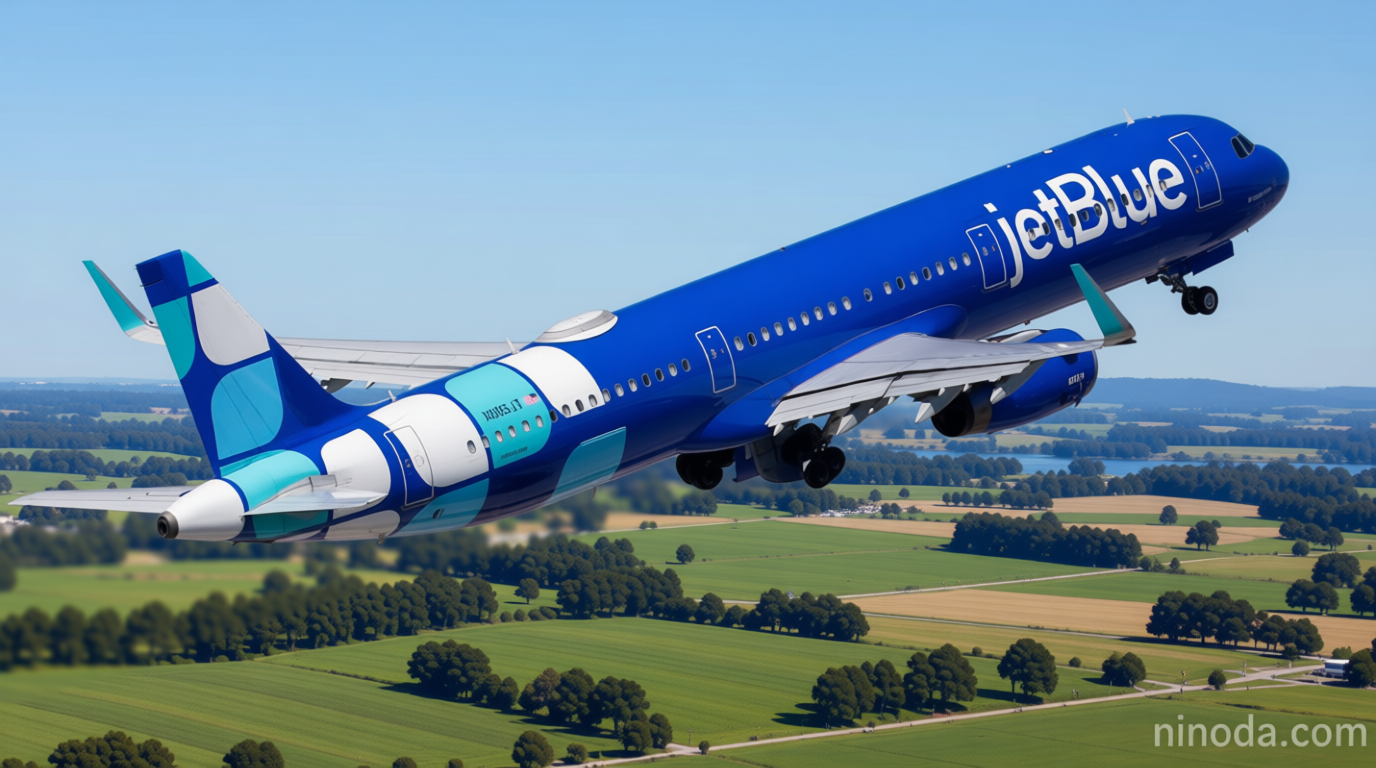
AI to help planes avoid climate-warming ‘sky graffiti’

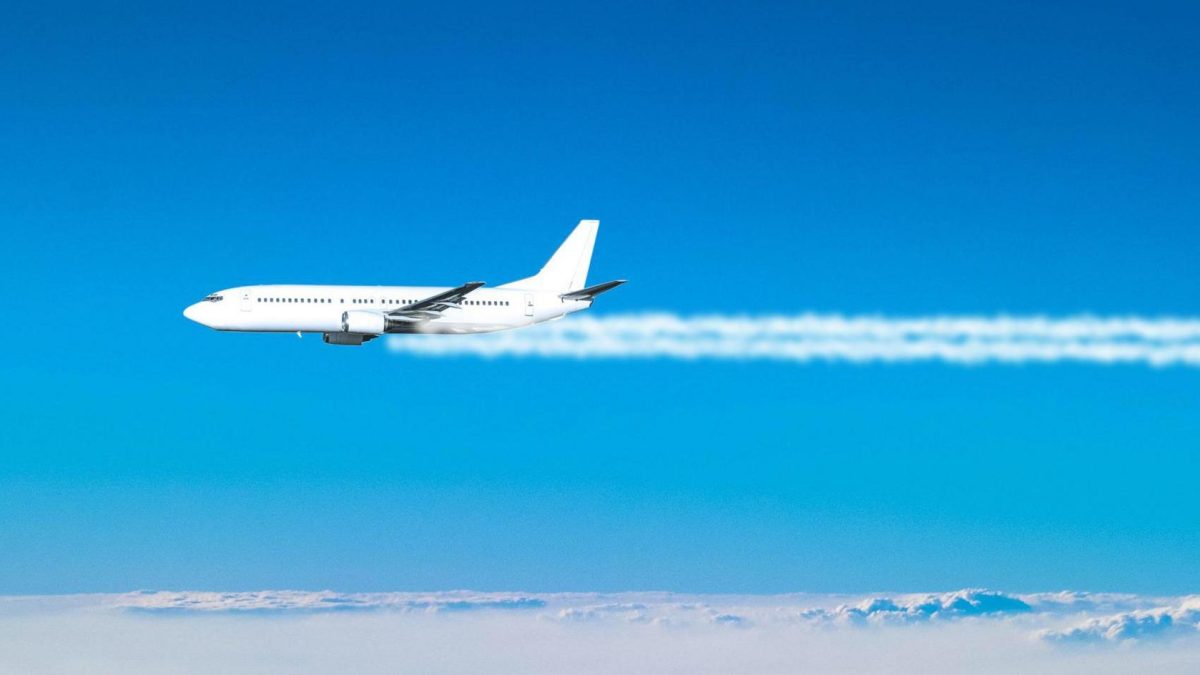
Table of Contents
AI-Driven Trial Aims to Steer Aircraft Around Climate-Harming Contrails
Ninoda.com – Those streaks of white vapour trailing behind jets overhead have long drawn curious gazes from people on the ground. Scientists, however, view them with growing alarm. Contrails — condensation trails born when scorching engine exhaust collides with frigid upper-atmosphere air — generate ice crystals that, under the right cold and humid conditions, linger and expand into heat-trapping cloud layers. Researchers estimate these warming contrails account for roughly one-third of aviation’s total climate impact.
A £5 million, 30-month programme called Operation Blue Skies will now put artificial intelligence to work predicting where such warming trails are most likely to appear, giving air traffic controllers the chance to nudge aircraft away before the damage forms. The initiative unites Google, the UK government, the Met Office, National Air Traffic Services (NATS), and a cohort of academic researchers.
How the Prediction System Operates
Google will feed satellite imagery and historical flight-path data into its models to map where contrails have previously materialised. That spatial intelligence is then layered onto real-time weather-pattern analysis to forecast future conditions conducive to trail formation. The resulting alerts flow to NATS controllers, who can instruct pilots to sidestep the flagged zones.
In practice, the manoeuvre will rarely involve a dramatic reroute. Most adjustments will amount to an altitude shift of approximately 2,000 feet — a routine procedure already employed to dodge turbulence and adverse weather, meaning passengers are unlikely to perceive any difference.
“Pretty much business as usual using existing procedures for the operators on the North Atlantic,” said Ian Jopson, director of sustainability at NATS.
Scope, Timing, and Funding
The trial will target the Shanwick Oceanic airspace, situated in the eastern portion of the North Atlantic corridor, a region responsible for roughly 5% of global contrail warming. Testing is scheduled for selected evening and night slots across the winters of 2026–27 and 2027–28, when traffic volumes dip. Approximately 10,000 flights are projected to transit the sector during the trial windows, though only a small subset will require a contrail-avoidance altitude change.
The Department for Transport is supplying £2.65 million toward the programme, while Google is contributing £1.4 million in the form of AI research, engineering expertise, and computing infrastructure.
“This is a world-first, and it’s British ingenuity leading the way,” declared Aviation Minister Keire Mather, describing the exercise as testing “small tweaks to flight paths over the Atlantic” that could render flying cleaner.
The Climate Arithmetic
A natural objection arises: if an aircraft climbs or descends to dodge a contrail zone, it burns extra fuel, potentially offsetting the benefit. Dr Paul Hodgson, Google’s technical lead for Operation Blue Skies, pointed to earlier airline-level trials showing that the incremental CO₂ cost stays well below 1% of the contrail’s warming footprint — a footprint he described as being of comparable magnitude to aviation’s entire CO₂ output.
“The CO2 penalty is in the order of less than 1%, compared to the contrail cost, which is of a similar order magnitude to all of the CO2 of aviation,” Hodgson explained.
Modelling specific to Operation Blue Skies projects roughly 100 kg of additional fuel per affected aircraft for a full deviation through the Shanwick sector. Prior airline-scale experiments have already delivered contrail-formation or warming reductions in the 60–70% range, according to Hodgson.
Wider Context
The trial lands amid government support for expanding UK airport capacity, sharpening the question of whether technological interventions can meaningfully curb aviation’s environmental footprint as passenger demand climbs. Google itself sits among the major tech firms pouring billions into new data centres — vast, energy-intensive repositories of processing chips that power AI workloads — facilities environmental groups warn will deepen climate pressures of their own.
Hodgson, whose five-year-old daughter has a more colourful name for the phenomenon, acknowledged the uncertainty surrounding the exact share of aviation warming attributable to contrails.
“We think that contrail warming is responsible for something like a third of all aviation climate warming,” he told the BBC’s Tech Life programme. “Either quite a large problem or a very large problem,” he added, conceding the precise figure remains unsettled.
Results from Operation Blue Skies are expected to be published once the trial period concludes.
Related Reading
Frequently Asked Questions
What is AI to help planes avoid climate?
AI to help planes avoid climate is the main topic of this guide. The article explains the context, practical details, and next steps readers should understand.
Why does AI to help planes avoid climate matter?
AI to help planes avoid climate matters because readers are looking for a useful answer, not just a short summary. Good content should match search intent and help them decide what to do next.