Urine test can spot more than nine in 10 bladder cancers

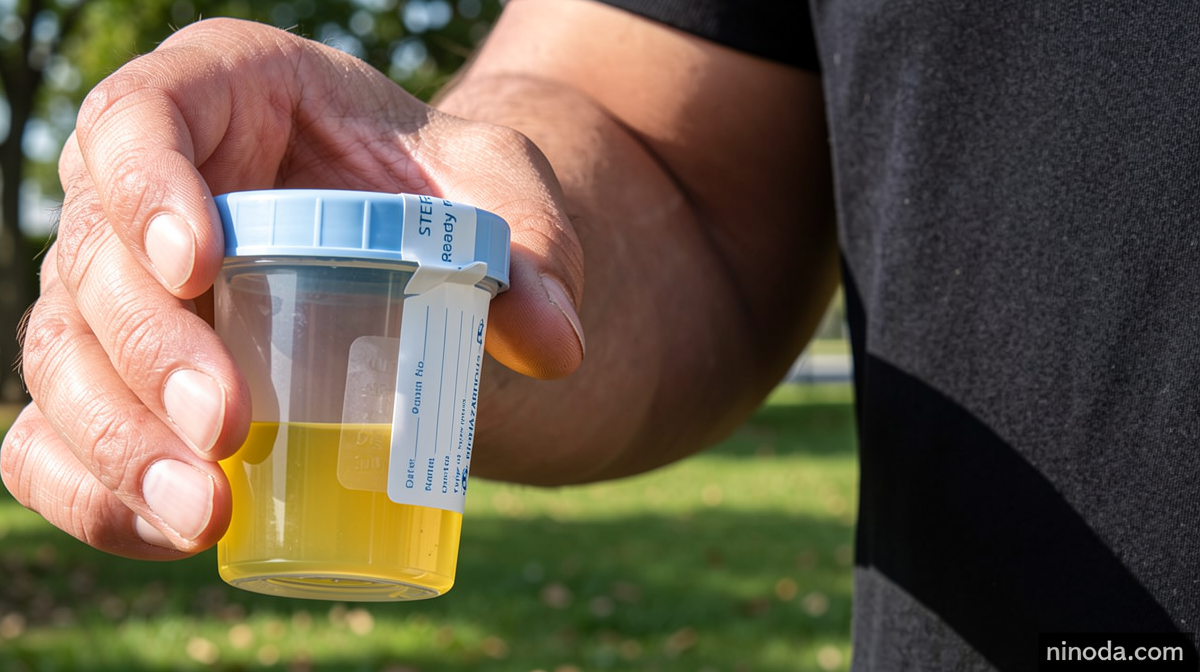
Table of Contents
A Home Urine Test Shows Strong Promise in Detecting Bladder Cancer Before Invasive Procedures Are Needed
Ninoda.com – A simple urine sample collected at home could soon spare tens of thousands of UK patients from painful and anxiety-provoking diagnostic procedures each year. New findings from an NHS-funded trial demonstrate that a commercially available urine-based assay correctly identified 92% of bladder cancer cases among nearly 1,000 patients evaluated across seven hospitals in England and Scotland. The results, published in the journal European Urology Oncology, represent what researchers describe as a meaningful step toward reducing the burden of urgent cystoscopies — the invasive camera-based examinations that currently form the backbone of bladder cancer diagnosis in Britain.
How the Test Works
The assay, branded Galeas, scans a patient’s urine for fragments of genetic material that bladder tumours shed into the urinary tract. Specifically, it targets more than 450 distinct DNA mutations distributed across 23 genes known to be implicated in bladder carcinogenesis. Because the test detects molecular signatures rather than relying on visual inspection, it can be performed without any instrumentation beyond a standard collection cup, making it suitable for home use.
The technology was originally developed at the University of Birmingham with financial backing from Cancer Research UK (CRUK). Under a licensing arrangement, diagnostics firm Nonacus now manufactures and distributes the test, returning a portion of commercial revenue to both the university and CRUK to sustain ongoing research.
What the Trial Found
In the NHS trial, the Galeas test flagged 92% of confirmed bladder cancer cases. Equally important for patient reassurance, a negative result carried more than a 99% probability that the individual did not harbour bladder cancer. That high negative predictive value means clinicians could use the test as a triage tool: patients who test negative would be directed into routine follow-up rather than rushed into an emergency cystoscopy, while those who test positive would be fast-tracked to urgent examination.
Researchers stressed that the urine assay is not intended to replace cystoscopy. Rather, it is designed to help physicians allocate scarce endoscopy slots to those at greatest risk, shortening waiting times for the patients who truly need immediate intervention.
The Scale of the Problem
More than 300,000 cystoscopies are carried out in the United Kingdom every year. The procedure involves threading a thin, lighted camera through the urethra and into the bladder to visually inspect the organ’s lining. While technically straightforward for experienced urologists, it is uncomfortable, requires sedation or local anaesthesia in many cases, and contributes to substantial waiting lists in several NHS regions. If a larger confirmatory trial validates the current findings, the urine test could divert a significant share of those 300,000 annual procedures away from patients who ultimately prove to be cancer-free.
Bladder cancer affects roughly 10,000 people in the UK annually and is disproportionately common in men over the age of 60. The most frequent presenting symptom is visible blood in the urine, though early-stage disease can be silent. Severity ranges from superficial papillary growths that respond well to localised treatment to muscle-invasive or metastatic cancers with markedly poorer prognosis. Early detection and prompt treatment remain the single most effective lever for improving survival.
Researcher and Funder Perspectives
After spending years developing and evaluating the science, it was exciting to see “very promising early performance” in a large real-world patient population.
— Professor Richard Bryan, co-author of the study and based at the University of Birmingham
“Too many people are waiting longer than they should for a bladder cancer diagnosis, and it’s essential that we find ways to tackle this problem. It’s early days for this test and further research is needed, but it’s vital that we continue to find faster and less invasive ways to help diagnose or rule out cancer.”
— Michelle Mitchell, Cancer Research UK
What Comes Next
The current trial, while substantial in scope, is considered a pilot-scale validation. Before the test could be rolled out across NHS primary-care pathways, a larger multicentre study would need to confirm sensitivity and specificity across diverse populations, confirmatory histology, and varying tumour stages. Regulatory clearance for home-use diagnostics in the UK would also require additional evidence packages.
Nevertheless, the data published this round of findings position the Galeas assay as one of the most advanced non-invasive screening tools yet evaluated for bladder cancer in a real-world clinical setting. For patients currently facing weeks-long waits for an urgent cystoscopy after noticing blood in their urine, the prospect of a quick, painless home test that can either reassure or accelerate diagnosis carries considerable practical weight.
Public-health officials and urological societies will be watching closely as the next phase of research unfolds. If the larger trial confirms the early numbers, the UK could become the first major health system to integrate a molecular urine screen into its bladder-cancer diagnostic pathway — a shift that would reduce procedural volume, ease pressure on endoscopy suites, and potentially improve outcomes by compressing the interval between symptom onset and definitive diagnosis.
Related Reading
Frequently Asked Questions
What is Urine test can spot more than?
Urine test can spot more than is the main topic of this guide. The article explains the context, practical details, and next steps readers should understand.
Why does Urine test can spot more than matter?
Urine test can spot more than matters because readers are looking for a useful answer, not just a short summary. Good content should match search intent and help them decide what to do next.