EU and Nato vow to step up pressure on Russia after ‘new escalation’ in Germany

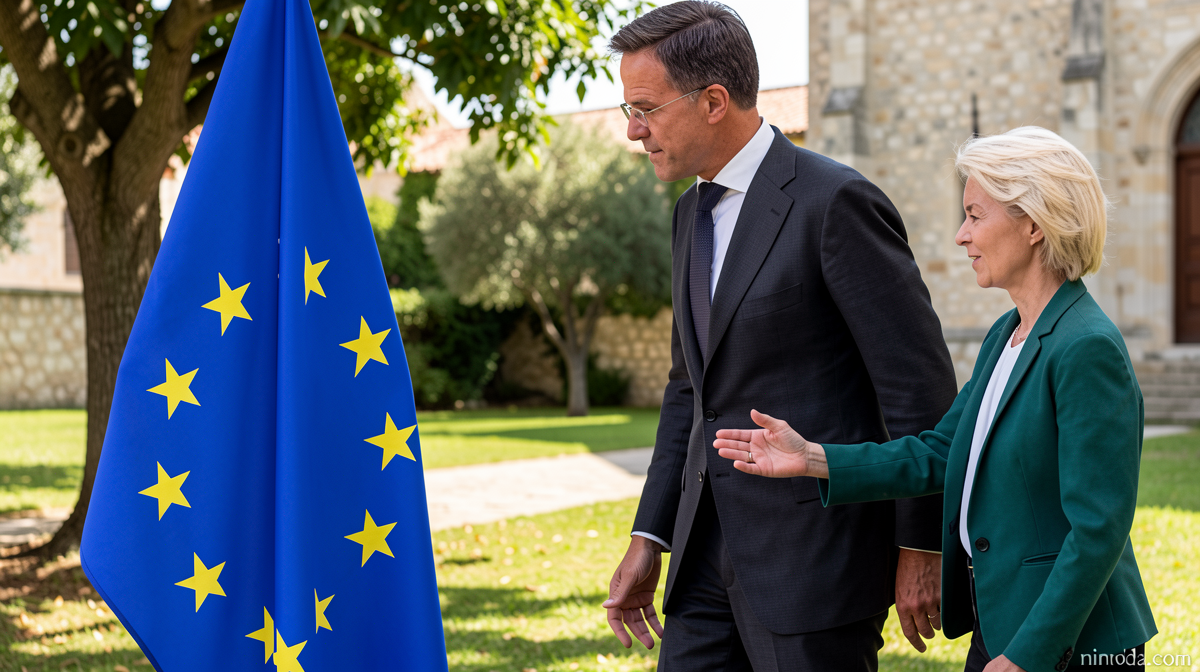
Table of Contents
Leipzig Drone Incidents Trigger Diplomatic Confrontation Between Berlin and Moscow
Ninoda.com – The discovery of Russian-made drones at one of Europe’s busiest air cargo hubs has ignited a fresh round of institutional closures, sanctions threats, and pointed rhetoric between Germany and Russia. What began as a routine defusing operation at Leipzig/Halle airport on 4 August has escalated into what European leaders now describe as a deliberate hybrid operation on NATO territory — and a test of how quickly the West can coordinate a unified answer.
The Incidents at Leipzig/Halle
On 4 August, a drone loaded with explosives was located aboard a Ukrainian cargo plane parked at Leipzig/Halle airport. A robot was deployed to defuse the device safely. A second drone is believed to have struck another cargo aircraft at the same facility. Ten days after the initial discovery, a third drone was reportedly found on the airport grounds. The site is a critical NATO logistics node and hosts Ukrainian Antonov transport aircraft on a regular schedule, making it a strategically sensitive target.
German authorities did not publicly attribute the incidents to Moscow until Tuesday, when the government announced that police investigations and intelligence findings had confirmed Russian responsibility. The interior minister stated that the drone’s configuration, components, explosives, and detonator matched those used in other known Russian hybrid operations. Two suspects have been identified: a Belarusian national holding a Russian passport who entered Germany on a tourist visa, and a second individual carrying both Latvian and Russian passports who arrived by plane in Berlin and departed two days before the failed attack.
Berlin Closes Russian Cultural and Consular Outlets
In direct response to the Leipzig episode, Germany announced it would shutter the Russian consulate in Bonn and the Russian House cultural institution in Berlin. The latter has long been viewed in German policy circles as a de facto propaganda channel for the Kremlin. Russia’s foreign ministry pushed back, stating that Berlin had offered no evidence to substantiate its claims.
Moscow’s counter-move came swiftly. Russian Foreign Minister Sergei Lavrov declared that Germany’s Goethe-Institut cultural centres in Moscow, St Petersburg, and Yekaterinburg would close in retaliation. Earlier in the diplomatic exchange, Germany’s chargé d’affaires Bernd Finke was summoned to the Russian foreign ministry to hear Moscow’s formal rejection of what it called Berlin’s
“entirely unfounded accusations.”
President Vladimir Putin went further, condemning Germany’s measures as a serious mistake that
“clearly runs counter to the interests of the German people.”
When pressed on whether Moscow might sever diplomatic relations entirely, Deputy Foreign Minister Alexander Grushko answered simply “maybe,” while noting that for the time being diplomacy was still being given a chance.
NATO and EU Leaders Frame a “New Normal”
One day after Germany publicly blamed Russia for the Leipzig drone plot, European Commission President Ursula von der Leyen and NATO Secretary General Mark Rutte issued a joint warning that Moscow was becoming increasingly reckless in its operations against Europe. Speaking in Brussels, von der Leyen characterized the episode as
“a new escalation on European Union soil directly attributed to Russia.”
She added that the attack involved
“military-grade material carried out by Russian operatives on European Union soil.”
Her tone left little room for ambiguity:
“We will not tolerate it. We have to step up and that means being ready to respond to Russia’s recklessness faster and better.”
Rutte, addressing the same gathering, affirmed that the alliance — which includes the United States — stood
“in full solidarity with Germany.”
The framing of a “new normal” signals that European institutions intend to treat hybrid incursions on member-state territory not as isolated incidents but as a pattern demanding accelerated, pre-authorized responses.
EU Foreign Ministers Convene in Wicklow
While von der Leyen met Rutte in Brussels, EU foreign ministers were assembled in Wicklow, Ireland. France’s Foreign Minister Jean-Noël Barrot proposed action at the European level against Russia’s so-called “shadow fleet” — the network of vessels transporting oil and other cargo while attempting to evade EU sanctions. Barrot, alongside counterparts from Belgium and the Netherlands, confirmed that Russian ambassadors had been summoned in protest over the Leipzig attack.
Lithuania’s Foreign Minister Kestutis Budrys observed that the episode made plain Russia’s calculation that hybrid operations against European allies carry no meaningful political cost. EU foreign policy chief Kaja Kallas stated that ministers were working to tighten enforcement of existing sanctions and noted broad support for an EU-wide visa entry ban on Russian ex-combatants, as well as stricter visa limits on Russian tourists.
Frozen Assets and the Broader Sanctions Question
Several member states — including Sweden, the Netherlands, Poland, and Spain — continue to press for the use of more than €193 billion (approximately £165 billion) in frozen Russian assets to support Ukraine. The proposal, first floated at an earlier EU summit, remains contested but gains momentum as the cost of the war extends into its fourth year. Critics within Germany have characterized Berlin’s Leipzig response as comparatively restrained, though the government has indicated it is calibrating its actions toward a more coordinated allied package that would combine extended EU sanctions with bloc-wide entry restrictions on Russian visitors.
The Leipzig episode, taken together with the institutional closures and the diplomatic tit-for-tat over cultural centres, marks a visible hardening of the European posture toward Moscow. Whether that hardening translates into faster decision-making on sanctions enforcement, visa restrictions, and asset utilization will depend on whether the remaining member states converge on a single, enforceable framework — or whether the response fragments into a series of bilateral gestures that Moscow can absorb without consequence.
Related Reading
Frequently Asked Questions
What is EU and Nato vow to step?
EU and Nato vow to step is the main topic of this guide. The article explains the context, practical details, and next steps readers should understand.
Why does EU and Nato vow to step matter?
EU and Nato vow to step matters because readers are looking for a useful answer, not just a short summary. Good content should match search intent and help them decide what to do next.