
Israeli exit polls suggest no clear winner in pivotal general election

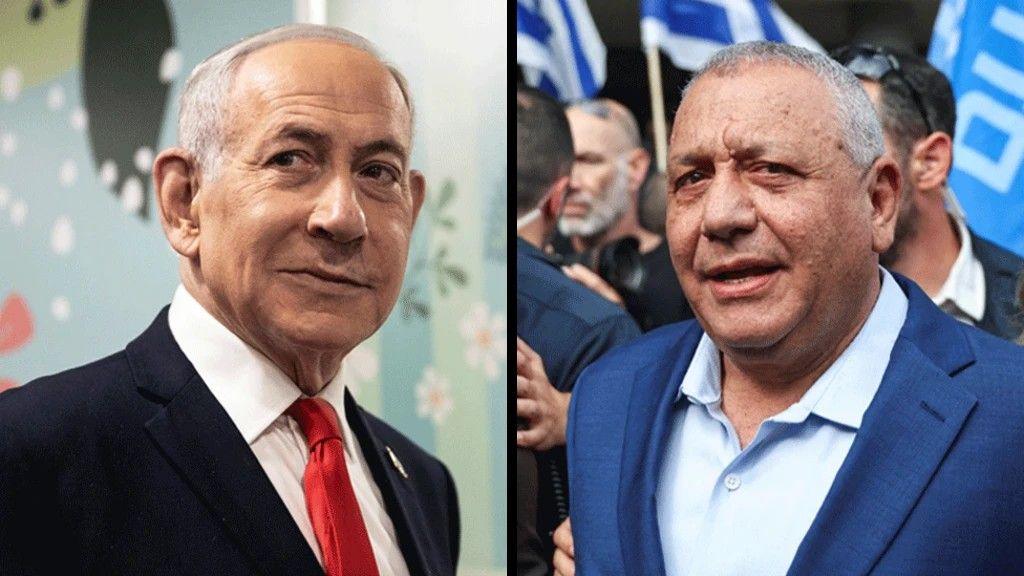
Table of Contents
Israel Faces Coalition Uncertainty After Tight Election Exit Polls
Ninoda.com – Israel appeared headed for another difficult coalition-building process after exit polls in a pivotal general election showed no decisive winner between Prime Minister Benjamin Netanyahu’s right-wing alliance and an opposition grouping led by former military chief Gadi Eisenkot.
Initial projections indicated that neither camp was close to the 61 seats needed for a majority in the 120-member Knesset. The result leaves the country’s political future dependent on negotiations that could stretch for weeks, as well as on the final count of hundreds of thousands of absentee ballots.
Two television projections put Eisenkot’s Yashar party and the three other Jewish opposition parties in his Change Bloc on 51 seats. Netanyahu’s Likud party, joined by its far-right and ultra-Orthodox Jewish partners, was also forecast to take 51 seats. A separate poll gave Netanyahu’s bloc a narrow advantage of three seats.
The numbers shifted during the night as broadcasters revised their estimates. Kan and Channel 13 later placed the rival blocs level at 51 seats apiece, while Channel 12 projected 52 seats for Netanyahu’s camp and 49 for Eisenkot’s alliance.
Arab parties could hold the balance
The United Arab List and the Joint List were expected to secure an unprecedented 18 or 19 seats combined, following what appeared to be strong participation among Arab Israeli voters. Arab Israelis make up roughly one-fifth of the population and many identify as Palestinian citizens of Israel.
That result could give the two parties substantial leverage in deciding who can assemble a governing majority. Yet cooperation with Arab parties remains politically contentious, and only one of the main parties has openly supported working with them in a government.
I hope that the numbers will work out and we, the Change Bloc and the UAL, can ensure that there are 61 Knesset seats,
United Arab List leader Mansour Abbas said as the early estimates emerged.
Abbas has experience in national coalition politics. After the 2021 election, his party joined a government led by Naftali Bennett and Yair Lapid. That administration survived for about a year before it fell apart, illustrating both the potential and the fragility of broad alliances in Israel’s fragmented political system.
Rival camps claim momentum
Supporters of Eisenkot gathered at Yashar’s headquarters in Tel Aviv, where they celebrated the first projections and chanted, “Bibi, go home!” The earliest estimates from Kan, Channel 12 and Channel 13 had suggested that Eisenkot’s bloc would be the largest grouping in parliament, with 52 to 53 seats, compared with 50 for Netanyahu’s governing partners.
Eisenkot described the showing as a historic moment and said he would seek a government that reflected the public’s choice.
We have made history.
Ensure that the people’s decision is translated into a Zionist government: stable and good for all of Israel’s citizens.
Yair Lapid, a former prime minister and Eisenkot’s ally in the Beyachad party, said Netanyahu’s side had suffered a “crushing defeat.”
Likud, however, showed no sign of conceding. The party was still projected to be the largest individual faction in the Knesset, even where its broader alliance remained short of a clear majority. At Likud’s Jerusalem headquarters, supporters watched the changing forecasts anxiously.
It’s not over until it’s over, but I’m sweating,
said one supporter, Itzik.
Foreign Minister Gideon Saar, a Netanyahu ally, argued that celebrations by opponents of the government were premature. National Security Minister Itamar Ben-Gvir urged supporters of his far-right Jewish Power party to pray for a result that would produce a “full-on right-wing government.”
Netanyahu later addressed supporters and said his bloc held a “great majority,” calling for a “strong, right-wing national government.” Whether that claim can be translated into a working parliamentary coalition will depend on the certified results and the readiness of other parties to negotiate.
High turnout and a delayed final picture
Participation was unusually high. Turnout reached 77.7% by the time polling stations closed at 22:00 local time, or 20:00 GMT. The Central Elections Committee said this was the highest turnout recorded at that point in an election day since 1999.
Official results were due to begin appearing overnight, but a complete picture will take longer. About 600,000 absentee ballots, cast mainly by military personnel, account for around one-tenth of all votes. Those ballots were not expected to be fully counted until Thursday.
Once the final tally is confirmed, Israel’s president will consult the political factions and ask the leader considered most likely to form a viable coalition to try. The process can take several weeks. If no candidate succeeds, the country could eventually be forced into another election.
An election shaped by war and national direction
The vote was the first national election since the Hamas-led attacks of 7 October 2023 and the conflicts that followed in Gaza, Lebanon and Iran. For many voters, it carried consequences beyond the choice of prime minister.
Central campaign questions included responsibility for the security failures surrounding the 7 October attacks, the management of regional military conflicts, judicial reform, the growing pressure to share military service obligations, and the country’s broader political direction.
The election was widely viewed as a test of whether Israel would continue along a hard-line, religious-nationalist path or move toward a different governing coalition. The exit polls did not settle that question. Instead, they pointed to a parliament in which smaller parties, especially the Arab factions, may determine the outcome of one of Israel’s most consequential elections in years.
Related Reading
Frequently Asked Questions
What is Israeli exit polls suggest no clear?
Israeli exit polls suggest no clear is the main topic of this guide. The article explains the context, practical details, and next steps readers should understand.
Why does Israeli exit polls suggest no clear matter?
Israeli exit polls suggest no clear matters because readers are looking for a useful answer, not just a short summary. Good content should match search intent and help them decide what to do next.