Trump’s doctor says he’s in excellent health – but are US presidents’ health checks a PR exercise?

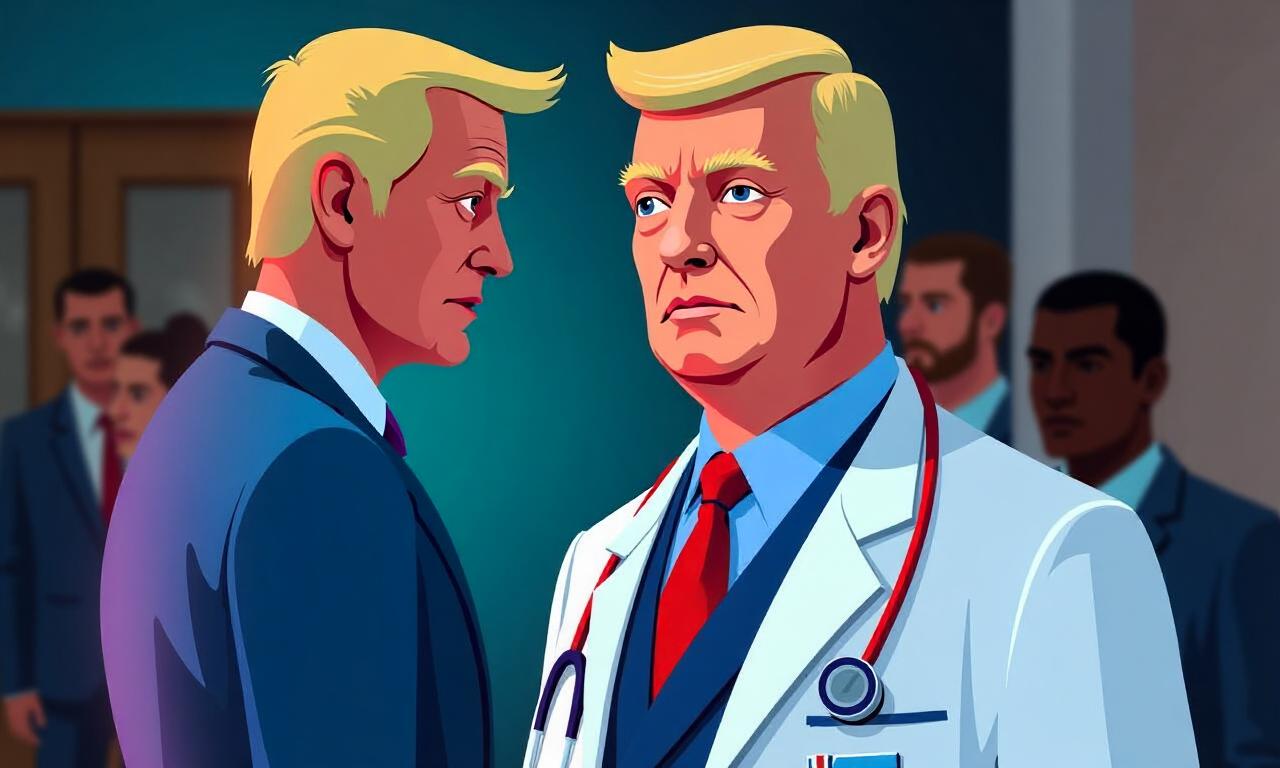
Trump’s Doctor Says He’s in Excellent Health – But Are US Presidents’ Health Checks a PR Exercise?
Ninoda.com – When Joe Biden, then 81 years old, joked that “they think I look too young” after his annual medical check-up, it underscored a growing trend: the public’s fascination with the health of American presidents. As the oldest leader in U.S. history at the time, Biden’s remarks highlighted how health assessments have become a key part of the political narrative. Yet, for many, these routine evaluations feel more like a strategic public relations campaign than a genuine measure of presidential fitness.
The Political Power of Physicals
Every modern president has followed a ritual of visiting Walter Reed National Military Medical Center for a standard physical. This practice, while rooted in medical tradition, has evolved into a symbolic act. Dr. Matt Dallek, a political historian at George Washington University, explains that this tradition is less about diagnosing ailments and more about reinforcing an image of strength. “Americans historically have wanted masculine presidents, vigorous presidents,” he says. “The physical exam is one way a president can outwardly demonstrate vitality, which in turn projects political power.”
Donald Trump, who turned 80 just weeks before his second term, has taken this practice to an extreme. His annual health report, issued by his physician, consistently emphasizes his robust condition. The memo released after his check-up noted “excellent health” and “strong cardiac, pulmonary, neurological, and overall physical function,” while also advising him to exercise more and lose weight. Despite the reassuring language, such reports often serve as tools to manage perception rather than provide complete transparency.
Historical Context: Covering Up Health Struggles
Health checks have long been a double-edged sword for presidents. Before television brought the White House into living rooms, leaders could obscure their medical challenges more effectively. Woodrow Wilson, for instance, suffered a debilitating stroke in 1919, which left him largely incapacitated for the end of his presidency. His doctors and advisors worked to downplay the severity of his condition, allowing his wife to make decisions on his behalf without widespread public awareness.
“The president can cherry pick what looks good, and what doesn’t look good,” said Jacob Appel, a medical ethicist at New York’s Mount Sinai Hospital.
Similarly, Franklin D. Roosevelt’s battle with polio-related paralysis was quietly managed during his presidency. While the public was aware of his physical limitations, the White House minimized the use of his wheelchair until his death in 1945. This pattern of selective disclosure has continued, with Gerald Ford famously pushing for greater transparency in the 1970s. Ford’s 1976 check-up included a declaration that he was “fit as a fiddle” and swam daily to maintain his health, even as his physician raised concerns.
Modern Trends: Scrutiny and Strategic Messaging
Today, the visibility of health reports is more pronounced, particularly with aging leaders. President Ronald Reagan’s delayed announcement of his Alzheimer’s diagnosis—made five years after his presidency—sparked debates about his cognitive abilities during his second term. Appel pointed out that such disclosures can be strategically timed to avoid undermining a leader’s credibility. “Anything we released to the American public will also be known by the Russian secret service, Chinese government, and adversaries,” he noted, emphasizing the dual role of health reports in both domestic and international politics.
Recent years have intensified this scrutiny. The U.S. has seen a shift toward electing older presidents, with Bill Clinton, George W. Bush, and Barack Obama all taking office in their early to mid-40s. However, the election of Trump and Biden, who were 70 and 78 respectively at their first inaugurations, has placed a spotlight on health assessments. Dallek observed that this has “turbocharged” media and public interest. “The concerns about Biden and Trump due to their age operate on a different level than previous administrations,” he said, noting how their age has become a central narrative in political discourse.
Biden’s 2020 check-up report, for example, included details of routine procedures like the removal of a precancerous skin lesion and a recommendation for hearing aids. These minor findings, while factual, often overshadow more serious conditions. The focus on such details can create an illusion of wellness, even as underlying health issues remain undisclosed. This selective emphasis on positive outcomes reflects a broader pattern: presidents and their teams often highlight favorable results while downplaying potential vulnerabilities.
Privacy and the Politics of Health
With no legal obligation to share medical records, presidents enjoy privacy akin to any American citizen. This confidentiality allows them to control the narrative around their health, which is critical in a hyper-partisan political landscape. Appel argues that revealing potential weaknesses could be seen as a strategic disadvantage. “Politicians have little to gain from exposing any potential weakness,” he said, highlighting how health reports are curated to align with public expectations.
The pressure to project healthiness is further amplified by the role of media. News outlets often frame these check-ups as pivotal moments, using them to fuel narratives about leadership capability. For instance, Biden’s age-related health challenges have been frequently discussed, even as his team emphasizes his overall fitness. This dynamic raises questions about the balance between transparency and image management. Are these reports meant to inform the public, or are they designed to shape public perception?
As the U.S. continues to elect leaders with advanced ages, the significance of health assessments will likely grow. The interplay between medical facts and political messaging ensures that these check-ups remain a cornerstone of presidential communication, blending science with strategy. Whether they are genuine indicators of health or carefully crafted PR exercises, the annual physicals serve a vital role in the American political ecosystem. They remind voters of the stakes of leadership, even as they highlight the human element behind the presidency.