Cuba’s blackouts leave high-rise residents with constant uncertainty

Cuba’s Blackouts Leave High-Rise Residents in Perpetual Uncertainty
Ninoda.com – Cuba continues to grapple with prolonged power outages, a crisis exacerbated by the U.S. fuel embargo that has persisted for months. For residents of high-rise buildings, the situation has become a daily challenge, disrupting routines and creating a sense of unpredictability. The BBC’s Will Grant recently interviewed Ana Rosa Romero, a 70-year-old widow living in one such building, to understand how these outages have reshaped her life. Her story highlights the broader struggle of Cubans navigating a landscape where electricity is a luxury rather than a guarantee.
The Strain on Daily Life
For Ana Rosa, the constant interruptions have turned simple tasks into unpredictable adventures. “Every morning, I check the clock to see if the power will come on,” she explained. “If it does, I can cook breakfast. If not, I have to wait for the next surge.” The lack of reliable electricity affects everything from cooking meals to preserving food, forcing her to rely on flashlights and candles. “I’ve started keeping a small battery-powered radio in my kitchen,” she added, “just in case.”
“It’s impossible for speakers to be heard,” said the French president during a recent speech in Kenya, drawing attention to the noise levels in international forums. His remark underscored the challenges of communication in high-stakes diplomacy, a theme that resonates with Cubans enduring similar disruptions in their own lives.
The U.S. government’s decision to maintain a near-total fuel blockade has deepened the crisis. Officials have cited geopolitical tensions as the reason for the continued restrictions, though the impact on everyday Cubans is stark. “We used to have power for eight hours a day,” said Ana Rosa. “Now it’s three, and we’re always waiting.” The electricity shortages have also strained the healthcare sector, with hospitals and clinics struggling to maintain operations during extended outages.
Legal Charges Against a Former Leader
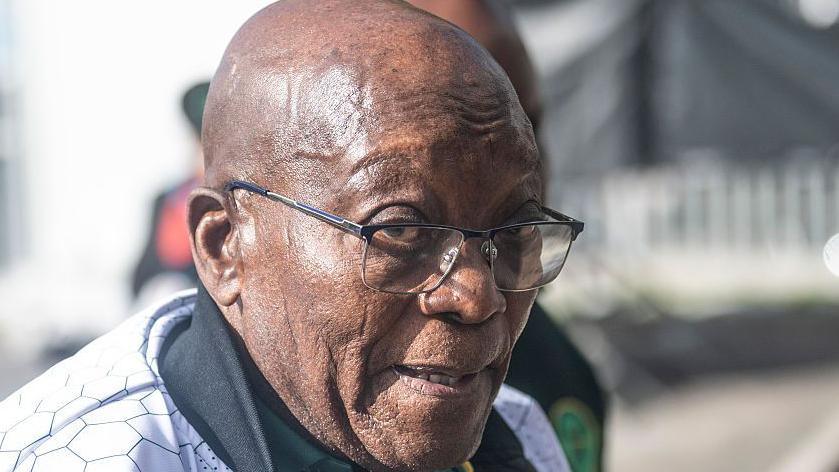
Meanwhile, the U.S. Department of Justice (DOJ) has charged the former Cuban leader with murder and other crimes related to the downing of two civilian aircraft in 1996. The allegations, which include conspiracy to kill U.S. nationals, have sparked international debate. BBC correspondent Will Grant reported from Havana, noting that the charges come as the U.S. and Cuba continue to navigate a complex relationship. “This is a symbolic move to highlight Cuba’s role in the 1996 incident,” Grant observed, “but it also reflects ongoing tensions over the island’s political and economic policies.”
President Donald Trump’s recent visit to Beijing marked a pivotal moment in U.S.-China relations. The summit, which lasted nearly two hours, saw Trump welcomed with a parade of troops and cheering children, mirroring the ceremonial gestures he had used for previous leaders. Laura Bicker and Steven Rosenberg, BBC analysts, explained that the meeting aimed to address pressing issues such as trade, security, and the ongoing conflict in Ukraine. “The U.S. and China are seeking to strengthen their alliance amid global challenges,” said Bicker, while Rosenberg noted the strategic importance of the talks for both nations.
International Reactions and Unforeseen Consequences
The timing of the U.S. charges against the former Cuban leader coincided with a flurry of international activity. In Washington, D.C., fans of the Eurovision Song Contest gathered to support their favorite acts, a testament to the cultural influence of the event despite political tensions. The same week, Juan Orlando Hernández, a former Honduran president, was controversially pardoned by Trump while serving a 45-year sentence for drug trafficking, further illustrating the impact of U.S. policy on Latin American leaders.
The blackouts have also been linked to broader environmental concerns. Officials in both the U.S. and Cuba cited dry conditions, high winds, and drought as key factors in the difficulty of controlling wildfires. These elements have compounded the challenges of energy production, with some experts suggesting that Cuba’s reliance on imported fuel has left it vulnerable to climate-related disruptions. “The crisis is not just about politics,” said an energy analyst in Havana, “but also about the changing climate.”
Back in the U.S., the Strait of Hormuz remained a flashpoint for conflict. Despite Trump’s announcement of an extended ceasefire between the U.S. and Iran, several vessels were attacked in the critical waterway. The BBC’s Azadeh Moshiri reported from Islamabad, where preparations for peace talks are underway, though no confirmed date has been set. “The ceasefire is fragile,” Moshiri noted, “and the region is still bracing for further tensions.”
The Human Cost of Energy Shortages
The power outages have had a profound human toll. In a tragic incident, passengers on a flight between two islands were forced to spend hours on a floating life raft after their 20-minute journey ended in disaster. The incident, which occurred during a period of severe weather, highlighted the dangers of relying on unstable infrastructure. “The aviation system is under immense pressure,” said a spokesperson for the Cuban airline, “but we’re working to ensure safety.”
As the situation in Cuba worsens, the government has faced criticism for its handling of the crisis. The Dutch foreign ministry confirmed that a British, German, and Dutch national had been rescued from a virus-hit ship, underscoring the global reach of the pandemic. However, this success contrasts with the struggles of Cubans who face daily power cuts. “We’re not just dealing with electricity shortages,” said Ana Rosa, “we’re dealing with the uncertainty of life itself.”
Broader Implications and Future Outlook
The blackouts have become a symbol of Cuba’s economic struggles, with many pointing to the U.S. blockade as the primary cause. However, the country’s own energy policies and infrastructure limitations also play a role. Analysts suggest that Cuba’s high-rise residents, like Ana Rosa, may face further challenges as the crisis deepens. “The future looks uncertain,” said a local resident, “but we’re adapting as best as we can.”
Amid the turmoil, the relationship between Trump and Xi Jinping has taken center stage. Their meeting in Beijing, which included a two-hour discussion, aimed to solidify cooperation on global issues. Laura Bicker explained that the power dynamic between the two leaders was marked by mutual respect and strategic maneuvering. “Xi Jinping’s support for Cuba is part of a broader effort to counter U.S. influence in the region,” she said. “But Trump’s focus on economic sanctions and political pressure remains a key factor.”
As the world watches Cuba’s struggle with power cuts, the impact on its citizens is becoming more evident. From high-rise residents to healthcare workers, the blackouts have touched every aspect of daily life. Ana Rosa’s story, while personal, reflects a larger narrative of resilience and adaptation in the face of adversity. “We don’t know when the power will return,” she said, “but we keep going, one day at a time.”