Tuchel’s complaints lead to Fifa moving photographers

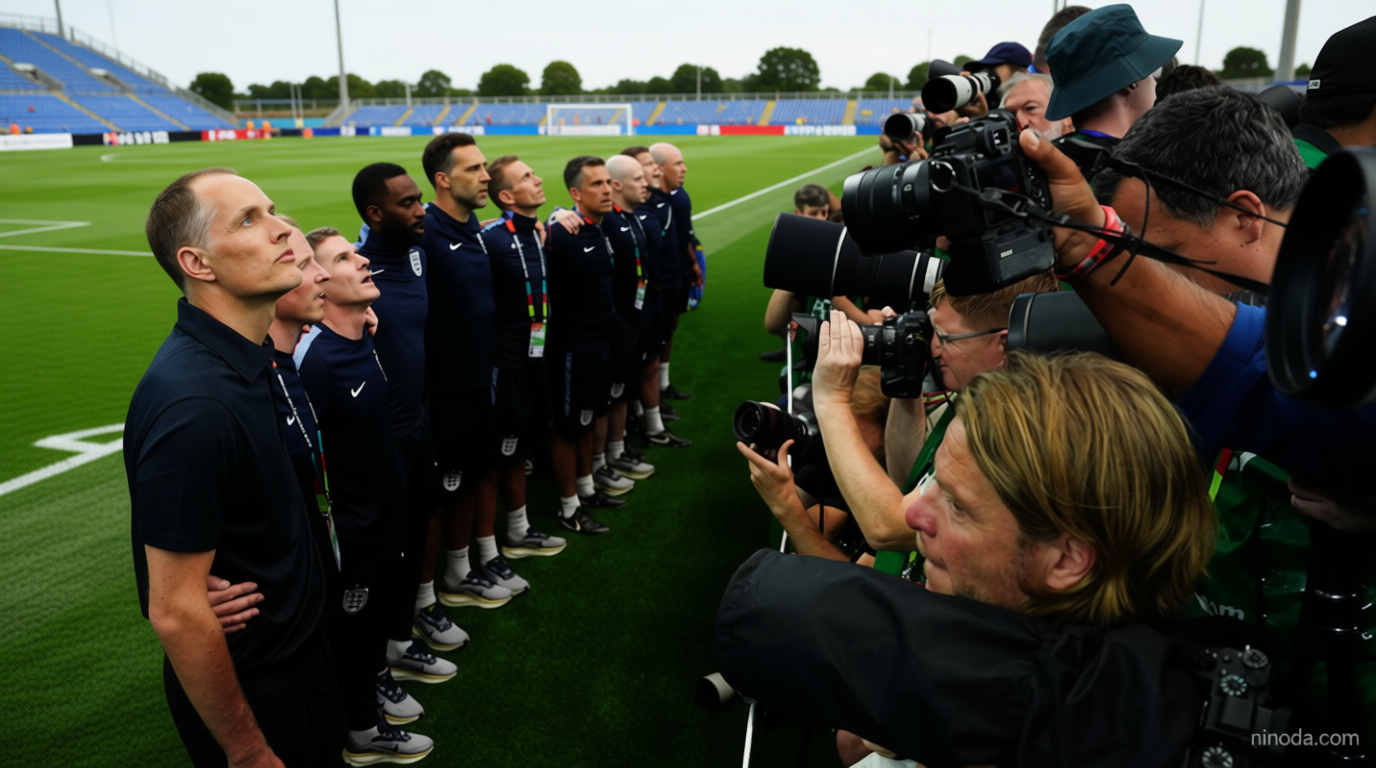
Photographers Relocated After Tuchel’s Request
Ninoda.com – Thomas Tuchel’s persistent complaints about obstructed views during England’s World Cup matches have prompted FIFA to implement a significant change in the positioning of photographers at key moments. During the nation’s 4-2 victory over Croatia in the opening fixture of the tournament, Tuchel expressed frustration that the dense cluster of cameras near the halfway line during the national anthems blocked his ability to observe the players. His request, supported by other coaches and officials, led FIFA to adjust the protocol for photographer placement, ensuring clearer access for tactical oversight in future games.
This shift is part of a broader effort by FIFA to balance the demands of media coverage with the needs of coaching staff. The elevated pitch design of AT&T Stadium, traditionally used for NFL matches, had long posed challenges for teams. With the field raised 1.2 meters, the sidelines were compressed, forcing coaches to stand in front of photographers during anthems. Tuchel’s concerns highlight how even minor adjustments can have a substantial impact on a manager’s ability to monitor players’ movements and make real-time decisions. His influence has now been acknowledged on a global scale, with FIFA acting on his feedback to improve the matchday experience.
Coaches Gain Unobstructed Access
The revised protocol allows photographers to gather in a centralized huddle near the halfway line, effectively creating a dedicated space for media while giving coaches a clearer view of the players. This change is particularly beneficial for managers like Tuchel, who can now observe the squad without being overshadowed by cameras. Previously, coaches were forced to position themselves strategically around the photographers, often sacrificing their ability to react swiftly during critical moments. The new arrangement aims to enhance both the coaching perspective and the visual experience for fans watching live.
“Tonight’s moment was special, yet I was blocked by 50 photographers. I couldn’t see a single player, which spoiled the experience a bit,” Tuchel remarked in a post-match interview.
His words underscore the importance of visibility for coaches, especially in high-stakes encounters. By reorganizing the photographer positions, FIFA has acknowledged the value of tactical insight during national anthems. This move is expected to streamline the coaching process and allow for more focused analysis of player performance, particularly in the early stages of the match when formations and strategies are being tested.
Stadium Adjustments and Initial Testing
The adjustment at AT&T Stadium is the result of FIFA’s collaboration with the Football Association to address logistical challenges. The stadium’s original design, optimized for American football, required modifications to accommodate the football pitch dimensions for World Cup matches. These changes included expanding the field and adjusting the layout, which inadvertently reduced the space available for photographers. FIFA’s trial of this new setup during the Czech Republic vs. South Africa Group A clash in Atlanta provided a glimpse of the potential benefits, though the long-term effectiveness of the policy remains to be seen.
Further refinements are being considered as the tournament progresses. While the centralized photographer position improves visibility for coaches, it may also affect the dynamics of crowd engagement. Fans seated near the halfway line could gain a better view of the action, but the media’s ability to capture diverse angles might be limited. FIFA is now working closely with the Football Association to ensure that the changes are not only practical but also adaptable for other venues. This initiative reflects a growing emphasis on optimizing the experience for all stakeholders, from players to spectators.
England’s 4-2 win over Croatia in their World Cup opener was a dramatic contest that showcased the team’s attacking flair and resilience. The match, held in Atlanta, drew global attention, with Tuchel’s tactical acumen playing a pivotal role in the victory. His coaching team, including lead analyst James Melbourne and assistant Anthony Barry, contributed to the strategic success, ensuring the players were in optimal positions to execute their game plan. The result highlighted the importance of clear sightlines for coaches, as the ability to assess player positioning can significantly influence the outcome of a game.
The World Cup continues to present unique challenges, from venue logistics to the pressures of high-profile matches. As teams adjust to new environments, the need for flexible solutions becomes apparent. Tuchel’s complaints have led to a tangible change, setting a precedent for future adjustments. This decision may also inspire other managers to advocate for similar changes, ensuring that the World Cup remains a platform where tactical decisions can be made without interference. The broader implications of this shift could influence how stadiums are designed for international competitions, prioritizing the needs of both coaches and media.