Why Kim Jong Un never talks about his mother – or her controversial bloodline

Why Kim Jong Un Never Talks About His Mother’s Controversial Bloodline
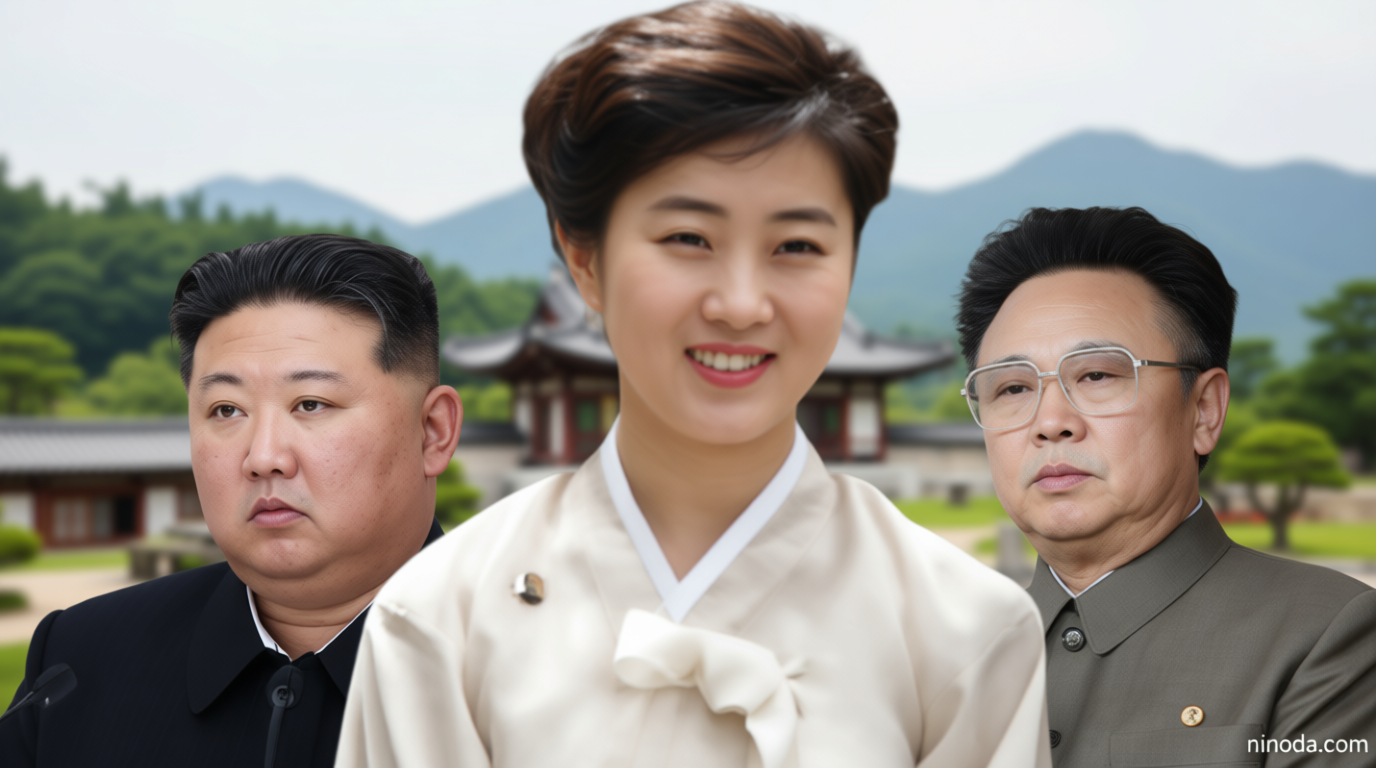
Ninoda.com – North Korea’s leader, Kim Jong Un, has never publicly acknowledged his mother, Ko Yong Hui, in his 15 years of ruling. This deliberate silence raises questions about the significance of her origins, which contrast sharply with the regime’s emphasis on the Paektu bloodline. The myth of this ancestral lineage, tied to the legendary founder Dangun, is central to North Korea’s political identity, yet Ko’s background as a Japanese-born woman challenges the narrative of pure Korean heritage. By omitting her from public discourse, Kim Jong Un’s regime may be reinforcing a carefully curated image of dynastic legitimacy.
The Paektu Bloodline and National Identity
The Paektu bloodline, or “Paektu myth,” has been a cornerstone of North Korean ideology since the 1950s. It positions the Kim family as the natural heirs of Korea’s ancient history, with Kim Il Sung claiming descent from the mythical Dangun, who is said to have founded the Korean nation. This narrative serves to legitimize the Kim dynasty’s rule, fostering a sense of historical continuity and divine right. However, Ko Yong Hui’s Japanese roots introduce an element of controversy, as her lineage suggests a connection to a foreign power during Korea’s colonial era.
Ko Yong Hui’s Background and the Jjaepo Label
Ko Yong Hui was born in Osaka, Japan, in 1952, to a family of Jeju Island origin. As a Zainichi Korean, she was part of the group historically regarded as “jjaepo” — a term implying cultural and social inferiority. This classification, rooted in the songbun system, determined social status based on family background, often privileging those with Korean descent over those with Japanese ties. Ko’s family moved to North Korea in 1962, joining thousands who sought opportunities under the regime’s resettlement policies. Despite her humble beginnings, she became Kim Jong Il’s favored partner, producing three children who later held prominent roles in the government.
Kim Jong Il, who later assumed leadership, reportedly married Kim Young Sook, the daughter of a military official, before meeting Ko Yong Hui. Their relationship, which began in the 1970s, was marked by a blend of personal connection and political strategy. Ko’s artistic talents and perceived natural beauty made her an ideal figure to bolster the Kim family’s image, even as her origins cast doubt on the regime’s claims of pure Korean heritage. Her status as a non-elite mother became a subtle but significant challenge to the myth of the Paektu bloodline, which North Korea uses to reinforce its authority.
“Kim Jong Un became heir in his 20s despite having no achievements, solely because of the Paektu bloodline,” wrote Ryu Hyun-woo, an exiled diplomat, in his 2025 book *Kim Jong Un’s Secret Vault*. This sentiment underscores the regime’s reliance on hereditary privilege over individual merit. Ko Yong Hui’s children, including Kim Jong Un, were raised in Wonsan, a coastal city 210 kilometers from Pyongyang, where they were exposed to a mix of traditional Korean culture and the influence of their mother’s Japanese upbringing. While the family’s public persona emphasized Korean pride, private records hint at the complexity of their heritage.
State media in North Korea has consistently avoided addressing Ko Yong Hui’s identity, leaving her legacy largely unexplored. This omission is not accidental; it aligns with the regime’s broader effort to maintain a cohesive narrative of Kim family supremacy. By framing Kim Jong Un as the unbroken descendant of a revered lineage, the state minimizes the role of his mother’s non-Korean roots in public consciousness. However, the lack of acknowledgment raises questions about the extent to which the regime is willing to compromise its own mythos for political stability.
Legacy and Symbolism in North Korean Propaganda
Ko Yong Hui’s absence from official accounts is a deliberate choice, reflecting the importance of maintaining a symbolic link to the Paektu myth. Her Japanese heritage, while not erased, is strategically downplayed to ensure that the Kim dynasty’s authority remains untarnished. This approach is emblematic of North Korea’s broader use of selective storytelling to shape national identity. For instance, Kim Jong Un’s public appearances often emphasize his connection to the country’s ancient traditions, even as his mother’s background is quietly overshadowed.
Analysts like Kim Hyung-su of the Northern Research Association have pointed out that the Paektu bloodline is not just a historical claim but a political tool. “The idea of the leader being a jjaepo’s son is unimaginable,” he noted, highlighting the regime’s efforts to distance itself from any suggestion of foreign influence. By focusing on Kim Jong Un’s supposed ancestral ties, North Korea reinforces the image of a leader who is both divinely ordained and culturally unassailable. This narrative is particularly vital in a society where the Kim family is seen as the embodiment of national unity and resilience.