When five Wimbledon titles in one weekend changed British tennis

When five Wimbledon titles in one weekend changed British tennis
A Weekend of Triumph and Legacy
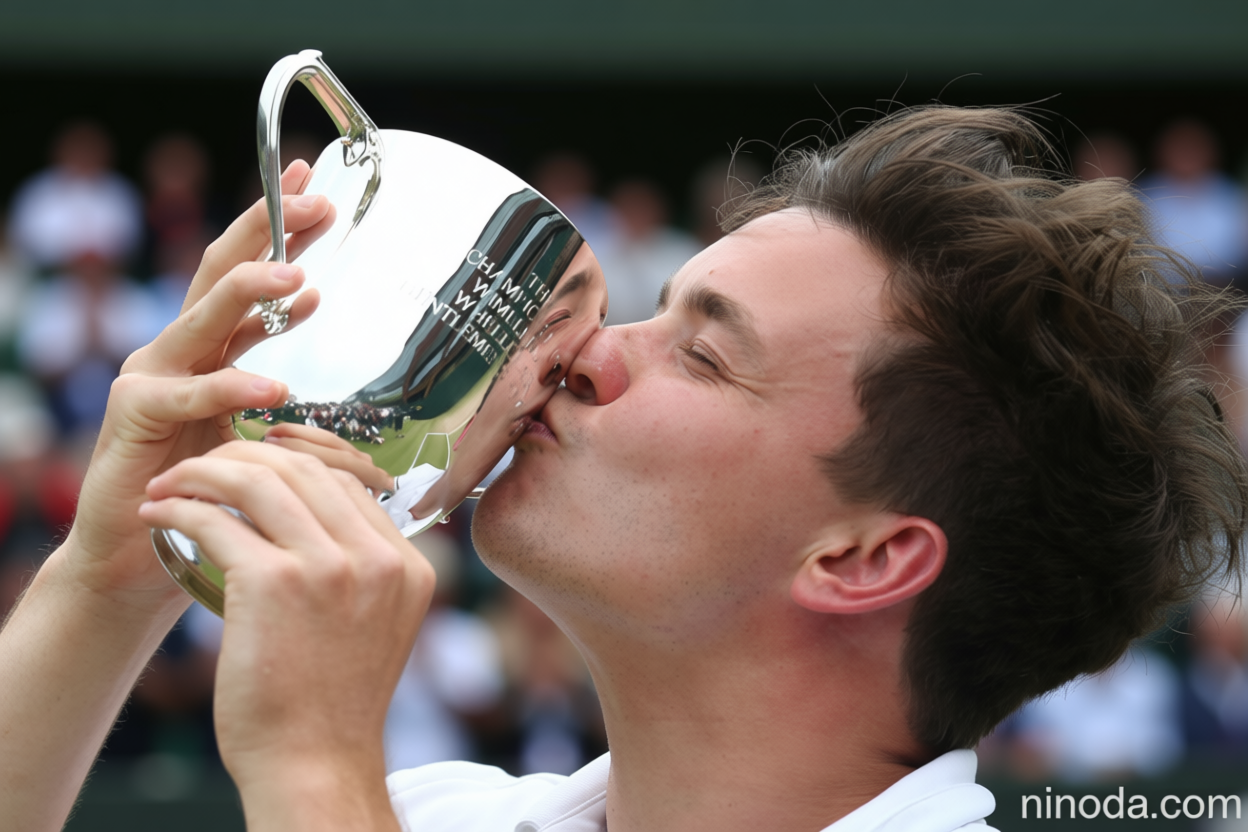
Ninoda.com – In the summer of 2016, Britain celebrated a rare confluence of sporting success. The nation had just voted for Brexit, Leicester City claimed the Premier League title, and England retained the Ashes. Amid this backdrop, Wimbledon became a focal point for British tennis, as five titles were secured by home players in a single weekend. Few will forget the moment Andy Murray embraced the men’s singles trophy, lifting it in celebration after his second Wimbledon title.
Three hours before Murray’s final began on Centre Court, the first wheelchair singles match at the All England Club drew a crowd. Despite the small court’s 276 seats, fans gathered on the adjacent court, peering over the edge to watch Gordon Reid face Sweden’s Stefan Olsson. Reid, who had partnered with Alfie Hewett to win the wheelchair doubles title the day before, recalled the “real positivity and buzz” surrounding British players that week.
“A real positivity and a real buzz around the British players that weekend,” Reid reflected.
His victory came in a decisive 6-1, 6-4, while Jordanne Whiley and Yui Kamiji added to their legacy by capturing their third consecutive Wimbledon women’s wheelchair doubles title. Whiley, now the second Briton to claim the day’s honors, celebrated with family and friends, their joy echoing across the grounds.
Meanwhile, Murray was on the cusp of his own historic moment. Having already won Queen’s and the Italian Open that year, he entered the final as a favorite, a role unfamiliar in an era where Federer, Djokovic, and Nadal often dominated. The semi-finals had seen Federer stunned by Milos Raonic and Djokovic unexpectedly ousted in the third round, while Nadal was sidelined by injury. These developments set the stage for a British triumph that felt inevitable.
Murray’s victory, which lasted two hours and 47 minutes, was a culmination of his resilience. The final score of 6-4, 7-6 (7-3), 7-6 (7-2) underscored his mastery, as he converted key moments with precision. In the aftermath, his emotions were unmistakable. Even his usually stoic coach, Ivan Lendl, was moved to tears, sharing the collective joy of the nation.
“Feel good?” Sue Barker asked during the on-court interview. “Er, yeah,” Murray replied, a response that captured the understated magnitude of his achievement.
As the celebrations continued, Murray’s victory extended beyond the court. Just hours earlier, Lewis Hamilton had clinched the British Grand Prix at Silverstone, adding to the weekend’s national euphoria. Murray’s success also redefined his career, allowing him to finally release the weight of a decades-long wait for a British men’s champion. Now, as Sir Andy, he returns to SW19 in a coaching role, mentoring Jack Draper, who was inspired by the legacy of that unforgettable weekend.
Gordon Reid, having already secured 30 Grand Slam titles, looks back on the 2016 triumph with pride. The wheelchair finals that week, paired with Murray’s victory, marked a turning point for British tennis, blending the achievements of players across different abilities. It was a weekend that transcended sport, symbolizing hope and determination for a nation celebrating its finest hour.