
US Supreme Court upholds birthright citizenship in blow to Trump

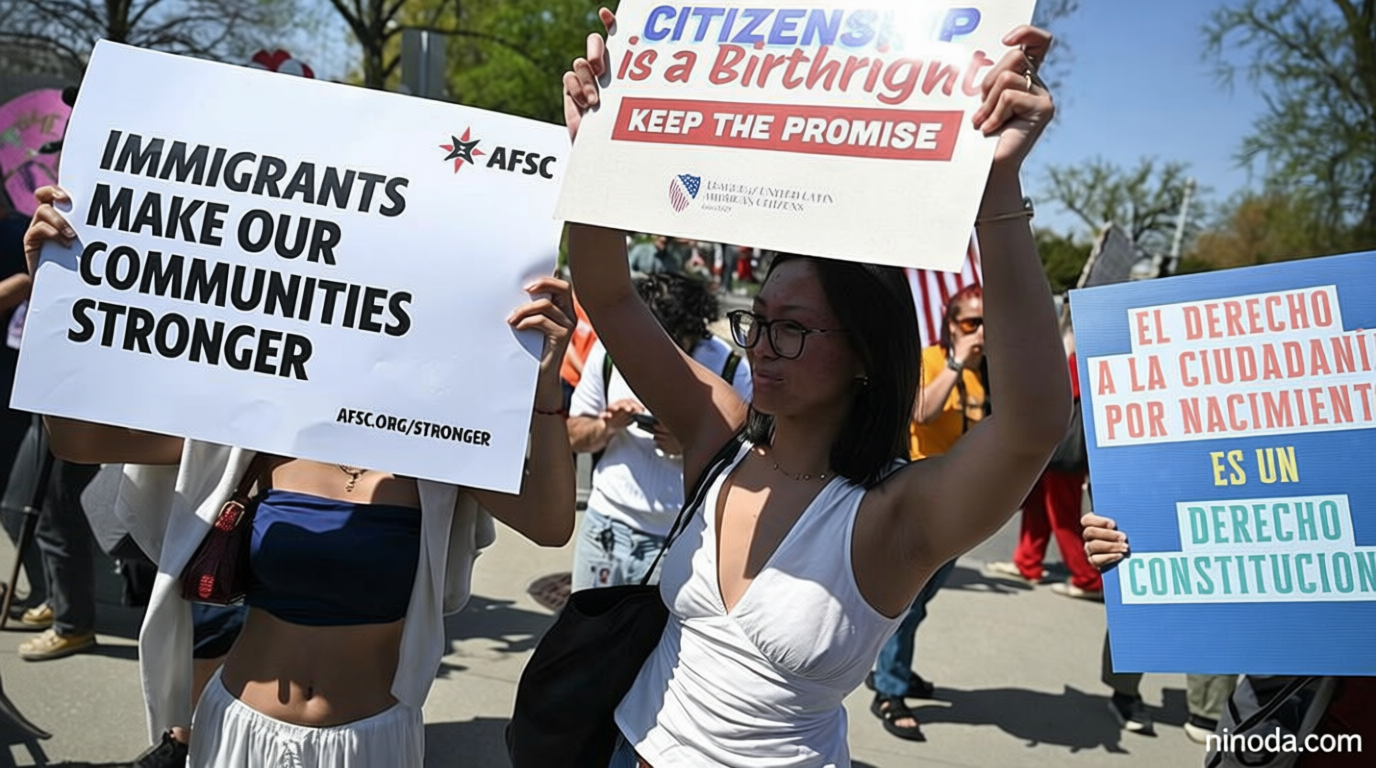
US Supreme Court Affirms Birthright Citizenship, Dealing Blow to Trump’s Immigration Plans
Ninoda.com – In a landmark decision that has reignited debate on immigration policy, the US Supreme Court has affirmed the principle of birthright citizenship, upholding the constitutional right for individuals born in the United States to automatically gain citizenship, regardless of their parents’ legal status. This ruling, delivered in a 6-3 decision, has been widely seen as a significant setback for former President Donald Trump’s efforts to reform the nation’s immigration system. Chief Justice John Roberts, writing for the majority, emphasized that the 14th Amendment guarantees citizenship to “every free-born person in this land,” including children of undocumented immigrants and temporary visitors.
Legal Framework and Historical Context
The 14th Amendment, ratified in 1868, has long been a cornerstone of American citizenship law, ensuring that all individuals born on U.S. soil are granted automatic citizenship. This foundational principle has been consistently upheld by the Supreme Court in past rulings, such as the 1898 case United States v. Wong Kim Ark, which solidified the idea that birthright citizenship applies to anyone born within the country. The current decision reaffirms this legal framework, stating that the term “subject to the jurisdiction thereof” in the amendment encompasses a broad range of circumstances, including those involving undocumented parents.
Trump had sought to redefine birthright citizenship by proposing an executive order that would limit the right to children of undocumented immigrants and temporary visitors. His argument centered on the idea that individuals born in the U.S. to parents who are not legally present should not be automatically granted citizenship. However, the Supreme Court rejected this interpretation, highlighting the historical intent of the amendment to secure civil rights for newly freed slaves and ensure that all persons born in the nation, regardless of origin, are entitled to full participation in its political and social systems.
“Citizenship, then and now, was the right to have rights – to freely participate in our political community,” Roberts wrote, underscoring the enduring significance of the 14th Amendment. “The Framers extended this promise to ‘every free-born person in this land,’ and we keep that promise today.”
Opposition and Dissenting Views
Three justices—Clarence Thomas, Neil Gorsuch, and Samuel Alito—dissented, arguing that the ruling overextends the original meaning of the 14th Amendment. Thomas contended that the amendment was intended to grant citizenship to former enslaved individuals, not to “repurpose” it for modern immigration policies. Alito, meanwhile, criticized the decision as a “serious mistake,” claiming it bestows citizenship on individuals who “arrive with the purpose of giving birth and then return to their home nations.” Gorsuch echoed similar concerns, emphasizing that the ruling creates a “national self-obliteration” by allowing foreign-born parents to pass citizenship to their children without clear legal ties to the United States.
These dissenting opinions reflect a growing divide among legal scholars and policymakers over the interpretation of birthright citizenship. Critics argue that the decision fails to account for the complexities of modern immigration, such as the economic and social implications of granting citizenship to children of undocumented immigrants. Proponents, however, view the ruling as a reaffirmation of constitutional principles and a safeguard against discriminatory policies that could strip millions of Americans of their rights.
Stephen Miller, White House Chief of Staff under Trump, quickly criticized the ruling on social media, calling it “one of the most destructive and outrageous decisions” in the court’s history. He asserted that birthright citizenship should be limited to individuals whose parents are “fully subject to the jurisdiction” of the United States, a stance that aligns with Trump’s broader vision of immigration reform. Despite these criticisms, the decision has been praised by civil rights advocates who see it as a victory for the constitutional guarantee of birthright citizenship.
“Anyone born on American soil, regardless of the legal status of their parents, is born an American citizen,” said Dariely Rodriguez, chief counsel at the Lawyers’ Committee for Civil Rights Under Law. “This decision is a testament to the nation’s resilience in defending its core values and ensuring equal rights for all.”
The ruling has sparked renewed discussions about the role of the Supreme Court in shaping immigration policy. While the decision upholds birthright citizenship, it also leaves room for legislative action, as Trump and his allies continue to push for reforms that could limit this right. Advocates argue that such changes would undermine the nation’s commitment to inclusive citizenship, while opponents warn that they could lead to a erosion of the constitutional rights enshrined in the 14th Amendment. As the debate intensifies, the Supreme Court’s affirmation of birthright citizenship stands as a pivotal moment in the ongoing struggle over immigration and identity in America.