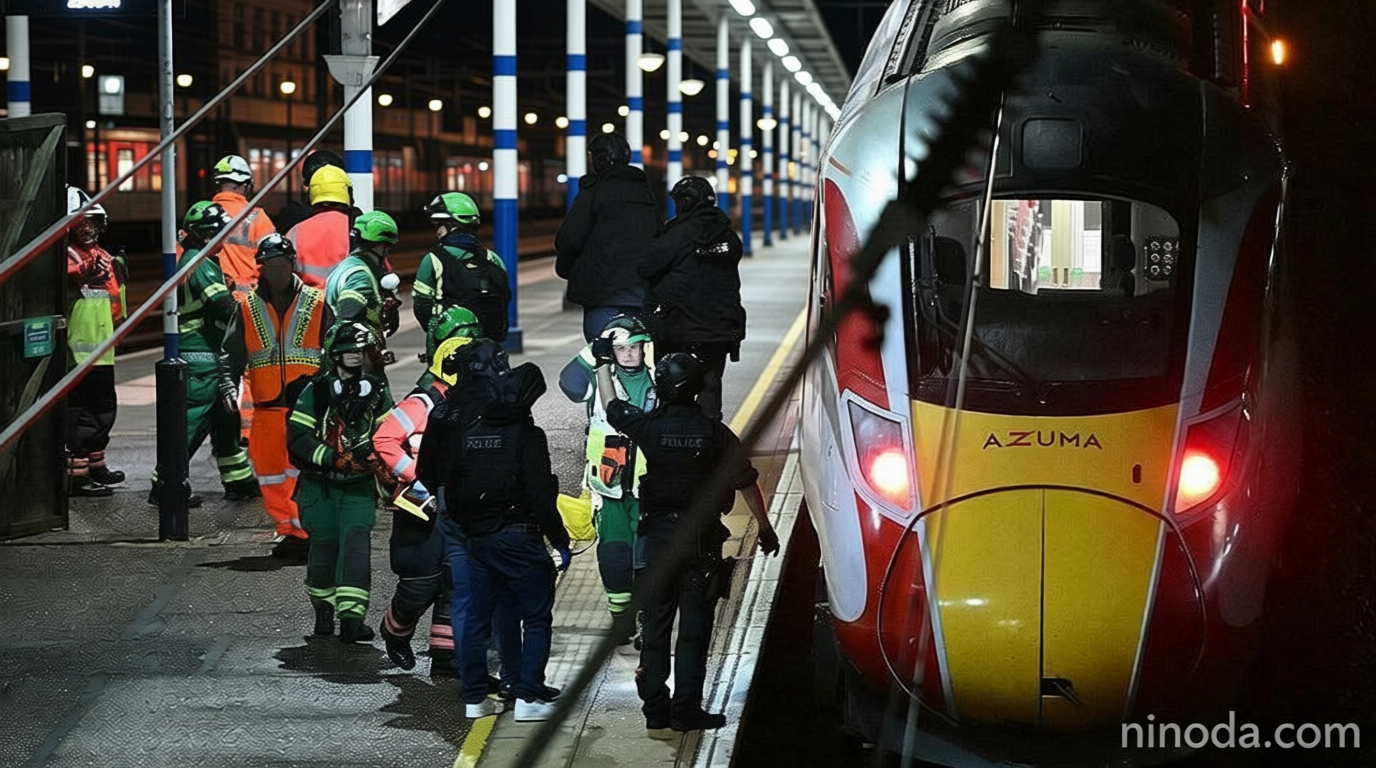
Blast targeting train kills at least 20 in Pakistan


Blast Targeting Military Train Claims At Least 20 Lives in Pakistan
Ninoda.com – A devastating explosion struck a train carrying military personnel in Quetta, Pakistan, on Sunday morning, leaving at least 20 dead and 70 injured. The incident occurred at Chaman Phatak station, a key junction in the western Balochistan region, as the train en route to the capital from a nearby military base. Emergency services reported that the blast sent three carriages and the locomotive off the tracks, with two more overturned in the chaos. The attack has sparked widespread alarm, with authorities assessing the damage and coordinating rescue efforts.
Initial reports from railway officials indicate the explosion caused significant destruction, leaving the train’s carriages in ruins and nearby vehicles partially consumed by flames. A local resident, Naseer Ahmed, described the scene to BBC Urdu, noting that the blast shattered his home windows and left him stunned by the scale of the devastation. “The train was moving, and passengers were inside when the explosion hit,” he said, highlighting the suddenness of the attack. His family, asleep at the time, was jolted awake by the force of the blast, which left the neighborhood in disarray.
“Such cowardly acts of terrorism cannot weaken the resolve of the people of Pakistan,” stated Prime Minister Shehbaz Sharif in a strong condemnation of the attack. He emphasized the nation’s unity in the face of violence, adding that the entire country stands in solidarity with the people of Balochistan during this period of sorrow.
The Balochistan Liberation Army (BLA), a separatist group, has claimed responsibility for the incident, labeling it a suicide bombing. While Pakistani officials have not yet officially confirmed the group’s claim, the attack aligns with the BLA’s pattern of targeting transportation infrastructure to disrupt government operations and draw attention to their grievances. Witnesses at the scene reported that a vehicle loaded with explosives had rammed into the train, triggering the explosion that devastated the area.
Medical teams have declared an emergency at hospitals treating the wounded, as the injured continue to arrive in large numbers. Officials confirmed that three soldiers were among the fatalities, with fears that the death toll may climb further as more victims are assessed. The train was en route to Quetta’s main station before it was set on fire, with its passengers expected to travel onward to Peshawar and then to their hometowns for the Eid holiday. The disruption has raised concerns about the safety of public transportation in the region.
BLA’s History of Attacks on Trains
This is not the first time the BLA has targeted trains in Balochistan. Over the past two years, the Jaffar Express, a major rail line, has been hit multiple times by the group. In March 2025, militants hijacked the train and took several passengers hostage while it was traveling toward Peshawar. These attacks have been part of a broader campaign by the BLA to challenge the federal government’s control over the region, which is rich in mineral resources.
The BLA has accused Pakistan’s federal government of exploiting Balochistan’s natural wealth without adequately sharing the benefits with the local population. The province, which spans nearly 44% of the country’s landmass, borders volatile regions including Iran and Afghanistan and extends along the Arabian Sea coastline. Despite its vast size, Balochistan is home to only about 5% of Pakistan’s total population of over 240 million. The group’s actions have intensified as tensions between separatists and security forces escalate.
Escalating Tensions in Balochistan
Violence between BLA fighters and Pakistani security forces has surged in recent weeks, with clashes erupting in Quetta and across the region. In early February, the conflict claimed the lives of 31 civilians, including both security personnel and local residents. The attacks have further fueled public frustration, with the BLA viewing them as a means to pressure the government into granting greater autonomy or addressing economic disparities.
Local authorities have confirmed that the train was carrying service personnel and their families, who were returning home for Eid. The route from the military encampment to Quetta’s station is a regular one, with the train intended to continue to Peshawar for the holiday. The explosion disrupted this schedule, forcing evacuations and emergency repairs to the rail line. As of now, the exact cause of the blast remains under investigation, though the BLA’s claim of a suicide attack adds urgency to the probe.
Residents in the area have expressed shock at the scale of the destruction, with many describing the blast as a “nightmare” that left their community in turmoil. The carriages that were thrown off the tracks lay in pieces, while nearby structures suffered damage from the shockwave and debris. Social media has been flooded with images of the aftermath, capturing the devastation and the ongoing efforts to rescue survivors. The incident has also drawn international attention, with analysts pointing to the BLA’s strategy of using high-profile targets to amplify their message.
Pakistan’s military and intelligence agencies are working to determine the specifics of the attack, including the identity of the perpetrators and the logistics of the explosion. The BLA’s involvement is suspected, given their history of similar strikes, but officials have not ruled out other groups. The attack has reignited debates about the security situation in Balochistan, a region that has long been a hotspot for separatist movements and cross-border militant activity.
As the investigation continues, the focus remains on the human toll of the incident. Families of the victims are in mourning, with many questioning the safety of travel in the region. The train, which had been carrying military personnel and their loved ones, now symbolizes the ongoing conflict between the state and the BLA. With the holiday season in full swing, the attack has disrupted not only daily routines but also the spirit of celebration for many in Balochistan.
Officials have reiterated the need for a swift response to the attack, vowing to strengthen security measures along the rail line. Meanwhile, the BLA has used the incident to underline their demands, accusing the government of neglecting the province’s interests. The group’s leaders have called for greater representation and resource allocation, framing the attack as a necessary step in their struggle for autonomy. As the nation grapples with the aftermath, the question remains: will this incident mark a turning point in the conflict or further deepen the divide between the people of Balochistan and the federal government?