‘Two weeks after her death I got a call’: Gaza patients face agonising delays for evacuation

‘Two Weeks After Her Death I Got a Call’: Gaza Patients Face Agonising Delays for Evacuation
Amina Abu al-Kas’s Struggle
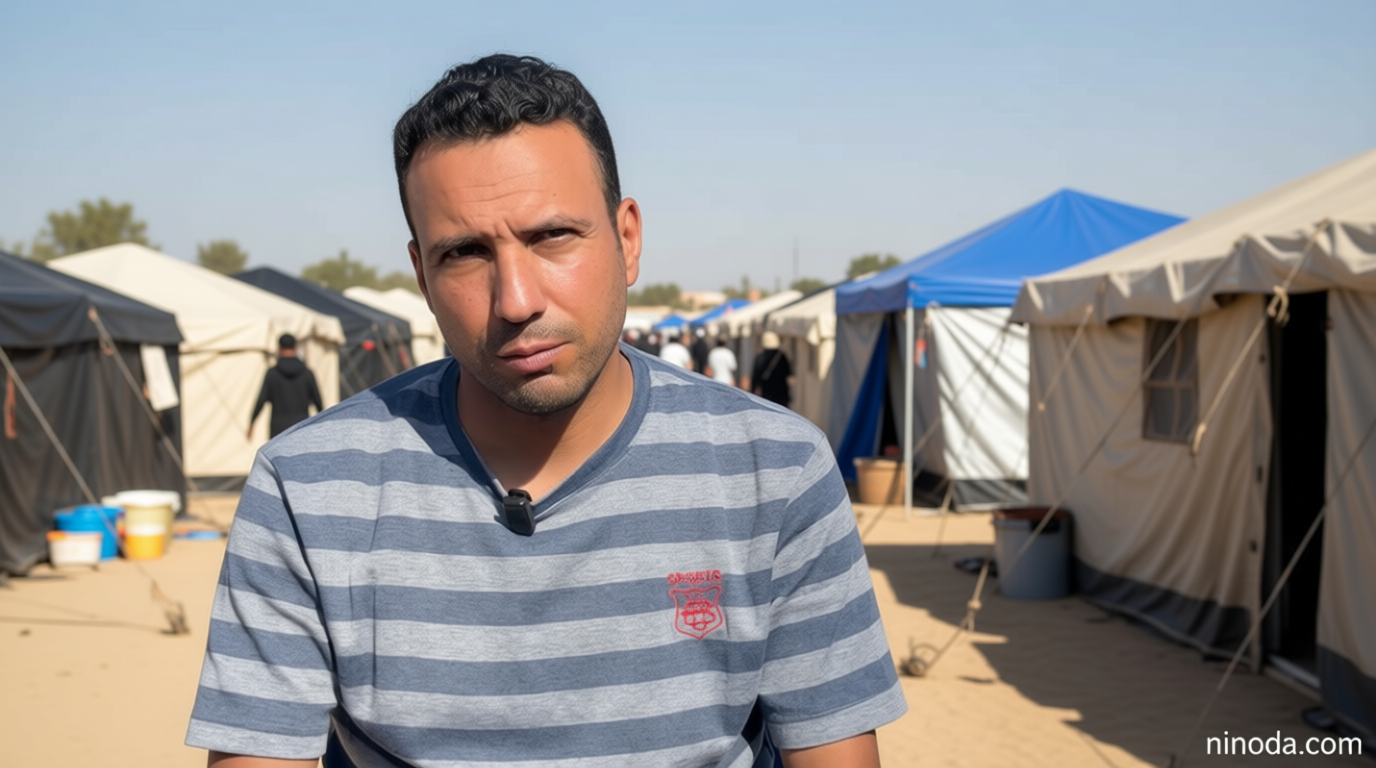
Ninoda.com – Amina Abu al-Kas, the mother of Saber Abu al-Kas, passed away in May after enduring prolonged waits for medical evacuation from Gaza. Her son recalled the moment the medical board approved her departure for treatment abroad as a turning point. “It brought life back into her. She knew there was no treatment in Gaza, so she was happy and excited,” Saber told the BBC.
Amina was battling a severe necrotising infection that had spread to her skull. Gaza doctors confirmed they lacked the necessary medications and therapies to treat her condition. Saber described her suffering as relentless. “My mother couldn’t sleep day or night; she stayed awake, crying out from the pain. Painkillers caused stomach ulcers and inflammation, and the doctors banned her from taking them.”
Evacuation Process and Delays
After securing the medical referral, Saber’s family waited for confirmation that Amina had passed security clearances and was accepted by a foreign country for treatment. Both steps were essential to exit Gaza. “We knew that at any moment God might take her. And we also knew that at any moment a miracle might happen, that we might get a call saying, ‘Get your bags ready and prepare to travel through the crossing,'” he shared.
Two weeks after her death, Saber received a call from the hospital stating her paperwork was finalized. The Gaza health ministry, which is controlled by Hamas, reports that 300 Palestinians have died while awaiting medical evacuations since the US-brokered ceasefire with Israel began in October. These figures align with those cited by the World Health Organization (WHO), which facilitates patient transfers through Israeli-controlled border crossings with Egypt and Israel.
Challenges in the Evacuation System
Thousands of others—estimated at 15,000 by the ministry—are still waiting for treatment abroad, some for war injuries and others for chronic illnesses like cancer. The list of evacuees is ever-changing, as patients’ conditions and decisions shift. The WHO notes that 1,977 people have left Gaza for medical care since the ceasefire began over eight months ago.
Dr. Reinhilde Van de Weerdt, WHO Representative for the occupied Palestinian territory, explained that the process is fraught with complexity. “Many recipient countries are quite specific in the type of patients they can support—for example, some only want children; others only want patients for shorter treatments.” She also highlighted the visa requirements for both patients and their families, as well as the need for security checks by Israel, Egypt/Jordan, and the host nation.
Logistical Constraints
Gaza’s acting undersecretary for health, Maher Shamia, noted that the main obstacles are the lengthy security screening and Israeli restrictions on the number of departures. Patients are permitted to leave via the Rafah crossing with Egypt only three days a week, and through the Kerem Shalom crossing with Israel just one day a week. The Israeli defence ministry’s Cogat unit stated that departures depend on official requests from receiving countries and completed security checks.
Despite the challenges, the “vast majority” of requests submitted since the start of 2025 have been approved, according to Cogat. However, the pace remains slow, and the WHO warns that it could take years to evacuate all those in need. In Gaza City’s al-Shifa hospital, amidst the rubble, protesters gathered to voice their frustration with the delays. Nidal al-Arir wailed as he joined the crowd, symbolizing the growing despair of families waiting for lifelines.