Watch: Does Trump’s Fifa intervention undermine football’s integrity?

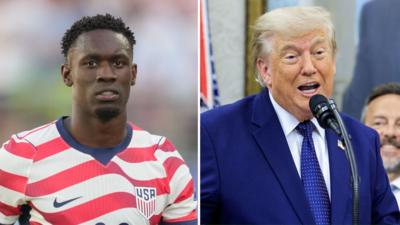
Watch: Does Trump’s Fifa intervention undermine football’s integrity?
FIFA’s Decision Sparks Debate Over Football Integrity
Ninoda.com – Watch: Does Trump’s Fifa intervention undermine football’s integrity? The recent suspension of USA striker Folarin Balogun by FIFA has sparked widespread debate about the integrity of football’s governing body. Balogun, a 27-year-old player known for his performances in international matches, was initially banned for one match after being found guilty of a misconduct charge during a crucial World Cup qualifier. However, FIFA’s decision to extend his suspension to 12 months has raised eyebrows, with critics arguing that political influence may have played a role in the ruling. This controversy has intensified as President Donald Trump publicly intervened, claiming the decision was necessary to align with the broader narrative of the tournament.
“I asked FIFA to revisit the decision regarding Folarin Balogun’s ban,” stated President Donald Trump on Monday. This intervention, he explained, was aimed at ensuring the ruling reflected the importance of the World Cup and the need for fairness in high-stakes matches. Trump’s remarks have ignited a discussion about the extent to which political figures can shape decisions within FIFA, a body traditionally seen as a bastion of sports autonomy.
The Context of Balogun’s Suspension
Folarin Balogun’s case began with a disciplinary hearing following an incident during a match between the United States and a rival nation in the lead-up to the World Cup. The initial one-match ban was imposed due to his alleged failure to report a financial transaction, a charge that sparked immediate controversy among fans and analysts. Critics questioned whether the evidence was sufficient to justify such a penalty, arguing that the incident appeared minor and the punishment disproportionate. However, FIFA’s extension of the suspension to 12 months has added another layer to the debate, with some suggesting that the decision was influenced by external pressures, including the political climate surrounding the tournament.
The World Cup, a global spectacle that draws billions of viewers, often becomes a focal point for political narratives. Balogun’s suspension, which could affect his participation in key matches, has been framed by some as a strategic move to ensure his team’s competitiveness. Supporters of the decision argue that it reflects FIFA’s commitment to upholding strict standards of conduct, even in politically sensitive moments. Meanwhile, opponents contend that the extension of the ban prioritizes political alignment over fair judgment, potentially eroding public trust in the organization’s impartiality.
Implications for FIFA’s Independence
The controversy surrounding Balogun’s suspension has brought renewed scrutiny to FIFA’s internal processes. With Trump’s public intervention, questions have been raised about whether the organization’s disciplinary decisions are now subject to external influence. FIFA, which has faced criticism in the past for its handling of corruption scandals, is now under pressure to demonstrate transparency and fairness in its rulings. The case has highlighted the tension between sports governance and political agendas, with some fearing that the decision could set a precedent for future interventions.
Analysts have pointed out that Trump’s involvement in the decision may not only affect Balogun but also reshape FIFA’s approach to discipline. The White House’s close relationship with FIFA, particularly during Trump’s tenure as a major sponsor of the World Cup, has been cited as a potential factor in the suspension’s extension. While FIFA officials have defended the ruling as a matter of sportsmanship, the timing and political backdrop of the decision have fueled accusations of bias. This situation underscores the importance of maintaining a clear separation between sports administration and political influence, especially in high-profile events like the World Cup.
“FIFA must remain independent to preserve the integrity of the game,” said a prominent sports journalist. “When political leaders like Trump start questioning disciplinary decisions, it sends a message that sports can be manipulated for broader strategic goals.”
Public Reactions and the Role of Media
The public reaction to FIFA’s decision has been divided, with social media platforms erupting into debates about the fairness of the ruling. Supporters of the suspension argue that it reinforces FIFA’s authority to penalize misconduct, while critics see it as an example of political interference. The BBC’s Daniel Bush has covered the issue extensively, noting that the decision has become a symbol of the broader challenges facing FIFA in balancing governance with political considerations.
Media outlets have played a crucial role in amplifying the controversy, with some highlighting the potential consequences for the World Cup’s credibility. The case has been used to illustrate how high-profile decisions can be scrutinized for their political motivations, especially in an era where sports events are often tied to national interests. As the debate continues, FIFA faces the challenge of addressing concerns about its independence while maintaining the confidence of its stakeholders, including players, teams, and fans worldwide.
“Football is a game of integrity, but when politics enters the equation, it can distort the very principles we value,” remarked a former FIFA official in a recent interview. The statement reflects growing unease among those who believe FIFA’s decisions are being influenced by external forces, particularly in politically charged environments.
Watch: Does Trump’s Fifa intervention undermine football’s integrity? The ongoing discourse around Balogun’s suspension serves as a reminder of the delicate balance FIFA must maintain. As the World Cup approaches, the case has become a focal point for discussions about the future of sports governance. Whether this intervention marks a shift in FIFA’s approach or a temporary anomaly, its impact on the organization’s reputation and the integrity of the game remains a topic of intense debate. For now, the focus is on how FIFA will navigate the scrutiny and reaffirm its commitment to fair play in the face of political pressure.