Canada makes largest defence procurement deal in its history, citing ‘dangerous and divided world’

Canada’s Historic Defense Contract Targets Arctic Security Amid Global Tensions
Ninoda.com – Prime Minister Mark Carney has finalized a landmark defense agreement with a German firm, marking Canada’s most substantial military procurement to date. The deal involves constructing a new submarine fleet of 12 vessels, set to replace the nation’s aging Victoria-class submarines, which have been in service since 1998. This move aligns with Carney’s broader strategy to elevate defense spending and strengthen ties with European allies, particularly as NATO members face pressure to increase military investment.
The announcement precedes Carney’s attendance at a NATO summit in Turkey, where leaders are expected to discuss the need for greater defense commitments. Since taking office, Carney has pushed Canada’s defense budget to 2% of GDP, aiming to reach 5% by 2035. The government highlighted that only 25% of current submarines are operational, citing concerns over Arctic ice melt and potential vulnerabilities in the region.
A Strategic Shift Toward European Partnerships
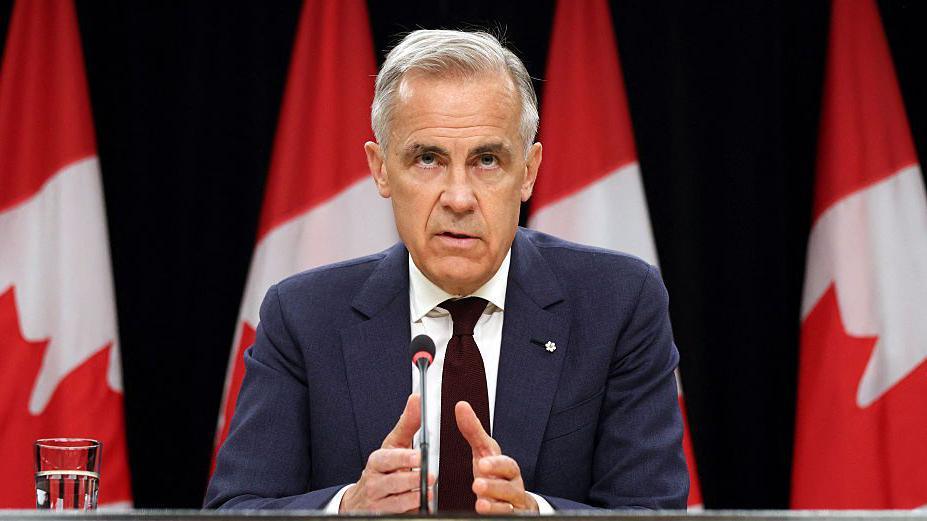
Carney emphasized the importance of the deal during a speech in Halifax, Nova Scotia, stating that it reflects Canada’s dedication to defending its interests and enhancing maritime sovereignty. “This project is about much more than acquiring submarines,” he remarked. “It builds Canadian industrial capacity.” The choice of TKMS, a global leader in conventional submarine manufacturing, signals a shift toward strategic partnerships with Europe, especially as trade tensions with the United States intensify.
“In a more dangerous and divided world, Canada must be prepared to defend our interests, protect our citizens, build our economy, and secure our future,” Carney declared. “To that end, we are making the largest defense procurement in our nation’s history with speed, ambition, and discipline.”
TKMS, collaborating with Norway, presented a bid emphasizing NATO alignment and shared logistical benefits. This contrasts with Hanwha Ocean of South Korea, which also competed for the contract. The government praised the new submarines for their under-ice capabilities, framing them as essential for safeguarding Canada’s extensive coastline.
Expert Insights on Enhanced Capabilities
David Perry, president of the Canadian Global Affairs Institute, noted the deal provides Carney with “significant credibility” in advancing defense goals. “He committed to move the project on an expedited schedule—astonishingly fast by Canadian standards—and appears to have delivered,” Perry observed. The new fleet is projected to ensure three submarines are consistently operational, a marked improvement over the current one occasionally in service.
While the total cost of the contract remains undisclosed, the project underscores Canada’s focus on long-term security and economic collaboration. As the country prepares for potential geopolitical shifts, the submarine acquisition is seen as a pivotal step in fortifying its strategic position in a rapidly changing global landscape.
NATO’s Defense Spending Push
US President Donald Trump has urged 32 NATO members to boost defense spending, a challenge Canada is addressing through this historic procurement. The government initiated the process in July 2024, with Carney vowing to select a contractor by June. This effort not only reflects military modernization but also positions Canada to meet its ambitious spending targets while expanding its maritime capabilities.