‘Learn how to lose’ – tempers flare in Wimbledon mixed doubles

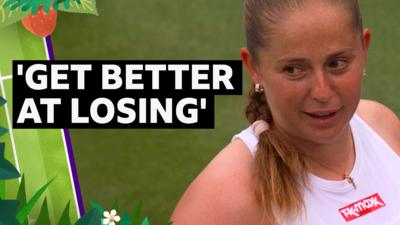
Tempers Flare in Wimbledon Mixed Doubs as Players Clash Over Slow Play
Ninoda.com – As the Wimbledon tennis tournament reached its electrifying stages, the phrase learn how to lose became a recurring theme among players, spectators, and analysts alike. The exasperated remark, often exchanged in heated moments on the court, encapsulated the frustration of competitors during a contentious mixed doubles encounter that sparked a dramatic post-match altercation. The incident, which unfolded in the semi-finals, not only highlighted the emotional intensity of high-stakes competition but also raised questions about how players navigate the pressures of setbacks and the rules governing their performance.
The Match That Sparked Controversy
The mixed doubles semi-final between Jelena Ostapenko and Marcelo Arevalo was a nail-biting affair, with the pair securing their progression to the final without major hiccups. Ostapenko, the 2019 French Open champion, and Arevalo, the 2022 US Open finalist, showcased their composure and skill, dominating their opponents in straight sets. However, the match’s conclusion was marred by a heated argument, centered on a disputed time penalty. The umpire’s decision to call a final time violation against Laura Siegemund and Edouard Roger-Vasselin ignited a clash of tempers, leaving the players to reflect on how to lose gracefully—or not at all—in the spotlight of the Grand Slam.
The Disputed Time Penalty and Player Reactions
During the final set, a critical time violation was called, resulting in a controversial stoppage that left Siegemund visibly agitated. The decision, which the French player believed was unjust, prompted her to exit the court abruptly, accusing her partner Roger-Vasselin of unnecessarily prolonging play. Ostapenko, who had been playing alongside Roger-Vasselin, became the focal point of the argument, with Siegemund claiming the Estonian player was responsible for the delay. The confrontation, captured in real-time by the BBC, underscored the tension between professional conduct and the high-stakes environment of Wimbledon, where every point can feel like a lesson in learn how to lose.
While the time penalty was a technical ruling, it amplified the emotional dynamics of the match. Ostapenko’s partnership with Roger-Vasselin had been a steady force throughout the tournament, but the incident revealed the fragility of their synergy under pressure. Siegemund, known for her tenacity on the court, expressed her dissatisfaction with the umpire’s decision, arguing that the penalty disrupted the flow of the game. Meanwhile, Roger-Vasselin defended his actions, emphasizing the importance of maintaining composure during critical moments. The exchange highlighted how players must learn how to lose not just in terms of points, but in managing their emotions and handling the scrutiny that comes with a Grand Slam.
The incident also brought attention to the broader issue of time penalties in tennis, a rule designed to ensure fair play but often perceived as a source of tension. Siegemund’s frustration mirrored the sentiments of many players who have faced similar disputes, raising the question of how to balance the need for efficiency with the human element of competition. Analysts noted that the moment was emblematic of the high-pressure environment at Wimbledon, where even minor infractions can lead to significant emotional reactions. As the tournament progresses, the lesson from this clash may serve as a reminder of how to lose with dignity, while also keeping the game’s spirit intact.
In the aftermath of the altercation, the focus shifted from the match itself to the players’ ability to handle adversity. Ostapenko and Arevalo, though victorious, had to confront the aftermath of their opponent’s frustration. The episode became a talking point among fans, with some praising the players for their resilience and others critiquing the way the situation unfolded. For Siegemund and Roger-Vasselin, the loss was a harsh but valuable lesson in learn how to lose, as they adjusted their strategies for the next round. The tournament, known for its tradition and precision, now carried an added layer of drama, where the line between competition and conflict can blur in the heat of the moment.