Can Scotland learn from history-making Norway?

Can Scotland learn from history-making Norway?
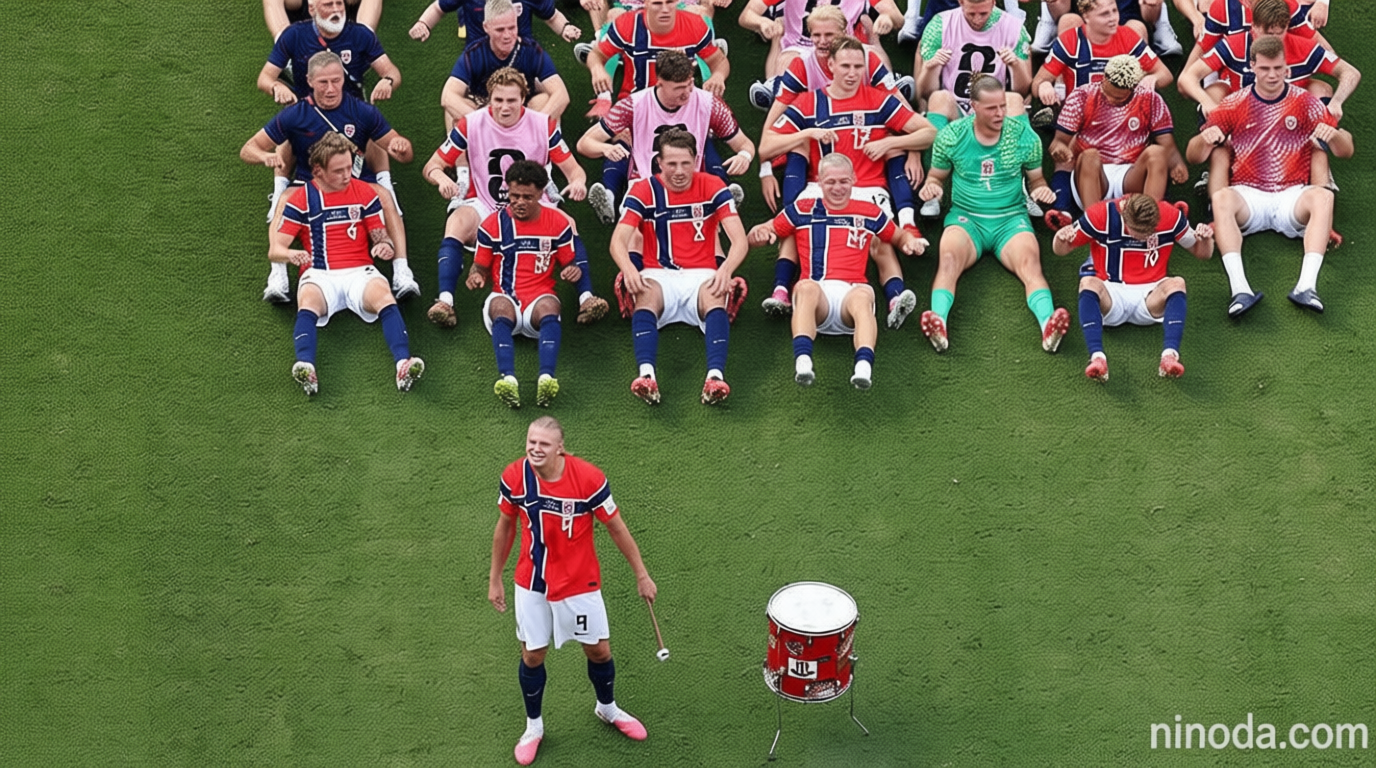
Ninoda.com – Can Scotland learn from history? Norway’s recent World Cup triumph offers a compelling case study for the nation’s footballing ambitions. In a dramatic turn of events, the Scandinavian team advanced past Brazil in the round of 16, a historic achievement that has rekindled hopes for Scotland, whose own team faltered in the group stage. This underdog victory, fueled by a blend of strategic coaching, infrastructure investment, and youth development, highlights the importance of sustained effort in football. Norway’s success, marked by a 92nd-minute goal from Erling Haaland, not only secured their place in the quarter-finals but also set a benchmark for countries aiming to rebuild their national identities. As Scotland reflects on its recent setbacks, the question remains: can they emulate Norway’s resurgence and turn their own history into a foundation for future glory?
Norway’s Strategic Football Revolution
Norway’s breakthrough in global football is rooted in a long-term strategy that prioritized development over immediate results. Under the guidance of coach Stale Solbakken, the team assembled a squad featuring 17 players who had competed in Europe’s top four leagues—Premier League, Bundesliga, La Liga, and Serie A—demonstrating a commitment to nurturing talent from the grassroots. This approach was supported by the National Team School (NTS), established in 2013 to provide elite training for young players. The investment paid off, as the country’s football infrastructure saw significant upgrades, including the creation of 539 new artificial pitches and the renovation of 586 existing ones between 2016 and 2025. These facilities, combined with a focus on technical skill and tactical intelligence, transformed Norway into a formidable force on the world stage.
The success of Norway’s system is not just about individual brilliance. Players like Martin Odegaard, a product of the NTS, have become household names, showcasing how a well-structured development program can produce world-class talent. The team’s ability to adapt and innovate, particularly in their attacking play and set-piece execution, set them apart. Their World Cup campaign, which saw a remarkable 16-goal haul from Haaland, exemplifies the power of a cohesive strategy. Scotland, with a population of 5.5 million—nearly identical to Norway’s—could draw valuable insights from this model, especially in addressing the gaps that have plagued their own progress.
Scotland’s Stagnation and the Cost of Inaction
Scotland’s performance in the World Cup contrasted sharply with Norway’s momentum. Despite their historic population similarity, the Scots failed to break through the group stage, leaving critics to question the effectiveness of their current approach. The decision to close performance schools in November 2022, a move that disrupted the pipeline of young talent, has been widely cited as a contributing factor. Former England striker Ian Wright, reflecting on Scotland’s plight, remarked,
“Somebody is letting down Scotland on a massive scale.”
His words underscore the urgency for change, as the SFA faces scrutiny over its long-term vision. While Norway’s investment in youth development led to tangible results, Scotland’s recent lack of continuity has raised concerns about its ability to compete with nations that prioritize football as a national priority.
The gap between Norway’s success and Scotland’s stagnation is stark. Norway’s national team has produced players who now thrive in top European leagues, while Scotland has struggled to maintain consistent development. The lack of infrastructure, combined with a decline in international competitiveness, has left the nation at a crossroads. Norway’s 2018 Euros qualification, followed by their World Cup breakthrough, demonstrates the rewards of patience and strategic planning. Scotland’s challenge lies in replicating this progress without the same level of investment. The contrast is not just in results, but in the broader cultural and systemic support that has defined Norway’s journey.
Haaland’s Leadership and the Legacy of the NTS
Erling Haaland’s role in Norway’s success cannot be overstated. As the team’s standout performer, his 16 goals in qualifying matches showcased the effectiveness of Norway’s talent development system. Haaland, a product of the National Team School, exemplifies how a robust youth program can produce world-class athletes. His leadership on the field, both in terms of goal-scoring and positioning, was a key factor in Norway’s confidence and cohesion during the tournament. The NTS, which has graduated players like Billy Gilmour and Nathan Patterson, now faces the challenge of maintaining its success. Scotland, with a similar focus on emerging talent, could benefit from reinforcing such programs to ensure a steady pipeline of skilled players.
However, Haaland’s individual brilliance also highlights the importance of collective effort. Norway’s success is a team achievement, built on the foundations of systematic coaching and cultural support. The team’s ability to adapt to high-pressure situations, such as the late goal against Brazil, reflects the training they’ve received. Scotland, on the other hand, has seen a decline in such adaptability, with critics pointing to inconsistent performances and a lack of cohesive strategy. The question remains: will Scotland recognize the value of Haaland’s model and invest in similar development pathways to ensure long-term success?
Lessons from the Past: A Blueprint for Revival
Norway’s journey from a mid-tier nation to a World Cup contender serves as a blueprint for Scotland to follow. The Scandinavian country’s early identification of stagnation in their football culture, and their decisive action to address it, offer a clear roadmap. By investing in infrastructure, such as modern training facilities and grassroots programs, Norway created an environment where talent could flourish. Scotland’s recent struggles, particularly in the group stage, underscore the consequences of underinvestment. The country’s failure to maintain momentum highlights the need for a more proactive approach, one that aligns with Norway’s historical emphasis on development over short-term gains.
Comparing the two nations’ strategies reveals key differences in mindset and execution. Norway’s success in the World Cup is a testament to their ability to blend tactical innovation with long-term planning. Scotland, however, has yet to replicate this synergy. The contrast between their fortunes underscores the importance of consistency in football policy. As Norway prepares for the next round, the spotlight turns to Scotland, which must now ask itself: can they learn from history and turn their own narrative into one of progress, or will they continue to fall behind?
Looking to the Future: A Call for Reform
The road to footballing success for Scotland requires more than a single victory—it demands systemic change. Norway’s World Cup run has shown that a well-structured development program, combined with strategic investment, can yield remarkable results. For Scotland to follow suit, they must recommit to fostering talent from an early age. The closure of performance schools in 2022 was a setback, but it also presents an opportunity to rebuild with a more modern, inclusive framework. By embracing innovative training methods and prioritizing youth engagement, Scotland can cultivate a new generation of players capable of challenging the established order.
Moreover, Scotland must learn from Norway’s approach to competition. The Scandinavian nation’s focus on technical skill and teamwork has enabled them to thrive in high-stakes matches. Scotland, with its rich footballing history, has the potential to mirror this trajectory. The question is no longer whether they can learn from history, but how quickly they can implement the changes necessary to turn potential into performance. As the World Cup continues, the lessons from Norway’s triumph will be critical in shaping Scotland’s future on the global stage.