Borrowed shoes, no Golden Boot – the story of the World Cup’s greatest scorer

Borrowed Shoes, No Golden Boot: The Story of the World Cup’s Greatest Scorer
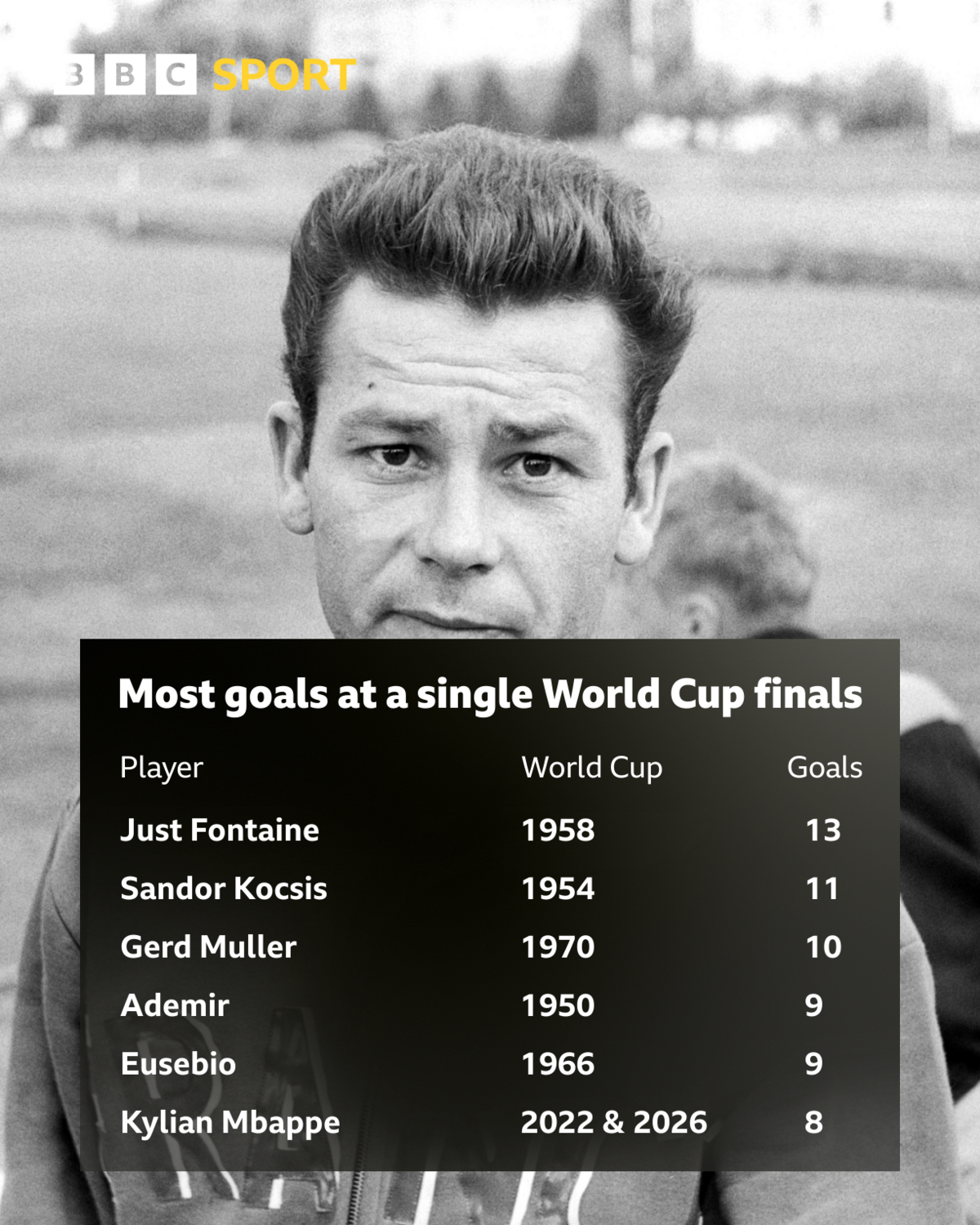
Ninoda.com – When discussing the most iconic World Cup goal scorers, the name Just Fontaine is often a footnote. Yet, his 13 goals in the 1958 tournament remain unmatched. The phrase “borrowed shoes, no Golden Boot” encapsulates his extraordinary achievement, highlighting how he broke records despite not wearing his own gear or winning the tournament’s top scorer award. His journey to this milestone was filled with challenges, but his determination turned adversity into legend.
The Borrowed Boots Story
Fontaine’s story began with an unexpected twist. During a pre-tournament warm-up match, teammate Rene Bliard suffered a minor injury, leaving Fontaine to step in as a last-minute replacement. However, his own boots were damaged in a training session, and he had no spare. Forced to borrow a pair from teammate Stephane Bruey, Fontaine faced skepticism from his peers and even the media. As sports historian Philip Barker observed, “Imagine something like that now—so very different from what we have today.” Despite the uncertainty, he carried his confidence into the tournament, proving that talent often shines brightest when the odds are against it.
“Only two journalists followed the team around. Our team bosses were so convinced we would be knocked out that they only gave us three shirts each, so we were totally free from pressure.”
Fontaine’s physical condition added to the narrative. He had undergone a meniscus operation earlier in the season, which left him questioning his readiness for the World Cup. Yet, he played every match, scoring in five of France’s six group games. His performance was a blend of natural talent and sheer will, as he outshone the tournament’s favorites to etch his name into history. The borrowed shoes became a symbol of his resourcefulness, while the lack of a Golden Boot trophy underscored the era’s different approach to recognizing individual achievements.
The Legacy of a Prolific Striker
Before the 1958 World Cup, Fontaine was already a standout in French football. He earned five caps for Les Bleus and was a pivotal figure at OGC Nice, where he helped secure the 1956-57 and 1957-58 league titles. His ability to score consistently, combined with his technical skill, made him a key player in the French league. However, his World Cup heroics overshadowed these achievements, as his 13 goals in six matches cemented his place in history.
Fontaine’s career extended beyond the 1958 tournament. In the following season, he led Reims to the European Cup final, scoring 10 goals in the 1958-59 campaign. His record-breaking performance in the World Cup was matched by his success in club football, where he became a six-time Ligue 1 champion. Yet, his name remains less recognized than that of contemporaries like Pele or later legends like Messi, despite his historic feat. This highlights the challenges of maintaining relevance in an era of global media and social recognition.
His legacy is not just about numbers but also about how he defied expectations. Even in the absence of a Golden Boot, Fontaine’s impact on the tournament was undeniable. His story is a reminder that football’s greatest moments often emerge from the most unexpected circumstances. As teammate Raymond Kopa once remarked, “Fontaine shared a room with Kopa on international duty, this legendary player for Real Madrid. They spoke about their understanding of the game.”
Modern-Day Pursuers of the Record
Over six decades later, the record Fontaine set still serves as a benchmark. In the 2026 World Cup, strikers like Lionel Messi, Kylian Mbappe, and Harry Kane are aiming to surpass his feat. Since 1970, only three players have matched or exceeded his six-goal tally, with Mbappe and Messi leading the charge at eight goals each. The expanded 48-team format gives strikers more opportunities to score, as teams now play eight matches in the knockout stages. However, even with these advantages, modern players struggle to replicate Fontaine’s consistency.
Fontaine’s 13 goals in six games remain a staggering statistic. For context, in the 2022 World Cup, the top scorer managed just seven goals, underscoring the difficulty of his achievement. His record is not just about volume but also about timing—scoring in consecutive matches and overcoming early setbacks. This makes his story even more remarkable, as it combines resilience with brilliance. While current strikers have access to better training facilities and technology, Fontaine’s story reminds us that talent and determination can overcome any obstacle.
Despite his lack of a Golden Boot, Fontaine’s legacy is now celebrated globally. His record is often cited in discussions about the most prolific World Cup scorers, even as modern players like Erling Haaland and Vinicius Junior attempt to break it. The phrase “borrowed shoes, no Golden Boot” has become a cultural reference, symbolizing how greatness can thrive under pressure. As the World Cup continues to evolve, Fontaine’s story remains a testament to the enduring power of underdog narratives and the true spirit of football.