Is tracking your food purchases good for your health?

Is tracking your food purchases good for your health?
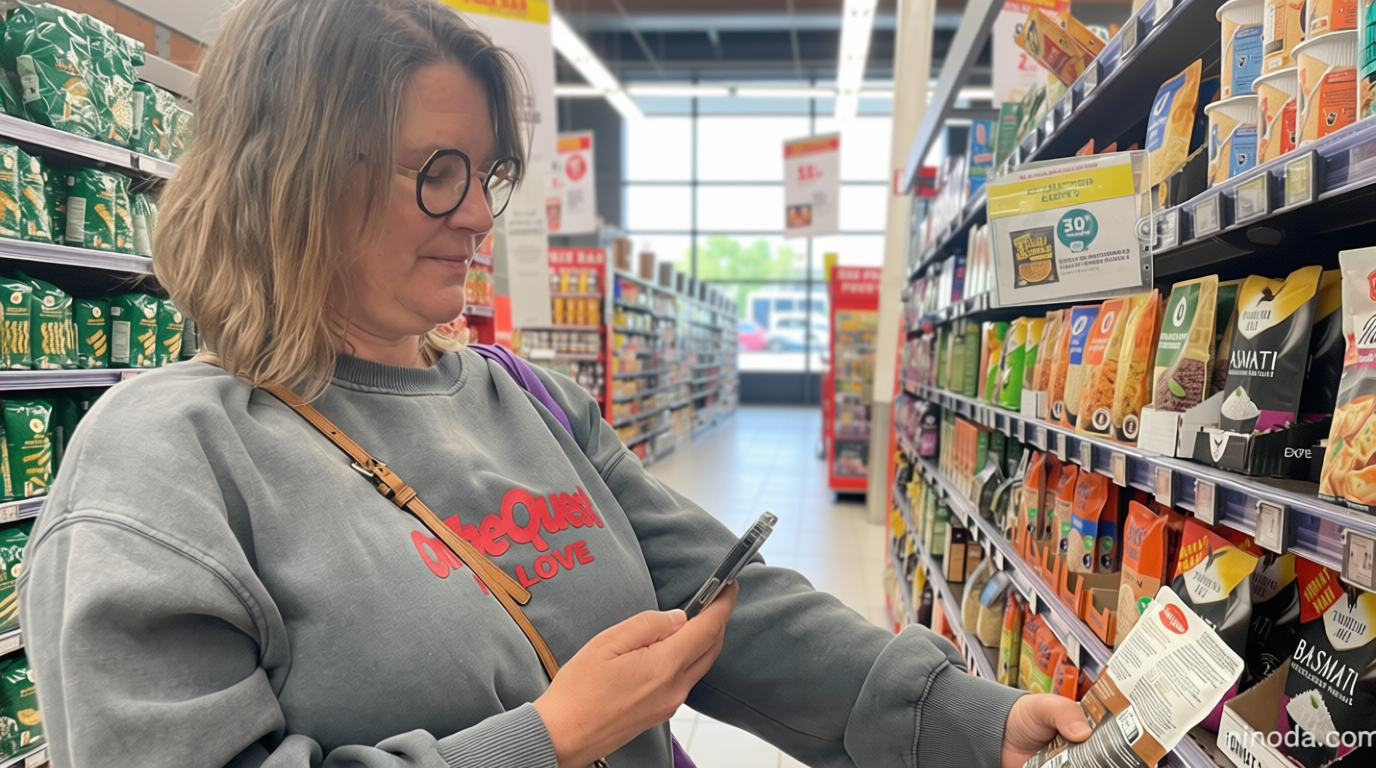
Ninoda.com – Nathalie stands in the biscuits sucrées section of a Parisian Hyper U supermarket, her phone in hand as she scans a package of sweets. The screen displays a stark red “0/100” score, prompting her frustration. “This is Malo’s favorite, but it’s loaded with sugar, saturated fats, and four additives—including one that could harm health,” she explains. The app highlights E450, a mineral that, in excess, may damage bone marrow or kidneys. “It’s infuriating that food meant for kids can contain these risks,” she adds.
Yuka, the app she uses, offers more than just scores. It provides detailed breakdowns of products, from food to cosmetics, and suggests alternatives. “You end up buying more organic items, which cost more,” Nathalie notes. Despite the added expense, she sees value in the tool, which has gained traction across 12 countries. With 85 million users, it’s a key player in the health-tracking movement, though the U.S. leads with 28 million, followed by France with six million and the UK with five million.
Yuka’s success in the U.S. is partly due to the country’s strong demand for transparency. Julie Chapon, the app’s co-founder and CEO, moved to America three years ago, citing the greater need for such tools. “I’m thrilled to be in a place where there’s still so much progress to be made,” she says. The app’s traffic light system—green for healthy, red for unhealthy—simplifies decision-making for shoppers.
In France, Yuka is part of a broader trend. In 2012, Stéphane Gigandet launched Open Food Facts, a free, crowdsourced database of food products. This community-driven platform now lists over four million items globally. Around the same time, the French government introduced Nutri-Score, a voluntary label created by food researcher Serge Hercberg. Inspired by the UK’s Traffic Light system, Hercberg aimed to simplify health assessments. “Nutri-Score gives a global score, letting you see at a glance if a product is good or bad for your health,” he explains.
While Nutri-Score is widely adopted by brands like Danone and Nestlé, some opt out if their products score poorly. Yuka and Open Food Facts complement this by offering deeper insights, such as information on additives like E-numbers. “These apps fill the gap, especially when labels aren’t enough,” Hercberg remarks. Yet, challenges remain. Christian Reynolds, a food policy expert, points out that while technology helps, people often lack the time or interest to engage fully with labels.
Yuka’s Global Reach
With six million products in its database—adding about 1,200 daily—the app has become a go-to tool for health-conscious consumers. Its popularity underscores a growing desire to make informed choices, even if it means spending extra time scanning items. For Nathalie, the effort is worth it, even if her son’s patience wears thin.
“Applications like Yuka and Open Food Facts fill that gap,” says Serge Hercberg. “They also go further than Nutri-Score, giving info, for example, about additives whose presence is a strong indicator that food is ultra-processed.”
The French Connection
Yuka was born in France and remains headquartered there, but its impact has expanded far beyond. The country’s Nutri-Score system, launched in 2012, is part of a larger push for nutritional transparency. Open Food Facts, another French initiative, has since become a global resource, demonstrating how local efforts can shape international trends.
“I was inspired in particular by the UK’s Traffic Light system which gives green, amber or red lights for sugar, fat, salt, calories… but I wanted something simpler,” says Hercberg.
“I supported a [British government] review on how people interact with labels,” says Christian Reynolds. “The take home from that was that few people have the time, capacity or inclination to engage.”