Norway boss brands Scotland’s Clarke ‘unprofessional’

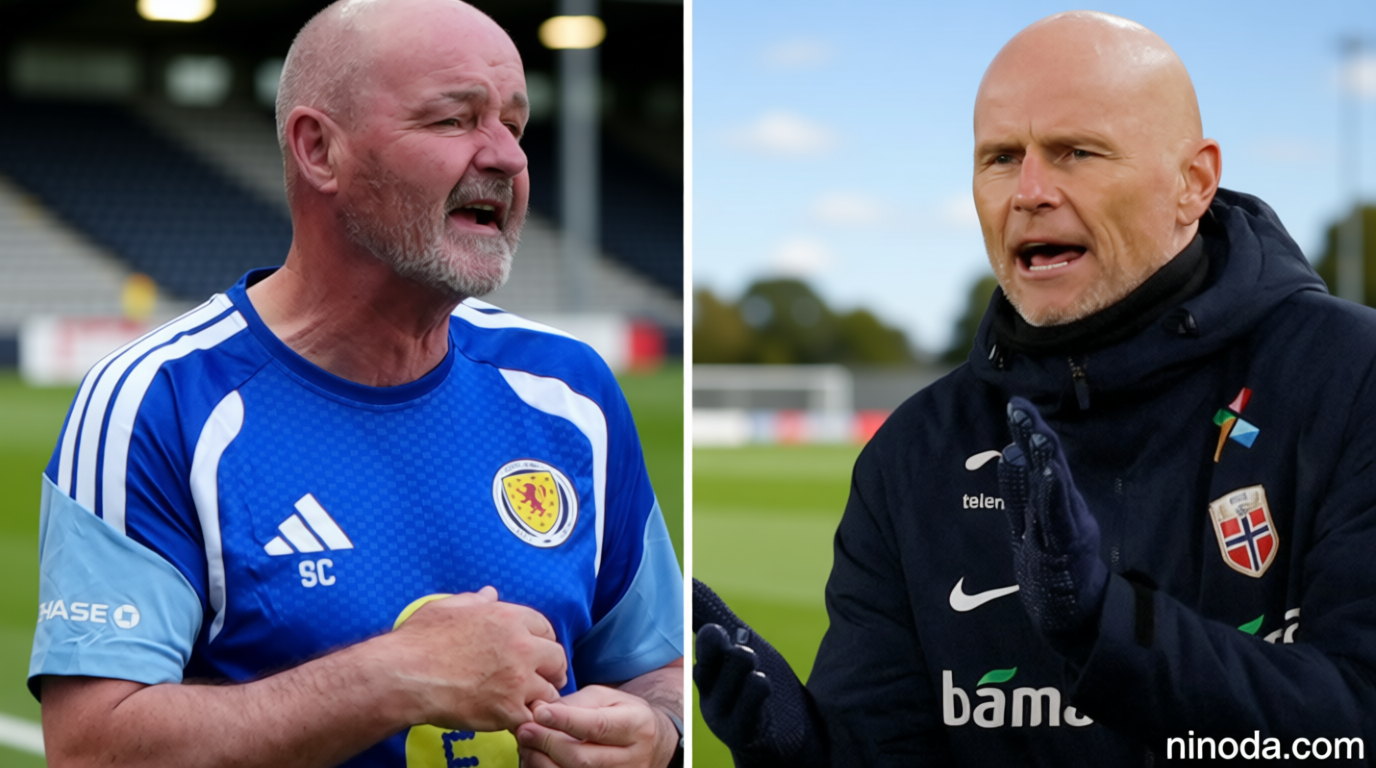
Norway’s Manager Calls Scotland’s Clarke ‘Unprofessional’
Ninoda.com – Scotland’s head coach Steve Clarke found himself at the center of controversy after abruptly canceling a planned friendly against Norway just days before the World Cup began. The match, originally scheduled for Monday, was called off by the Norwegian Football Federation on Sunday, with injuries within Scotland’s squad cited as the reason. However, Norway’s manager Stale Solbakken took issue with the timing of the decision, calling it a sign of unprofessionalism from the Scottish side. “It is unprofessional of Scotland,” Solbakken stated to Norwegian broadcaster NRK, emphasizing the lack of communication and the abruptness of the cancellation.
The Friendly That Was Called Off
The match between Norway and Scotland was set to take place in North Carolina, where both teams were based ahead of their World Cup campaigns. Solbakken expressed frustration over the last-minute withdrawal, pointing out that the Scottish team had already trained and that the decision was made without prior consultation. “It is unprofessional that the coach has not called me, that they use the team manager and say it after we have finished training,” he added. The absence of a clear explanation from Clarke left Norway’s squad feeling blindsided, especially since the game had been a key part of their preparations for the tournament.
“We based our preparations on this game for many months before arriving in Greensboro,” Norway’s team manager Brede Hangeland explained. “It is embarrassing to cancel it a couple of days before. We can’t do anything about it. We just have to forget about it and make the best of it. But there has been a lot of organisation, agreements and gentlemen’s agreements and then suddenly they don’t want to. I think that was weak, so to speak,” Hangeland continued.
Clarke’s Explanation and the Debate Over Professionalism
Clarke, when questioned by BBC Scotland, clarified that the cancellation was intended to be a brief one-hour session at their training ground. He argued that minor injuries sustained the previous week made the match too risky. “We decided it wasn’t worth the effort,” he said. While his explanation may have been logical, it didn’t satisfy Norway’s team, who felt the decision was made hastily and without sufficient dialogue. The incident has sparked a broader discussion about the professionalism of Scotland’s approach to the World Cup, with critics suggesting that the lack of communication could undermine their team’s cohesion and focus.
Scotland’s squad had previously secured a 4-0 victory against Bolivia in their last public preparation match, showcasing their readiness for the tournament. However, the cancellation of the Norway game raised questions about their ability to manage expectations and maintain a structured schedule. Meanwhile, Norway, which had already played their final warm-up match against Morocco, faced the challenge of adjusting their plans at short notice. The abrupt change forced them to reconsider their training strategies, with Solbakken highlighting the importance of such matches in building team chemistry and rhythm for the competition.
As the World Cup progresses, teams are being tested not only by their on-field performance but also by their ability to manage logistical and diplomatic challenges. The Norway-Scotland friendly, originally meant to serve as a crucial pre-tournament warm-up, now stands as a case study in how communication and planning can impact a nation’s football strategy. Solbakken’s public criticism of Clarke’s decision has added a layer of tension to the rivalry, with both managers now under scrutiny for their handling of the situation. This incident underscores the high stakes of international football, where even minor missteps can have significant consequences.
With the World Cup fixtures now in full swing, the focus is on the teams’ ability to adapt quickly. Norway is set to face Iraq in their Group I opener next Tuesday, while Scotland takes on Haiti in Group C just three days later. The canceled match has left fans and analysts debating whether Scotland’s actions were a strategic move or a sign of disorganization. As the tournament unfolds, the professionalism of each nation’s preparation will be a key factor in determining their success on the pitch. The Norway boss brands Scotland s Clarke controversy will likely linger as a talking point throughout the competition, highlighting the importance of seamless collaboration between teams in high-pressure environments.