Will AI help you do your job or replace you?

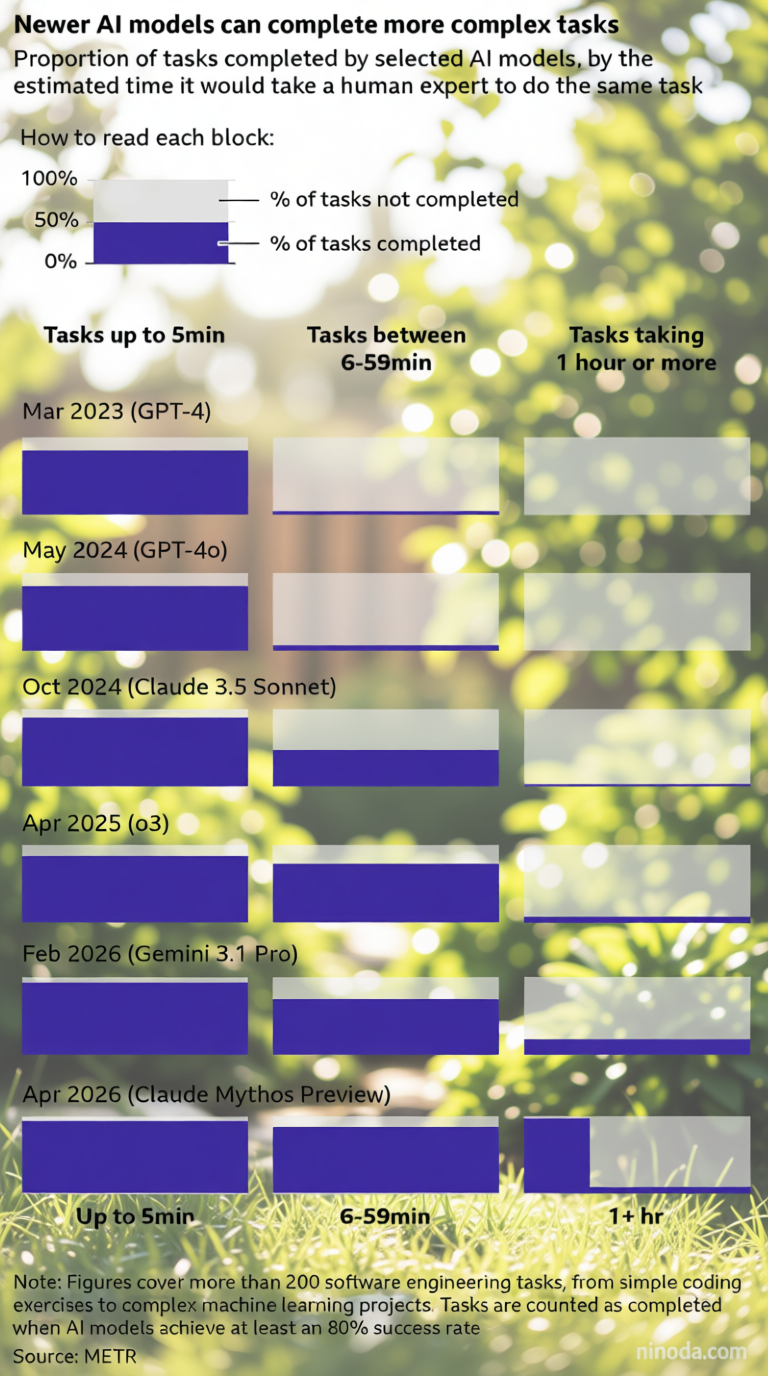
Table of Contents
Artificial Intelligence: Workforce Transformation or Displacement? Ninoda.com – Will AI help you do your job or replace you entirely?
Artificial Intelligence: Workforce Transformation or Displacement?
Ninoda.com – Will AI help you do your job or replace you entirely? This question dominates conversations across industries as technology corporations advance bold assertions regarding their systems’ capacity to supplant human workers. Certain positions face full automation while others receive enhancement through augmentation. Corporate executives across global enterprises are channeling enormous capital into these technologies, motivated partly by potential reductions in staffing expenses. Understanding whether Will AI help you do your work more efficiently remains critical for professionals navigating this transition.
The conventional hierarchy is shifting dramatically. We hear that organizational structures are flattening rather than expanding, as shareholders question whether fresh hires or vast networks of “AI Agents” should handle particular functions. These digital employees perform designated duties, ranging from basic to highly specialized roles. If projections hold even partially, consequences will ripple through every industry and professional trajectory, potentially arriving faster than anticipated. Workers must consider how Will AI help you do your daily tasks versus taking over completely.
Economic Warnings and Market Shifts
Laureates of the Nobel Prize in Economics have cautioned that immediate action is essential. They emphasize that artificial intelligence must elevate living standards rather than trigger widespread employment losses. Concurrently, enterprises in London have reported difficulties securing necessary expertise as the employment landscape transforms. The urgency of adaptation cannot be overstated.
“Must act now” — this urgent message comes from Nobel prize-winning economists regarding AI’s impact on employment and prosperity.
Accelerating Technical Capabilities
Current benchmarks reveal significant advancement in how machine learning models execute human-completed functions. Three years prior, large language models handled only brief operations requiring mere seconds or minutes. Present capabilities extend to intricate procedures lasting approximately one hour. Some contemporary systems identify flaws within cryptocurrency agreements and refine their own architectures—tasks demanding multiple human hours.
Emerging model iterations may achieve self-development within twelve months. While this progression centers on programming, parallel developments appear across financial evaluation, preliminary legal research, and certain creative positions requiring minimal experience. As capabilities grow, professionals must ask: Will AI help you do your job better, or will it do it for you?
Employment Data and Regional Impacts
Comprehensive research originates primarily from American sources, examining four years of employment statistics across age demographics within occupations. Roles heavily influenced by AI include software engineering and customer service representatives, while healthcare professionals, childcare providers, and beauty specialists face minimal disruption.
Stanford University’s examination of compensation and employment figures reveals a 2.7 percent decline in positions held by twenty-two to twenty-five-year-olds following ChatGPT’s widespread adoption. This figure escalates to 12.8 percent within sectors most vulnerable to automation, including finance, technology development, and creative fields. Not every economist concurs, suggesting alternative explanations such as interest rate fluctuations.
Online recruitment advertisements have similarly experienced changes since artificial intelligence tools emerged. The OECD’s comparative study highlights notable differences between highly exposed sectors like telemarketing and legal services versus less affected areas including construction and food preparation. Britain demonstrated significant vulnerability on this metric despite stable or declining interest rates, a trend emerging before last year’s National Insurance increase.
Most global indicators suggest the UK’s heavy reliance on services creates substantial exposure to potential AI-related employment reductions. Understanding these patterns helps workers determine whether Will AI help you do your current role or transform it entirely.
The Token Economy and Cost Considerations
Artificial intelligence consumption measures activity in “tokens”—compact text segments enabling systems to comprehend, process, and produce language. Each token approximates three-quarters of an English word. Usage surged dramatically throughout 2026, with total token consumption far exceeding reductions in individual token pricing.
Leading corporations implemented “token leaderboards” encouraging staff to maximize productivity gains through cutting-edge models. During recent months, trillions or quadrillions of tokens powered “agentic use”—automated task execution by intelligent agents.
Substantial expenses accumulated rapidly, prompting numerous organizations to implement usage restrictions. This development carries significance: it may indicate boundaries on automation potential. Virtual employees could prove costlier than human counterparts depending on specific responsibilities.
Related SEO Topics
Frequently Asked Questions
Apa itu Will AI help you do your?
Will AI help you do your adalah topik utama yang dibahas di artikel ini dengan konteks praktis agar pembaca memahami informasinya dengan jelas.
Mengapa Will AI help you do your penting?
Will AI help you do your penting karena membantu pembaca membandingkan pilihan, menghindari kesalahan umum, dan mengambil keputusan yang lebih tepat.
Bagaimana cara memakai panduan Will AI help you do your ini?
Gunakan poin utama, contoh, dan tautan terkait di halaman ini sebagai rujukan awal, lalu cek detail terbaru sebelum mengambil keputusan final.