On the front line of Ecuador’s drugs war, police fight gangs, guns and corruption

Ninoda.com – “`html
Police Battle Criminal Networks Amidst Rising Violence in Ecuador
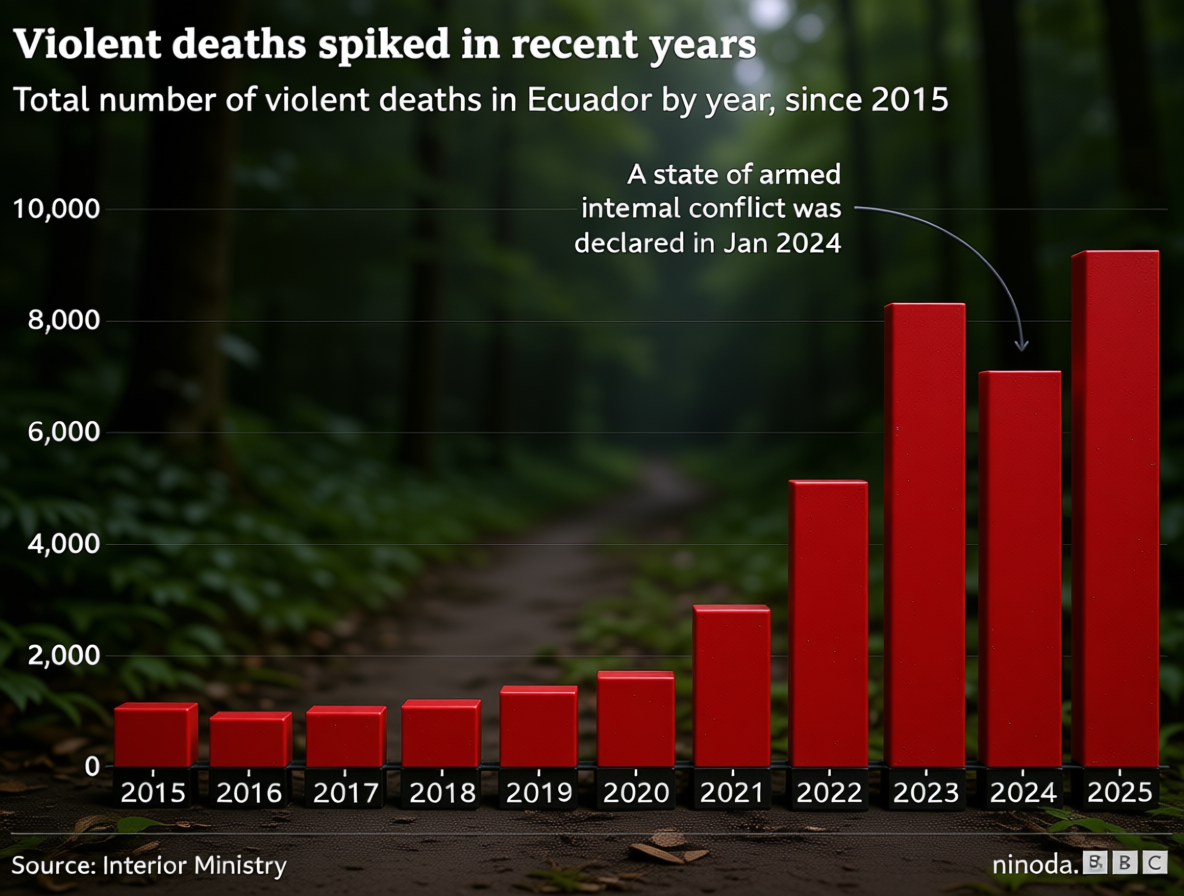
Across the Pacific coast, a nation once celebrated for tourism has transformed into one of the world’s most dangerous territories. Within just ten years, Ecuador’s homicide statistics have skyrocketed, with interior ministry figures revealing more than 9,200 fatalities in a single year. Despite President Daniel Noboa’s aggressive enforcement measures over the past two years, many observers argue the strategy has produced unintended consequences.
While top criminal leaders have been captured, this approach has simultaneously caused organized groups to splinter and expand their operations. The situation stems from Ecuador’s strategic position as a transit point for narcotics flowing from Colombia and Peru, the globe’s leading producers. Local syndicates, maintaining connections with Mexican cartels and Albanian criminal organizations, exploit inadequate border security and limited resources to move approximately 70 percent of cocaine destined for American and European markets.
A Captain’s Daily Confrontation
Within Durán, a city saturated with rival factions and illicit substances, Police Captain Jean Carlos Bustamante faces threats from multiple directions. At thirty-four years old, the former special forces operative commands respect among his colleagues, serving as the most senior member of his carefully selected unit. As evening approaches, he guides his personnel through a neighborhood characterized by barred windows and terrified residents living under the control of Los Aguilas, known as The Eagles.
“We have many, many bad people inside our unit, inside the state, inside politics,” he explains. “We have many, many guys that are corrupt. They are in the pay of the gangs.”
When questioned about citizens who dare to oppose criminal organizations, the captain provides a straightforward answer: “They kill them.” This brutal reality ensures silence among locals. “So that’s why they never say nothing,” he observes.
Weapons and Vulnerabilities
During one evening operation, the team targets an empty residence where firearms are believed to be concealed. Gunmen typically store their weapons away from their homes, making such locations valuable intelligence targets. The officers position themselves along the wall, weapons drawn, before a battering ram breaches the entrance. Inside, they discover two pistols—one showing signs of rust, the other fully operational—alongside ammunition suitable for an assault rifle.
“The first reason is because we are safe,” he states. “The second is that there are two guns less for the gangs.”
This represents merely a minor triumph in an ongoing conflict. The captain acknowledges that criminal organizations possess greater financial resources and armaments than government forces. Personal loss has shaped his perspective; he has buried three close companions killed during operations against organized crime. While he conquered his own fears years ago, his parents remain anxious about his safety.
“My mum says ‘be careful, maybe you can die there’,” he shares. “My dad calls all the time and asks ‘my son, are you good? Tell me that you are good.'”
From Local Streets to Global Markets
A connection exists between Durán’s narrow alleys and metropolitan centers worldwide, measured in currency and shattered families. The captain utilizes modern technology during operations, monitoring backstreets through drone surveillance. Recently, he identified three individuals engaged in micro-trafficking near a playground—local dealers selling minute quantities rather than bulk shipments.
Within moments, officers tracked the suspects to their residence. Once again, the battering ram opened the way into a kitchen where a middle-aged woman objected and a child began crying. Searching by flashlight due to power outages, officers examined closets and lifted bedding. Behind a window upstairs, they located a young suspect, while two additional individuals were secured in another room. All three denied involvement in drug distribution.
Nearby, the captain discovered small paper packets containing “H,” a potent combination featuring minimal heroin content. Neighborhood vendors sell each packet for one dollar, or seventy-five pence. One individual faces charges carrying a potential five-year sentence upon conviction, though prosecutors freed the remaining two suspects—a common outcome according to senior officials.
“`