
Satellite images show impact of heatwaves and drought on UK landscape

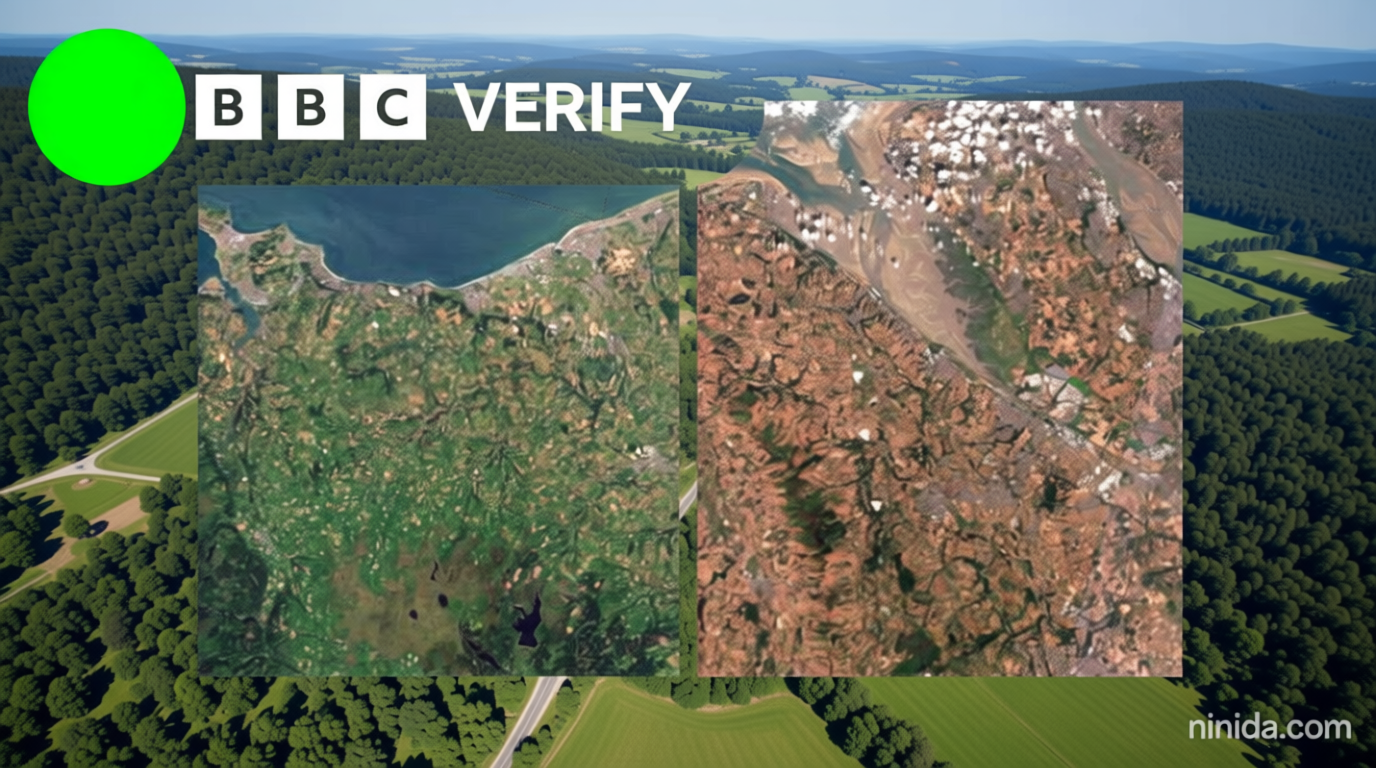
UK Terrain Reveals Heatwave Severity Through Satellite Analysis
Ninoda.com – BBC Verify has examined satellite photographs revealing how this year’s extended period of warm weather has transformed the British countryside. By analyzing orbital imagery, researchers identified regions experiencing the most intense effects from both soaring temperatures and insufficient precipitation. Certain areas demonstrate what specialists term “vegetation stress”—a condition where plant development, grass growth, and crop production face serious challenges.
Measuring Plant Health Across the Nation
Researchers utilized the Normalised Difference Vegetation Index, commonly known as NDVI, to evaluate plant vitality. This measurement system quantifies how green and robust vegetation appears. Comparing photographs captured in May against those from July reveals dramatic transformations in plant condition across the country.
The most pronounced alterations appear throughout Conwy, Flintshire, Denbighshire, and Merseyside. Regions that once displayed a mosaic of verdant fields and meadows now exhibit extensive light brown coloration, signaling widespread vegetation stress. Additional concentrated areas of concern include Peterborough, Lincolnshire, and sections of mid and east Devon, where agricultural land appears considerably browner than during the previous year.
Conversely, elevated regions of Britain—including substantial portions of Scotland’s highlands alongside Welsh mountainous terrain—maintained conditions closer to normal or even showed slight greening in certain locations.
Expert Perspectives on Drought Impacts
While it is not unusual to see some browning in the summer, the large expanses of dry grass in parks, lawns and gardens are particularly noticeable this year.
Dr Jess Neumann, associate professor at the University of Reading, provided this observation. She further noted that British flora lacks the adaptation seen in Mediterranean regions when confronting extended summer droughts and intense heat.
The current “flash” drought phenomenon stands out for its rapid emergence. Early spring measurements of river flows, soil moisture content, and reservoir levels typically fell within or exceeded normal ranges following an exceptionally wet beginning to 2026. Subsequent waves of hot weather extracted moisture from both soil and plant life through evaporation, simultaneously elevating water requirements for agricultural, industrial, and domestic purposes.
Agricultural and Environmental Consequences
The drought could have a direct knock-on effect on food supplies.
Dr Pauline Scheelbeek, associate professor at the London School of Hygiene and Tropical Medicine, emphasized this point. She suggested consumers might encounter reduced quantities of British-grown produce alongside elevated prices, as inconsistent water access diminishes crop yields.
Additional agricultural pressures include depleted grass reserves, compelling certain farmers to utilize winter feed supplies for livestock during summer months. This practice creates potential shortages for subsequent seasons. Professor Michael Singer from Cardiff University voiced concerns regarding wildlife, noting that numerous British animals and plants lack sufficient adaptation to severe drought circumstances.
Water Resources and Future Outlook
Although vegetation changes are immediately apparent, reservoir levels have experienced less dramatic decline due to an unusually wet winter season. Satellite observations indicate the banks of the Clywedog reservoir in mid-Wales show greater exposure this July compared to the previous year.
While insufficient rainfall remains the primary driver behind recent hosepipe restrictions and drought announcements across extensive areas of England and Wales, reservoir volumes remain below typical levels for this season. The Environment Agency confirmed that England’s reservoir storage currently sits at 75 percent, falling short of the long-term seasonal average of 83 percent yet exceeding levels recorded during last year’s drought conditions.
Scientists caution that the United Kingdom confronts escalating water scarcity risks throughout coming decades, influenced by anthropogenic climate change alongside rising consumption demands. Vegetation browning, even when extensive, does not necessarily indicate permanent plant death. Grass, shrubs, and various tree species can regenerate once precipitation resumes, assuming their root networks survive intact. Nevertheless, declining groundwater reserves during extended dry spells eliminate a crucial secondary water supply for deep-rooted vegetation.
Interestingly, sustained dry conditions may paradoxically increase flash flooding potential when rain finally arrives. Parched, hardened soil struggles to absorb water initially, causing precipitation to flow across the surface rather than penetrating downward.