The five dramatic days that shook Infantino and world football

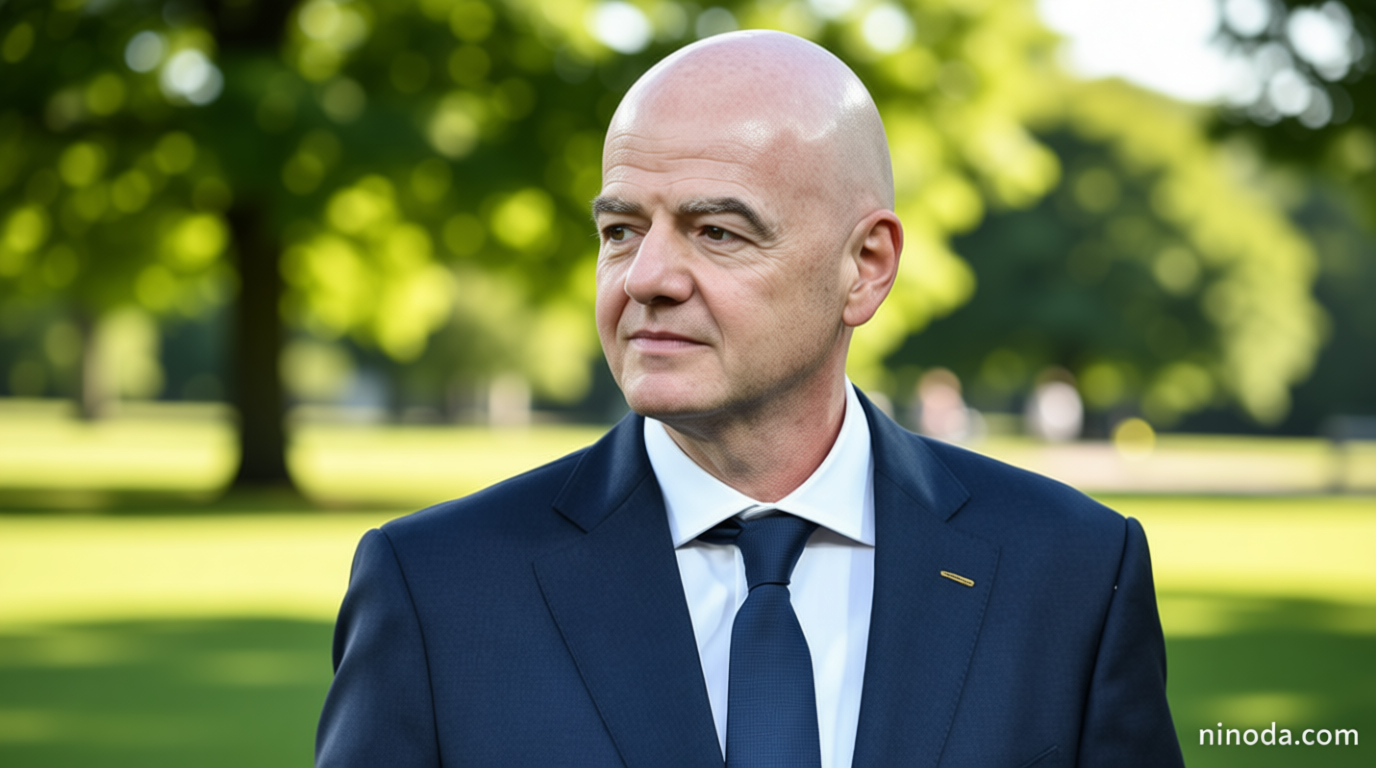
Infantino’s Funding Proposal Collapses Amidst Growing Storm
Ninoda.com – Gianni Infantino’s ambitious World Cup private-investment scheme has been officially pulled, ending any lingering hopes that the FIFA president could quietly recover from the controversy. The announcement came on Saturday, just as UEFA—the European football governing body—delivered a scathing assessment of his leadership, declaring it had “lost confidence” in his direction. This powerful statement ranks among the harshest criticisms ever directed at the world football chief.
Terms like “shabby” and “secret schemes” captured the mood perfectly. The turmoil has evoked memories of the European Super League collapse in 2021, when twelve top European clubs—including six Premier League sides—attempted to create a breakaway competition. Former England defender Gary Neville summed up widespread sentiment by labeling the ESL effort “pure greed.” That venture fell apart rapidly.
A Plan That Outlasted the ESL by Two Days
While Infantino’s proposal lacked a memorable name, it survived two days longer than the ESL before meeting its fate. Even though FIFA confirmed the withdrawal on Saturday, the stain on its reputation is likely to endure. Football at the elite level operates as a massive commercial powerhouse, with salaries and earnings far exceeding what typical supporters can relate to. Yet this episode raises an important question: has a boundary been crossed?
Four key issues undermined FIFA’s World Cup plan, prompting speculation about whether Infantino might face replacement. Sheikh Salman bin Ibrahim al-Khalifa, president of the Asian Football Confederation, was among those voicing concerns alongside Infantino in a 2023 photograph.
Transparency Concerns at the Heart of the Crisis
FIFA operates as a not-for-profit entity boasting financial reserves exceeding $2 billion (£1.48 billion). The organization anticipates announcing record earnings of approximately $15 billion (£11.13 billion) connected to this summer’s tournament. Given these substantial resources—and the fact that numerous nations wouldn’t necessarily require the additional $40 million (£29.67 million) being offered for development programs under Infantino’s proposal by the 19 September deadline—many questioned why private capital was sought at all.
This fundamental question remained largely unasked, both publicly and within FIFA’s internal circles. Several senior officials, including vice-presidents, special advisers, and executives, reportedly had no opportunity to raise concerns because they were unaware the plans were being formulated.
“The current Fifa leadership has not only lost Uefa’s confidence but also that of many other members of the football family,” UEFA stated in its official response.
“When Gianni Infantino asked for the trust and the votes of Fifa’s member associations to elect him as their president in 2016, he said: ‘Of course we have to be transparent.’ He told the assembled stakeholders: ‘The money of Fifa is your money. It’s not the money of the Fifa president. You are the national associations and the money of Fifa has to serve for the development of football and not for anything else.’ On both these promises, he has failed to deliver.”
UEFA had voiced strong opposition from the moment the plans became known. Its reaction upon the proposal’s demise proved particularly damning.
Leadership Calls for Greater Openness
Sheikh Salman bin Ebrahim Al Khalifa—the AFC president and one of eight FIFA vice-presidents—also highlighted transparency issues. He emphasized that any upcoming initiatives affecting global football should be communicated to members “in a timely, transparent and meaningful manner.”
“The future of global football must always be shaped through proper consultation, collective dialogue and respect for the established governance structures of our game,” he added.
Anter Isaac, chair of Football Australia, stressed that trust is built “not simply through good decisions, but through the integrity of the processes that lead to them.” He noted that while football continuously evolves, certain core values must remain constant: integrity, independence, good governance, transparency, meaningful consultation, and due process. These elements, he argued, are not obstacles to advancement.
During the ESL controversy, supporters ultimately drew the line—supported by the Premier League, the Football Association, and even Prince William. The 2021 plan’s failure demonstrated that fan sentiment, when properly channeled, could reshape the sport’s landscape.