Artan to referee Uefa Super Cup after losing World Cup role

Artan to Referee Uefa Super Cup After Losing World Cup Role
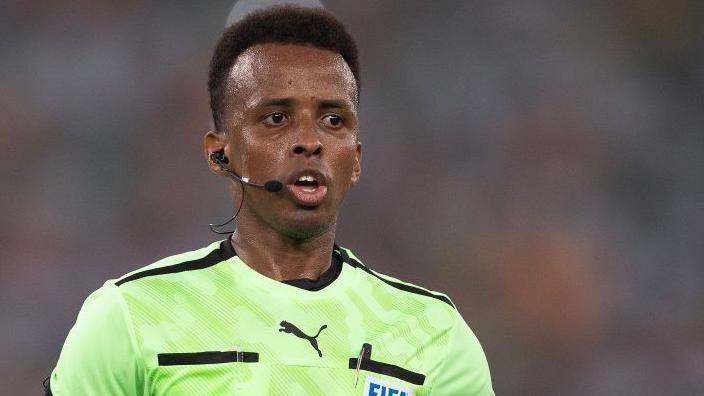
Ninoda.com – Omar Artan, a Somali referee on the FIFA international list since 2018, has been named to officiate the Uefa Super Cup match between Paris St-Germain and Aston Villa, set for 12 August in Salzburg. This decision marks a significant milestone, as Artan will become the first non-European official to referee a major international football match in Europe. The opportunity arose after he was denied entry into the United States, which had previously blocked his participation in the World Cup, a setback that has left him with a renewed focus on Uefa competitions. Despite the challenges, his inclusion in the Uefa Super Cup highlights the growing recognition of African referees on the global stage.
US Entry Denial and Security Concerns
The U.S. border authorities denied Artan entry in late July, citing concerns over his alleged connections to the Al Shabab militant group. While Artan claimed he had no knowledge of the organization and provided all required documentation, including a diplomatic passport and a single-entry visa, the refusal raised eyebrows among football officials. This incident occurred against the backdrop of a broader travel ban list implemented under former President Donald Trump, which targeted individuals from several countries, including Somalia. The denial has sparked discussions about the intersection of sports and international security, with some questioning whether the decision was politically motivated.
“Artan to referee Uefa Super Cup is a testament to his dedication and skill, even after facing these hurdles,” said a spokesperson for the Confederation of African Football (Caf). “His ability to navigate such challenges while maintaining his professional standards is commendable.” The Caf has been instrumental in supporting Artan’s career, having recently recognized him as Africa’s top referee for 2025. This achievement underscores his potential to represent the continent on a global level, despite the obstacles posed by U.S. immigration protocols.
Uefa’s Commitment to Global Representation
Uefa’s decision to appoint Artan reflects its ongoing efforts to promote diversity and inclusion in football officiating. The organization has long collaborated with Caf to integrate African referees into international competitions, as seen in past exchanges during Euro 2020 and Copa America 2021. By selecting Artan for the Uefa Super Cup, Uefa not only acknowledges his expertise but also reinforces its commitment to expanding opportunities for officials from Africa and other regions. This move is expected to inspire a new generation of referees across the continent.
While the Uefa Super Cup is not the same as the World Cup, the match carries considerable prestige, especially for Artan. It serves as a platform to showcase his capabilities in high-pressure settings, such as the Champions League and Europa League finals. Uefa officials have emphasized that Artan’s selection was based on his proven performance and the value he brings to the competition. His presence in Salzburg is also seen as a strategic step to strengthen ties with African football associations, aligning with broader initiatives to foster cross-continental partnerships.
Artan’s journey to this point has been marked by perseverance. After his World Cup role was revoked due to the U.S. entry denial, he remained focused on Uefa assignments, including a recent match between two top-tier European clubs. His ability to adapt to this new challenge demonstrates his resilience and commitment to the sport. Uefa president Aleksander Ceferin praised his work, stating, “Artan to referee Uefa Super Cup is a proud moment for both him and the African football community. His talent and dedication deserve global recognition.”
The Uefa Super Cup, a highly anticipated annual event, will provide Artan with the chance to make history. While the World Cup remains his ultimate goal, this assignment offers a vital opportunity to cement his reputation as a referee capable of handling elite-level matches. The match will be a showcase of top European talent, with Artan’s role symbolizing a shift toward greater inclusivity in international football. His success could pave the way for more African officials to take on prominent roles in European competitions, further bridging the gap between continents.
As the football world prepares for the Uefa Super Cup, the story of Artan’s career serves as a reminder of the challenges and triumphs faced by referees from diverse backgrounds. His inclusion in this prestigious match not only validates his skills but also highlights the importance of international collaboration in football governance. While the U.S. entry denial was a setback, it has not diminished his resolve. Artan’s journey from Somalia to Salzburg underscores the power of perseverance and the growing influence of African referees on the global stage.