Woman has pioneering womb surgery to fix ‘miracle’ baby with intestines outside its body

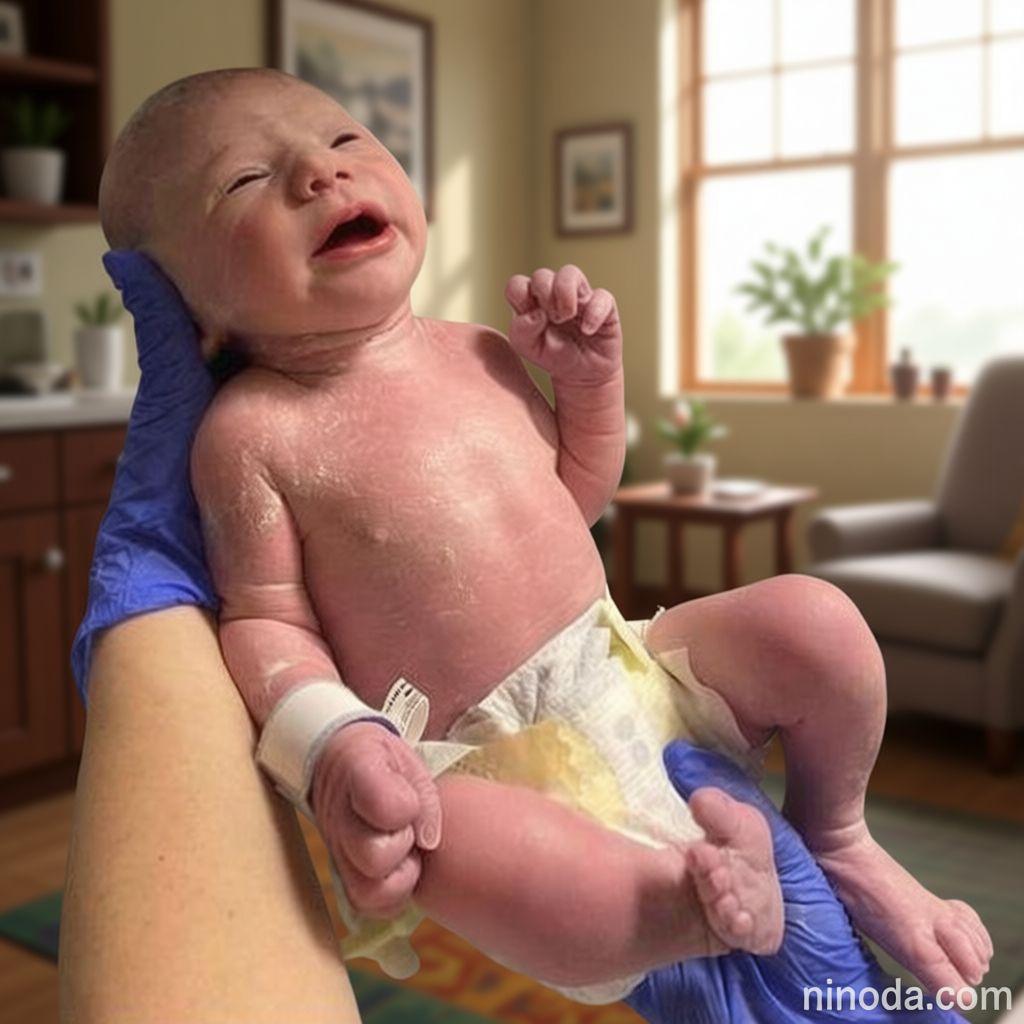
Table of Contents
Groundbreaking Womb Surgery Saves Baby Born with Intestines Outside Body
Ninoda.com – Five-month-old Theo is thriving after becoming the first British infant to receive pioneering in-utero surgery for a severe abdominal birth defect. His mother, Maisie Savage, underwent the procedure while 26 weeks pregnant, with doctors in the United States successfully repositioning his exposed organs back into his abdomen.
Theo was born via vaginal delivery in Texas in February and is now doing well. His parents, both teachers, describe him as a “little miracle” following the successful operation that corrected complex gastroschisis before birth.
Understanding the Condition
Gastroschisis is a serious condition affecting approximately one in 3,000 babies born in the UK annually. The defect occurs when the belly button fails to develop correctly, leaving the intestines growing outside the body rather than inside the abdomen.
For infants with the more severe form of this condition, medical outcomes can be challenging. Even with optimal care, one in ten babies may not survive. Complex cases often require extended stays in neonatal intensive care units lasting up to six months, multiple surgical interventions, intravenous nutritional support for as long as two years, and occasionally an intestinal transplant.
From Routine Scan to Life-Changing Diagnosis
Maisie and Josh French, Theo’s father, were initially unaware of any complications with their pregnancy. “Going towards a 20-week scan, we were purely just excited to have an image of our baby,” Josh recalled. “We didn’t know he was going to be a ‘he’ at the time.”
At 24 weeks, specialists at London’s Great Ormond Street Hospital began preparing the couple for what the first half-year of Theo’s life might entail. However, when doctors identified the more serious variant of gastroschisis, they referred the family to Texas Children’s Hospital in Houston.
“Josh said discovering Theo had gastroschisis had been a shock and ‘incredibly scary’,” Maisie noted.
A First-of-Its-Kind Clinical Trial
Texas Children’s Hospital was conducting an innovative clinical trial led by Dr. Michael Belfort, who specializes in both fetal and pediatric surgery. Dr. Belfort had previously developed a similar womb-based surgical approach for babies with spina bifida.
Theo became only the third baby globally to participate in this groundbreaking trial. Maisie faced a significant decision about whether to travel to Texas immediately and remain there for the duration of her pregnancy.
“It was a huge decision,” she explained. “But, it was worth it.”
The Surgical Journey
Before traveling to Texas, Maisie visited Leuven Hospital in Belgium. There, specialists administered a Botox injection through her womb into Theo’s abdominal wall. This treatment relaxed the muscles, facilitating the upcoming repair.
The surgical procedure took place in November while Maisie was 26 weeks pregnant. Doctors partially exposed her uterus and drained the amniotic fluid, replacing it with carbon dioxide gas to create additional operating space.
Using keyhole techniques, surgeons gently maneuvered Theo’s organs back into his abdomen before stitching the closure. The operation left Maisie with a scar approximately twice the size of a typical cesarean section incision.
Josh described the experience as agonizing. “The length of that day, it felt like a week,” he said. “The waiting and just not knowing exactly what was going on at each and every stage.”
Recovery and Birth
Unlike mothers recovering from cesarean deliveries, Maisie still needed to carry her baby for another 14 weeks. She reported that Theo frequently kicked her scar, causing discomfort during her recovery period.
“It was a hard recovery,” Maisie shared. “But, it was worth it.”
The surgery proved completely successful. Theo was carried to full term and delivered vaginally in Texas in February.
Remarkable Results
Dr. Belfort, who serves as obstetrician and gynecologist-in-chief at Texas Children’s Hospital, expressed satisfaction with the outcomes. “The mother, the baby, the surgery, the time of the surgery, the fact that we had zero complications during the foetal surgery and after the foetal surgery, just remarkable,” he stated.
He added that he was “stunned by the results of the surgery.”
If this clinical trial achieves success, it could transform treatment options for families facing complex gastroschisis, offering hope that babies can be repaired before birth rather than enduring extensive postnatal interventions.
“He’s a little miracle, isn’t he?” Maisie told BBC News.
“The mother, the baby, the surgery, the time of the surgery, the fact that we had zero complications during the foetal surgery and after the foetal surgery, just remarkable.” Dr. Michael Belfort
Related Reading
Frequently Asked Questions
What is Woman has pioneering womb surgery to fix?
Woman has pioneering womb surgery to fix is the main topic of this guide. The article explains the context, practical details, and next steps readers should understand.
Why does Woman has pioneering womb surgery to fix matter?
Woman has pioneering womb surgery to fix matters because readers are looking for a useful answer, not just a short summary. Good content should match search intent and help them decide what to do next.