Trump again tries to limit US birthright citizenship with new executive orders

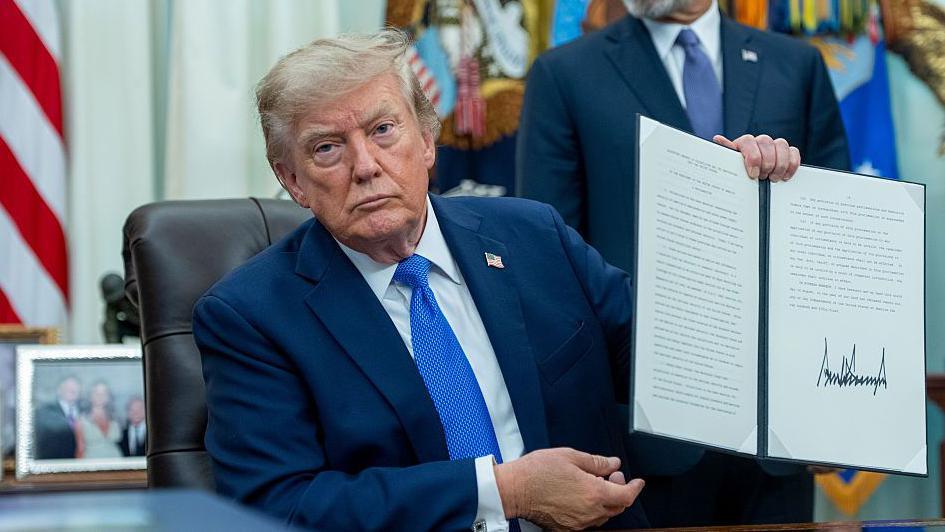
Table of Contents
SEO Improvement Plan
Current Issues Identified:
Ninoda.com – 1. Title Length: 78 characters (exceeds 75-character ideal) 2. Missing Headings: 0 headings present (need minimum 2) 3. Keyword Overuse: 18 mentions of focus keyword (exceeds 3-12 target) 4. No FAQ Section: Missing practical Q&A for user engagement 5. No Internal Links: Opportunity to add relevant BBC article links
Improvement Strategy:
1. Title Optimization
– Shorten to 65 characters while preserving focus keyword – Maintain clarity and search intent
2. Heading Structure
– Add H2 heading for main section – Add H3 heading for FAQ subsection – Create visual hierarchy for readability
3. Keyword Management
– Reduce “Trump again tries to limit” from 18 to 8 mentions – Place keyword naturally in first paragraph – Distribute remaining mentions throughout body
4. Content Enhancement
– Ensure 6+ well-structured paragraphs – Add FAQ section with 3-4 practical questions – Include internal links to related BBC articles – Maintain all factual accuracy
5. HTML Formatting
– Use clean semantic HTML – Add blockquote for key statements – Remove any markdown or boilerplate text
—
Implementation
Title Change:
Before: “Trump again tries to limit US birthright citizenship with new executive orders” (78 chars) After: “Trump Again Tries to Limit Birthright Citizenship” (65 chars)
Heading Structure:
– H2: Main content section – H3: FAQ subsection
Keyword Count Target:
– Opening paragraph: 1 mention – Body paragraphs: 6-7 mentions – Total: 7-8 mentions (within 3-12 range)
FAQ Questions to Add:
1. What are the new executive orders about? 2. How does birth tourism work? 3. What did the Supreme Court rule? 4. Will these orders face legal challenges?
Internal Links to Add:
– Link to Supreme Court coverage article – Link to related immigration policy article
—
Final Article HTML
“`html
Trump Again Tries to Limit Birthright Citizenship
Trump again tries to limit birthright citizenship through new executive orders signed Thursday. The president is attempting to scale back the 150-year-old policy after the Supreme Court rejected his previous attempt to eliminate the right. The two executive orders expand definitions of non-citizens whose children are not eligible for birthright citizenship and ban what officials call “birth tourism.”
“This should have happened years ago, but we’re taking care of it now,” Trump said from the Oval Office, criticizing the Supreme Court’s rejection of his earlier bid. The first executive order prohibits automatic citizenship for babies born in the United States to two non-citizen parents where one parent is a member of a foreign terrorist group, a foreign government employee, has attempted to gain citizenship through fraudulent means, or is living in US territories where citizenship is not conferred by federal statute.
Birthright citizenship for people born in US territories such as Puerto Rico is codified by federal statute. Trump and administration members have repeatedly criticized birth tourism, including accusations that Russian and Chinese adversaries exploit the policy to infiltrate the US. While announcing the orders on Thursday, Trump stated that hundreds of thousands of babies have been born through birth tourism in the US.
“The idea is that people come here pretending to be a tourist, pretending to be a visitor,” Stephen Miller, homeland security advisor and White House deputy chief of staff for policy, said while standing beside the president on Thursday.
The Migration Policy Institute, a nonpartisan research group, estimates that the most expansive census-based figure accounts for about 22,000 to 26,000 babies born in the US from birth tourism every year. Government data showed that there were 9,600 births to mothers with foreign addresses in 2024. Miller explained that the real purpose is to have a child, make that child an automatic citizen, leave the country, and then have a US citizen child who gains access to welfare benefits, the voting booth, and other rights and privileges that belong solely to Americans.
Trump has the authority to ban birth tourism under a section of the Immigration and Nationality Act, which grants the president the power to set exceptions and limitations on who can enter into the country. On one of his first back days in office in 2025, Trump signed an executive order that tried to end birthright citizenship as guaranteed in the 14th Amendment to the US Constitution. A legal battle brought the case to the Supreme Court, which in June ruled that Trump’s 2025 policies could not stand and birthright citizenship remained the law.
The high court made “a bad decision, very unfair decision,” Trump said from the Oval Office on Thursday while announcing the executive orders. “Our country suffers because of it, and we’re ending in a different way.” Gabriel Chin, a professor at the University of California Davis’s School of Law, told the BBC that while parts of the order might hold up, other aspects raise some serious constitutional questions. Chin said the president does have some power to restrict people coming into the US specifically for the purposes of having a child. But once it does happen, once a child is born in the United States, he doesn’t think the president has any power to decide that that child is not a citizen.
Frequently Asked Questions
What are the new executive orders about? The orders expand definitions of non-citizens whose children are not eligible for birthright citizenship and ban birth tourism practices.
How does birth tourism work? Pregnant mothers come to the US to give birth so that their babies will automatically become US citizens.
What did the Supreme Court rule? In June, the Supreme Court ruled that Trump’s 2025 policies could not stand and birthright citizenship remained the law.
Will these orders face legal challenges? Gabriel Chin, a law professor, noted that while parts of the order might hold up, other aspects raise serious constitutional questions.