Air India pilot’s reported cannabis test: What it can and can’t tell investigators

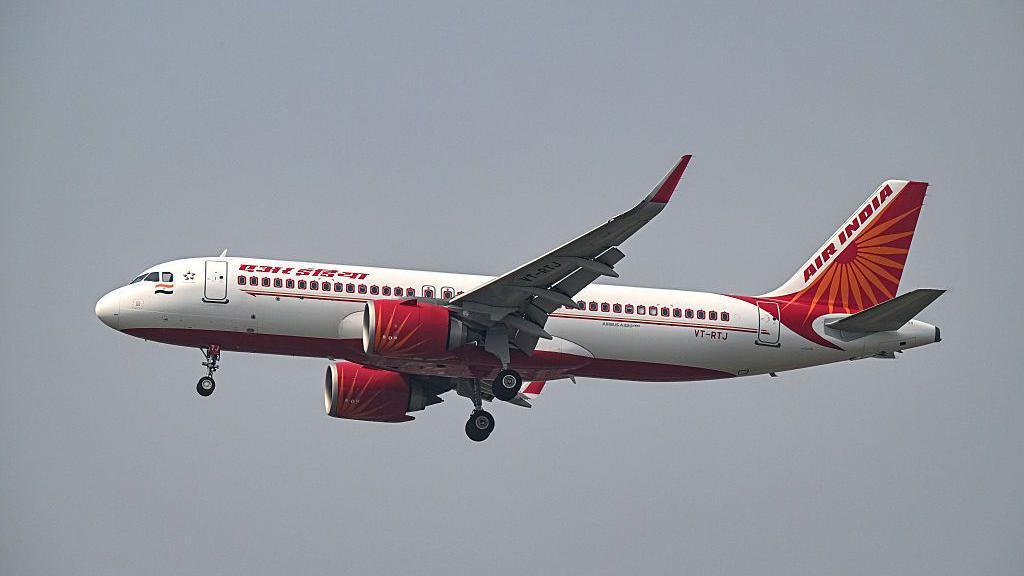
Table of Contents
Understanding the Air India Captain’s Cannabis Test Results
Ninoda.com – News emerged that an Air India pilot showed elevated cannabis levels following a flight—a discovery that would certainly capture an aviation investigator’s attention. However, this finding remains unverified officially, and even if confirmed, it might not represent the definitive evidence many assume.
On August 4, an Air India Airbus A320 traveling from Phuket to Delhi experienced an unexpected altitude drop of approximately 91 meters, equivalent to 300 feet. The incident resulted in injuries to 13 passengers alongside four crew members aboard the aircraft, which carried a total of 137 passengers and eight crew members before landing without further incident in Delhi. Authorities have launched an investigation into the occurrence.
Testing Procedures and Pending Confirmation
According to India’s aviation ministry, both pilots participated in standard post-flight screening for psychoactive substances. The ministry indicated that the captain’s preliminary test yielded a result necessitating additional confirmatory analysis. Consequently, both pilots were taken off flying responsibilities while the investigation continues.
Several media outlets, referencing unnamed sources, announced earlier this week that the captain’s subsequent laboratory confirmatory test revealed marijuana presence. Air India has yet to validate these reports publicly.
What Does a Positive Cannabis Test Really Mean?
These reports have sparked considerable discussion regarding pilot drug screening protocols and aviation safety standards throughout India. Currently, no official determination connects the captain’s suspected drug-test outcome to the unexpected altitude reduction. Investigators are evaluating multiple dimensions of the incident—technical, operational, medical, and human factors—while the precise cause of the aircraft’s descent remains uncertain.
The straightforward inquiry involves whether cannabis played any role. The more nuanced question concerns what a positive cannabis test actually reveals about a pilot’s condition several hours prior to testing.
Research on Pilots and Cannabis Effects
Considerable knowledge exists regarding cannabis influence on complex task performance. Less understanding exists about converting a positive test into an accurate impairment timeline. Some of the most pertinent evidence derives from an unexpected source: pilots themselves.
A 1976 experiment examined ten pilots who consumed a moderate marijuana dose before operating a flight simulator. Results demonstrated performance degradation, including mistakes related to altitude, heading, and radio navigation. Researchers observed these effects persisted for minimum two hours and typically resolved within four to six hours.
Twelve years later, scientists revisited post-“high” effects. Ten seasoned private pilots underwent flight simulator testing twenty-four hours after cannabis consumption. They exhibited substantial deterioration across multiple measurements, encompassing elevator and aileron control, landing precision, and vertical and lateral approach deviations. Most notably, these pilots failed to recognize their performance decline.
A 1991 follow-up investigation generated comparable findings. Nine active pilots operated a simulator following consumption of a cigarette containing 20 milligrams of THC—tetrahydrocannabinol, the primary psychoactive component in cannabis responsible for the characteristic “high” and numerous effects on brain function and motor capabilities. Performance showed impairment at intervals of fifteen minutes, four hours, eight hours, and twenty-four hours. Seven of nine pilots demonstrated some impairment at the twenty-four-hour mark, yet only one recognized the drug’s influence.
Limitations and Modern Considerations
These investigations remain limited in scope, dated, and conducted using aircraft simulators rather than contemporary commercial airliners. They cannot definitively explain events within the Air India cockpit. Nevertheless, experts consider them valuable for establishing that cannabis can disrupt the fine motor control, attention span, and intricate human-machine interactions essential for aviation.
A review conducted by aviation-medicine specialist David Newman for Australia’s Transport Safety Bureau arrived at comparable conclusions. Cannabis influences behavior, cognition, and psychomotor performance through dose-dependent mechanisms, with complex activities like flying showing particular sensitivity. The review additionally identified evidence of residual effects extending up to twenty-four hours.
Scientific understanding has grown more intricate as cannabis consumption has expanded globally and product potency has increased across numerous regions. A 2022 randomized clinical trial led by Thomas Marcotte at the University of California San Diego evaluated 191 regular cannabis users. Those who smoke
Related Reading
Frequently Asked Questions
What is Air India pilot s reported cannabis?
Air India pilot s reported cannabis is the main topic of this guide. The article explains the context, practical details, and next steps readers should understand.
Why does Air India pilot s reported cannabis matter?
Air India pilot s reported cannabis matters because readers are looking for a useful answer, not just a short summary. Good content should match search intent and help them decide what to do next.