Boulter wins one game in 58-minute US Open defeat

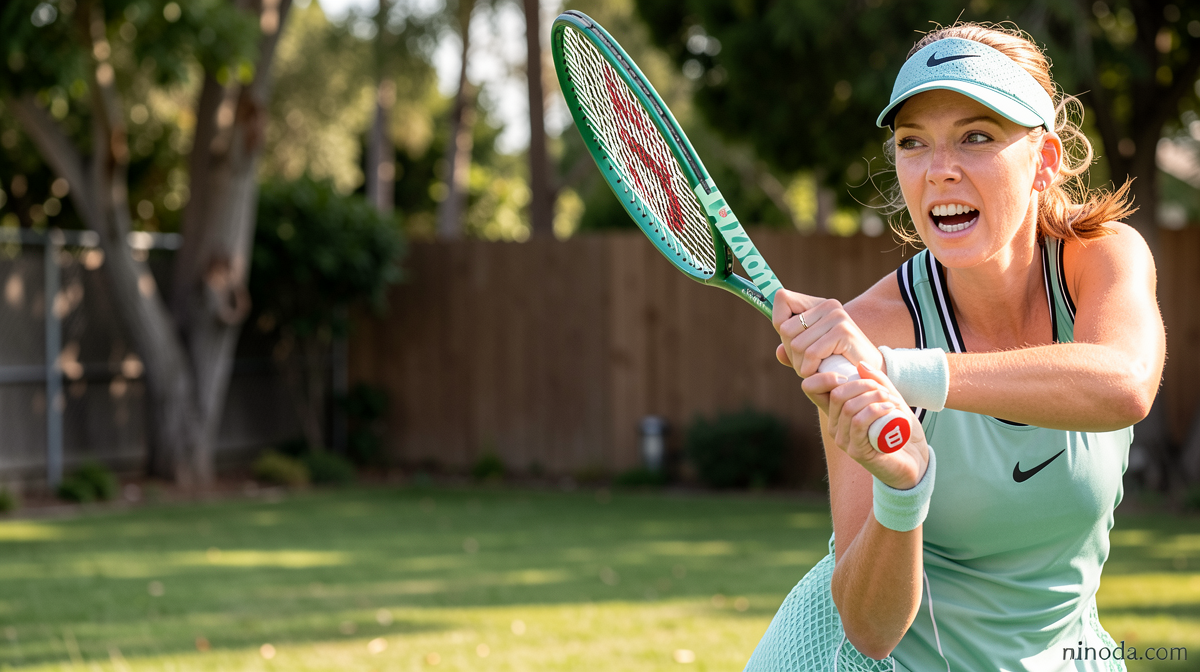
Table of Contents
British Tennis Takes a Collective Setback as Boulter Falls in Under an Hour
Ninoda.com – The US Open second round delivered a brutal reminder of how quickly Grand Slam momentum can evaporate. Katie Boulter, ranked 62nd in the world and carrying the weight of being Britain’s top-ranked woman, lasted barely 58 minutes before being dismantled 6-1 6-0 by Czech seventh seed Karolina Muchova. It was the shortest of short days on the New York schedule, and one that compounded an already underwhelming Grand Slam season for the 30-year-old.
The contest, initially slated for an outer court, was relocated to the 14,000-seat Louis Armstrong Stadium after persistent rain across the New York area. Spectators who had secured a third-match session ticket presumably expected a longer evening. What they received instead was a clinical display from Muchova, a two-time US Open semi-finalist, who converted every opportunity with surgical precision.
A Serve That Simply Wasn’t There
The statistical picture told the story before any narrative could be constructed. Boulter committed eight double faults and recorded zero aces. She converted only 33 percent of points behind her first serve and failed to save any of the seven break points she faced. Her unforced error tally reached 22 against a mere four winners — a ratio that speaks to a player completely out of rhythm and out of confidence.
Muchova, by contrast, produced 14 winners while limiting her own unforced errors to nine. Her drop shots and penetrating groundstrokes kept Boulter pinned to the baseline, unable to generate the forward momentum her game demands.
“Ultimately, it was a bad day at the office – times two,” Boulter said after the match. “I struggled with the conditions. I struggled with the roof, the noise, I let things distract me. I let it get to me. I’m not usually aware of everything going on. It made me feel a little bit uncomfortable. I have to deal with it better.”
Expert Eyes on the Problem
Former world number five Daniela Hantuchova, speaking on BBC Radio 5 Live, identified the serve as the critical failure point and urged Boulter to return to the practice court immediately.
“I would be really humbled [if I was Boulter], I would sit down with my team and say ‘OK, we need to change something big time’,” Hantuchova said. “First of all, it was very obvious today that it was the serve. I feel like it needs to be cleared up because she was losing the rhythm and not using her legs. That’s the number one thing. If I am Boulter, I would be on the practice court tomorrow. If she still wants to invest everything into her tennis then she needs to be on the court.”
A Season of Thin Returns
The loss extends a deeply disappointing stretch for Boulter across the four majors. She has won just two Grand Slam matches this year. Following a first-round exit at Wimbledon, she had managed only two victories from six matches before this US Open campaign. The contrast with her personal life is stark: in July she married Australian world number seven Alex de Minaur, a union that drew widespread attention across both tennis nations.
For a player who has spent years climbing toward the top tier, the gap between her ranking aspirations and her current results is widening. The psychological toll of repeated early exits at the biggest events is well documented in elite sport, and Boulter’s own admission that the stadium environment unsettled her suggests the pressure of expectation is beginning to compound technical difficulties.
Other British Results: Mixed Fortunes
Boulter was not alone in her struggles. Two fellow Britons also failed to advance to the men’s third round on Wednesday. Jacob Fearnley, who had produced a remarkable five-set comeback against Spain’s Martin Landaluce in the first round, fell 6-3 6-3 3-6 6-3 to Argentina’s 27th seed Tomas Martin Etcheverry. The Argentine recovered from losing the third set and trailing a break down in the fourth, while Fearnley’s 57 unforced errors and 11 double faults proved decisive.
Toby Samuel, 23, who had earned his main-draw entry through qualifying for his US Open debut, was beaten 6-4 6-2 6-4 by Czech Republic’s 18th seed Jiri Lehecka. British number three Jan Choinski also exited in the first round, losing 6-3 6-1 7-6 (7-5) to Dutchman Botic van de Zandschulp in a match delayed to Wednesday by weather.
Jones Survives a Rain-Interrupted Thriller
One bright note emerged from the British contingent. Francesca Jones, who had won her first Grand Slam match at the French Open earlier this year, completed a dramatic three-set victory over Poland’s Magda Linette (ranked 82nd) after the match was suspended by rain on Tuesday night.
Jones had taken the first set 6-4 before the interruption. Upon resumption, Linette appeared noticeably fresher, surging to a 5-0 lead and closing out the second set in just 28 minutes. Jones, however, found a gear in the decider, claiming the decisive break at 2-1 and converting the match to record her second Grand Slam-level win.
“I’ve never been quite in this position so I was nervous with how I’d quite feel about coming back out,” Jones told Sky Sports. “I thought I’d maybe handle it better than the score reflects.”
“[I’m] really grateful that I just managed to pull through,” she added. “She came out all guns blazing – it was incredible how she was playing until about 4-0 and then it started to equal out. But in that situation, hats off if they can sustain that, I just tried to show my northern grit, stick in there and do what I can.”
Jones will face American 14th seed Iva Jovic in the second round on Thursday, carrying the momentum of a hard-fought comeback into a tougher assignment.
For British tennis as a whole, the day underscored a recurring theme: the distance between reaching the Grand Slam draw and converting that access into meaningful progress remains vast. Boulter’s swift elimination, combined with the exits of Fearnley, Samuel, and Choinski, left Jones’s narrow survival as the sole thread of continuity into the next round — a thread that will be tested immediately against a top-15 opponent.
Related Reading
Frequently Asked Questions
What is Boulter wins one game in 58 minute?
Boulter wins one game in 58 minute is the main topic of this guide. The article explains the context, practical details, and next steps readers should understand.
Why does Boulter wins one game in 58 minute matter?
Boulter wins one game in 58 minute matters because readers are looking for a useful answer, not just a short summary. Good content should match search intent and help them decide what to do next.