France prepares for day of protest a week after nationwide riots

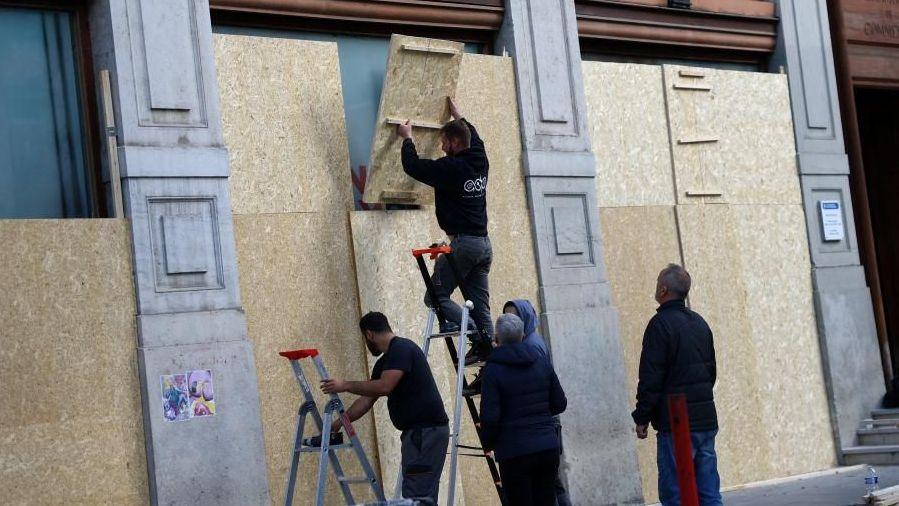
Table of Contents
France Raises Security Alert Ahead of Fresh Nationwide Protests
Ninoda.com – France is preparing for another tense Saturday as student organisations, trade unions and wider anti-government groups call for demonstrations across the country. The mobilisation comes just one week after major unrest left shops damaged, buildings set alight and police struggling to contain crowds in several cities.
Authorities expect hundreds of thousands of people to take part despite extensive limits on public gatherings. The government has tightened protest rules following the violence of 17 October, while local authorities have adopted differing approaches to planned marches.
Large police deployment planned
The Interior Ministry says 70,000 police officers will be deployed nationwide, significantly increasing the security presence in urban areas. The scale of the operation reflects concern that authorised marches could again be followed by vandalism, looting or clashes.
“We will not let anything go unchallenged,” Interior Minister Laurent Nuñez said.
“We will be uncompromising with the vandals, with the looters, and all those who commit acts of violence,” he added.
Nuñez said officials had also identified online calls for violence linked to the “far left and radical extreme left”. Opposition parties have criticised the government for failing to anticipate the extent of the previous weekend’s disorder.
In the days since the riots, fast-track court proceedings have resulted in hundreds of jail sentences for offences including arson, property damage and looting. Justice Minister Gérald Darmanin said on Friday that 232 people had been imprisoned over the 17 October violence, while more than 1,100 had appeared before courts. About 260 cases involve allegations connected to organised gang activity.
Darmanin has instructed prosecutors to pursue severe penalties for people found guilty of looting or attacks on police. Proposed measures include bans on joining future demonstrations, loss of voting rights and restrictions on access to social media.
Different rules from city to city
President Emmanuel Macron announced earlier in the week that Saturday demonstrations would be allowed only if organised by recognised trade unions. Some cities have imposed even tougher rules. Lyon, Nice and Montpellier are among those that have announced broad bans on gatherings.
Yet the national picture remains uneven. Parts of France, including sections of Paris, have experienced partial curfews over the past week, but not every city is taking the same position on protests. Some mayors have continued with sweeping restrictions, while others have permitted demonstrations formally registered with authorities.
Marseille illustrates that contrast. An earlier order prohibiting all demonstrations was quickly withdrawn so that a march organised by trade unions could proceed. Elsewhere, organisers appear undeterred by official restrictions, with hundreds of events of varying size still expected.
In Paris, a student-union march backed by labour groups has been told to follow a route outside the city centre. Preparations for possible disorder are nevertheless under way around some of the capital’s best-known locations.
Closures in Paris as businesses take precautions
Several major cultural sites will close for the day, including the Louvre, the Musée d’Orsay and the Picasso Museum. Paris Saint-Germain’s scheduled home football match has been postponed until Monday. Some businesses have covered windows and storefronts, seeking to reduce the risk of damage should violence recur.
Those precautions follow a difficult week for the country. Demonstrations in Paris led by students and unions were largely peaceful at first last Saturday, but disorder developed later in the day. Rioting and looting spread in several places as the protests continued.
The unrest also affected cities beyond the capital. In Limoges, the ornate nineteenth-century town hall was set on fire, becoming one of the most striking symbols of the damage. Shops were looted, public and private property was attacked, and police were heavily outnumbered in some locations.
Student movement broadens into wider anger
Macron met representatives of high-school students on Friday, one day before the planned demonstrations. Student leaders said the president made clear commitments during the meeting, but they urged pupils to keep mobilising.
The movement is no longer limited to students. The revived gilets jaunes, or yellow-vest movement, is also expected to be visible on Saturday. The group drew supporters from both left and right during Macron’s first term and previously organised large, disruptive demonstrations across France.
A website associated with the yellow-vest movement listed more than 500 planned demonstrations and roughly 200 additional actions for Saturday. Its call to action demanded Macron’s resignation and rejected what it described as a broader chorus of outrage over the 17 October violence, while accusing police of attacking protesters.
The coming day will test whether France can protect the right to demonstrate while preventing a repeat of the destruction seen a week earlier. For residents, businesses and public institutions, the immediate concern is practical: whether planned protests remain peaceful, whether restrictions can be enforced consistently, and whether the heavy security operation can keep separate acts of violence from overwhelming lawful demonstrations.
Related Reading
Frequently Asked Questions
What is France prepares for day of protest?
France prepares for day of protest is the main topic of this guide. The article explains the context, practical details, and next steps readers should understand.
Why does France prepares for day of protest matter?
France prepares for day of protest matters because readers are looking for a useful answer, not just a short summary. Good content should match search intent and help them decide what to do next.