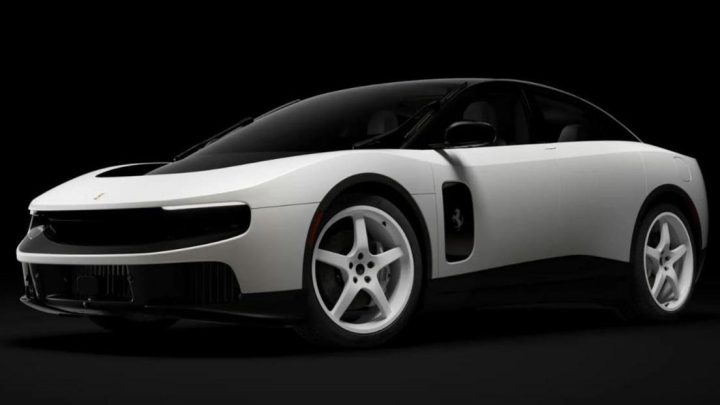
Ferrari wanted to take on Chinese EVs with the Luce – then the backlash started

Ferrari’s Luce: A Bold Move Against Chinese EVs Sparks Controversy
Ninoda.com – Ferrari’s latest venture, the Luce, represents a bold departure from its traditional offerings. Designed in collaboration with iPhone creator Sir Jony Ive, the vehicle is the Italian automaker’s first electric model and also its first five-seater. Its debut was monumental, drawing the attention of high-profile figures such as Italian President Sergio Mattarella and Pope Leo XIII, who were invited to witness the unveiling of the luxury brand’s new electric revolution. Yet, despite the grandeur of its launch, the Luce has quickly become a focal point of criticism, with detractors from across the automotive world voicing their disapproval.
A Shift in Identity
The Luce’s introduction marks a pivotal transformation for a marque historically defined by its sleek, petrol-powered supercars. For decades, Ferrari has been synonymous with the roar of V12 engines and the aggressive, aerodynamic designs that define its racing heritage. However, the company has now ventured into an uncharted territory with the Luce, which is Italian for “light.” The car’s departure from Ferrari’s classic aesthetic has sparked debate about whether the brand is losing its core identity.
The Luce’s performance, while impressive, is not the primary source of contention. The vehicle can accelerate from 0 to 60 mph (96 km/h) in roughly 2.5 seconds, boasting a top speed exceeding 190 mph. These figures are competitive with many traditional supercars, yet the focus has shifted to its appearance. Critics argue that the Luce’s design lacks the signature Ferrari flair, opting instead for a more modern, boxy silhouette that feels out of place among the brand’s heritage. Former Ferrari chairman Luca Cordero di Montezemolo, speaking to reporters, warned that the Luce risks “the destruction of a legend” and suggested the company should consider removing its iconic badge from the car.
“This is supposed to be innovation? I wonder what Enzo Ferrari would say,” said Matteo Salvini, Italy’s deputy prime minister and transport minister, referencing the company’s founder. “The Luce looks like anything but a car from the prancing horse.”
Market Reactions and Price Concerns
The Luce’s launch has not only stirred design debates but also raised eyebrows in financial circles. Shares in Ferrari plummeted by 8% the day after its unveiling, reflecting investor unease. Social media platforms have amplified the backlash, with users mocking the car’s $640,000 price tag. Some have likened it to far more affordable alternatives like the Nissan Leaf, while others have drawn comparisons to Chinese electric vehicles, suggesting Ferrari is attempting to compete in a market it previously overlooked.
Shaun Baker, an Australian car collector and dealer, has taken to calling the Luce “the Loser” on social media. “Ferrari was the aspirational brand to own. But with the Luce, they’ve hurt their image,” he remarked. The car’s design, he argued, fails to evoke the same prestige associated with Ferrari’s legacy. Despite this, some internet users have praised the Luce as a “masterclass” in design, highlighting its elegant interior and futuristic elements. However, these positive remarks are overshadowed by the overwhelming criticism.
James Wong, a Singapore-based car analyst, acknowledged the Luce’s interior as a standout feature but noted that the vehicle as a whole feels “unrecognisable” as a Ferrari. “Its eye-popping price tag looks even more exorbitant when compared to the increasingly affordable and luxurious EVs already available,” added Jessica Cheam, a sustainable industry expert. These critiques underscore a growing skepticism about whether the Luce’s premium pricing justifies its electric innovation, particularly in an era where consumer demand for EVs is rapidly evolving.
A New Era of Automotive Evolution
Ferrari’s decision to embrace electric vehicles comes at a time when the global motor industry is undergoing significant transformation. Chinese automakers, known for their aggressive pricing and cutting-edge technology, have emerged as formidable competitors, challenging traditional luxury brands. The Luce’s unveiling has placed Ferrari at the forefront of this shift, but its reception has been mixed. While the company has secured strong interest from potential buyers, the question remains: can a brand steeped in internal combustion engine heritage successfully transition to electric power without alienating its loyal customer base?
Ferrari’s CEO, Benedetto Vigna, has defended the Luce’s design and price, stating it is a fair trade-off for innovation. He emphasized that the vehicle’s launch reflects the company’s commitment to staying relevant in the rapidly changing automotive landscape. However, the backlash suggests that not all are convinced. Some have even gone so far as to generate AI-modified versions of the Luce’s design, proposing a more sporty alternative that they claim surpasses the original. “They were made in 10 seconds and still look better than what Ferrari has come up with,” Baker remarked, highlighting the stark contrast between the Luce’s design and the visual appeal of its predecessors.
Industry-Wide Challenges and Brand Evolution
The Luce’s controversy is part of a broader trend affecting the automotive industry. In 2024, Jaguar faced similar scrutiny when it announced its plans to become a high-end EV brand, unveiling the Type 00 concept vehicle. The Type 00’s ultra-long bonnet and chunky wheels were seen as a departure from Jaguar’s classic E-Type roots, prompting debates about the brand’s identity. At the time, Jaguar’s CEO Rawdon Glover defended the move, stating, “Jaguar needs to be bold and disruptive in order to cut through and get our message across.”
Ferrari’s situation is not unique. Rival supercar maker Lamborghini has also had to adapt, scrapping its all-electric vehicle program due to weak demand and customer preference for petrol engines. Lamborghini’s boss, Stephan Winkelmann, recently said that the company’s focus on hybrid models over all-electric ones was “the right way to go.” This decision reflects the challenges faced by traditional automakers in balancing heritage with the need for innovation. While Lamborghini has opted for a hybrid approach, Ferrari’s all-electric Luce represents a more radical step, raising questions about the sustainability of such a move.
Despite the criticism, Ferrari’s embrace of electric technology signals a significant evolution in the industry. The Luce’s launch has positioned the brand as a pioneer in the electric supercar segment, though its success will depend on its ability to reconcile its storied history with modern demands. As the market continues to shift, the automotive world will be watching closely to see whether Ferrari can maintain its status as a symbol of luxury and performance in the face of electric competition.
In the end, the Luce serves as a microcosm of the challenges and opportunities facing traditional automakers in the age of electrification. Its design, price, and performance have sparked a wave of debate, with critics arguing that it strays too far from Ferrari’s roots. Yet, its creation also reflects a necessary adaptation to a changing landscape. Whether the Luce will be remembered as a bold leap forward or a misstep in the brand’s legacy remains to be seen, but its impact is already undeniable.