The woman who fought for Pakistan’s disappeared men now faces life in jail

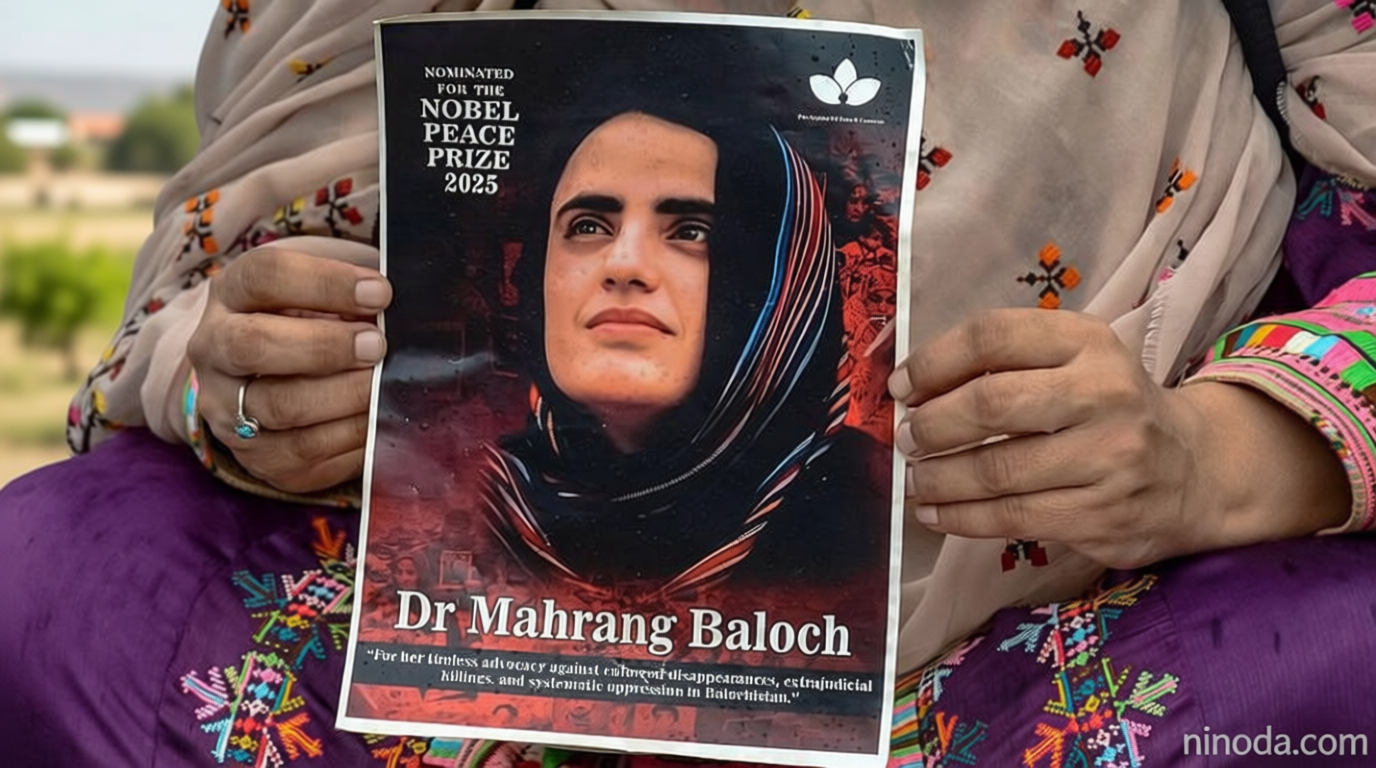
The woman who fought for Pakistan’s disappeared men now faces life in jail
Ninoda.com – Dr. Mahrang Baloch, a 33-year-old activist, has been sentenced to life imprisonment by a Pakistani anti-terrorism court. The ruling came after she and her colleague Sibghatullah Shah were convicted of terrorism, sedition, and murder in 2025. The charges stem from a protest in Gwadar, where a paramilitary soldier was killed. The pair plan to appeal the decision, which has drawn criticism from rights groups and families of the missing.
A personal crusade against enforced disappearances
Mahrang’s activism began in her teenage years, sparked by her father’s mysterious vanishing in 2009. Abdul Ghaffar Langove, a political figure, was allegedly taken by security forces and later found dead in Lasbela district, his body torn and marked by torture. His death, which she recounted in her final BBC interview before arrest, became the driving force behind her lifelong fight for accountability.
“When my father’s body arrived, he was wearing the same clothes, now torn. He had been badly tortured,” she said.
Over the years, Mahrang turned her grief into a campaign advocating for missing persons in Balochistan. Activists estimate thousands of ethnic Baloch have disappeared since the 2000s, often detained without due process or executed in operations against separatist groups. The Pakistani government disputes these claims, arguing many have fled or joined militant factions.
Balochistan: A province in turmoil
Balochistan, Pakistan’s largest province spanning 44% of the nation’s territory, is rich in natural resources like gas and gold. Yet, its people have long felt marginalized. Security restrictions, poor infrastructure, and scarce utilities have deepened the region’s isolation. Foreign journalists often face barriers to reporting on the situation.
The province was annexed by Pakistan in 1948, despite resistance from tribal leaders who sought independence. Over time, the conflict has escalated, with militant groups like the Balochistan Liberation Army (BLA) targeting security forces. The BLA, labeled a terrorist organization by Islamabad and its allies, has intensified attacks, including bombings and ambushes.
Legacy of waiting and resilience
Mahrang’s struggle has become emblematic of a generation of Baloch women who live in the shadow of disappearance. Nadia Baloch, her sister and legal representative, expressed defiance after the conviction. “We will challenge this decision in the higher courts,” she stated, adding that she hesitated to visit Mahrang in prison due to guilt over not securing justice for her father.
“I don’t have the courage to see her,” Nadia said. “Because I feel I have failed her by not getting Mahrang justice.”
Recent BBC reports highlighted the stories of Baloch women who have spent years searching for missing relatives. Some have become accustomed to morgue visits, hoping to uncover clues. Others describe the heartbreak of identifying bodies recovered from remote graves. Mahrang, once a doctor, now symbolizes their collective hope for truth and reconciliation.