Has VAR become a lottery at the World Cup?

VAR’s Role in World Cup Uncertainty
Varied Interventions Challenge Consistency
Ninoda.com – The World Cup has seen a series of contentious VAR decisions, leaving fans questioning whether the system is applied uniformly. Just days into the tournament, a goal by Germany against Ecuador in the second minute sparked debate, as the video assistant referee chose not to intervene. This inconsistency has raised concerns about the reliability of VAR calls, contrasting with earlier expectations.
From Ghana’s missed penalty against England to Brazil’s disallowed goal against Scotland, the VAR’s involvement has been unpredictable. These decisions have highlighted the difficulty in maintaining a consistent standard, even as the competition progresses. In comparison to the Premier League, where VAR interventions averaged 0.29 per game last season, the World Cup currently sits at 0.28. However, subjective calls—where referees consult monitors—have slightly increased, with the tournament recording 0.17 per match versus 0.15 in England.
Referee Pierluigi Collina, head of FIFA’s officiating team, argues that football’s nature as a contact sport means not all incidents should be flagged as fouls. He advocates for allowing strong challenges to continue, which in turn affects how VAR operates. This approach makes it harder to identify clear errors, a challenge the Premier League has grappled with.
Conflicting Calls Under Scrutiny
Recent games have exposed VAR’s inconsistencies. On Tuesday, Ghana’s coach Carlo Queiroz criticized the system after his team was denied a penalty for Ezri Konsa’s challenge on Prince Kwabena Adu. “VAR went for a coffee,” he said, expressing frustration over the lack of intervention in a 0-0 draw. By Wednesday, Brazil’s goal against Scotland was overturned, yet the decision appeared subjective, with Vinicius Jr’s foul on Jack Hendry being contested.
“I think Scotland are a little fortunate to be honest,” said Darren Cann, a former World Cup assistant referee, on MOTD. “There is a little contact before the ball is played, but I don’t really feel that it’s a foul.”
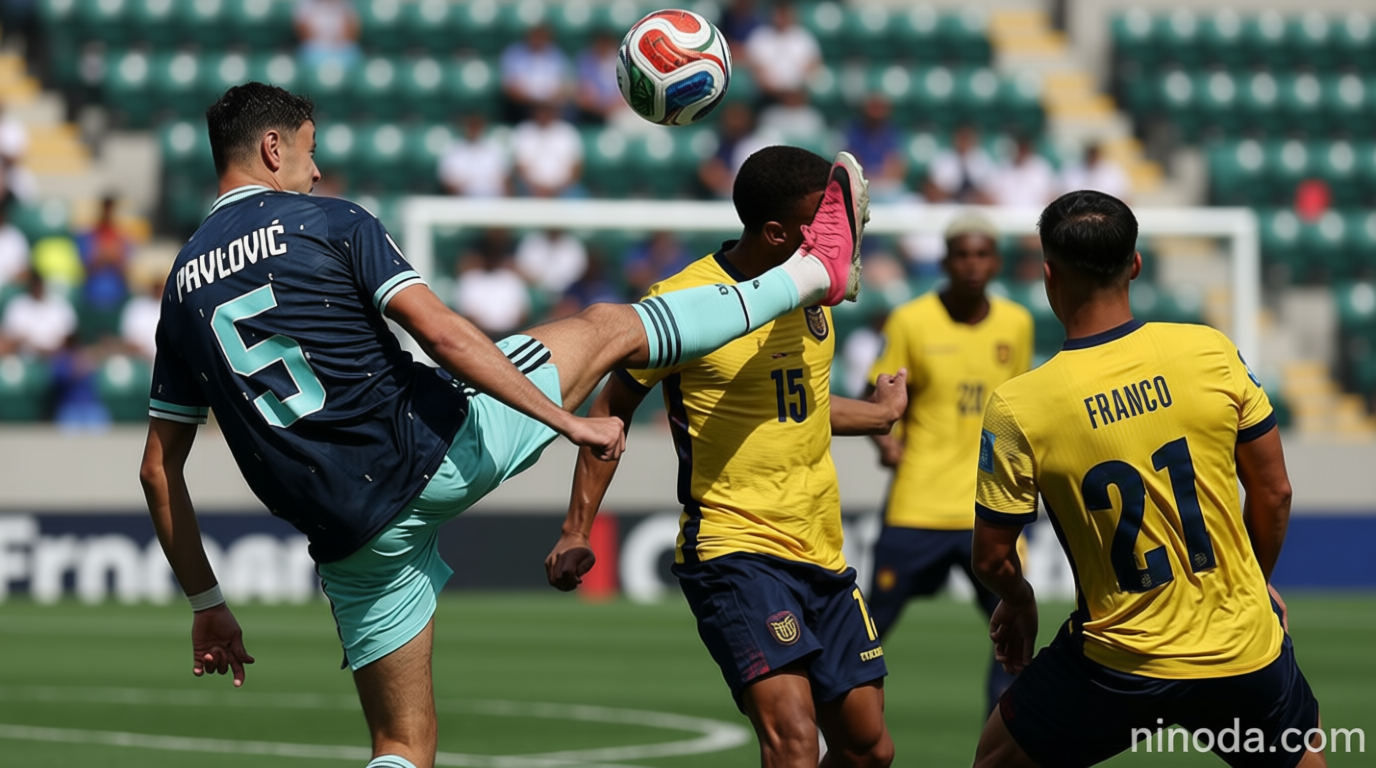
Thursday’s match between Germany and Ecuador further fueled the discussion. Leroy Sane’s early goal was allowed despite Alexandar Pavlovic’s high boot clearly striking Pedro Vite’s head. “Every single player watching this World Cup right now would have seen this incident and said immediately, that’s endangering an opponent, that’s a high boot, that’s a foul,” remarked Joe Hart on MOTD. Ellen White echoed the sentiment, adding: “I’m shocked that it wasn’t reviewed and it wasn’t disallowed.”
Yet, in the same game, the VAR intervened when Kai Havertz went down under Joel Ordonez’s challenge, overturning the penalty. While this decision was justified in isolation, it contrasted with the earlier high bar set for Pavlovic’s foul. “It did seem inconceivable that the VAR could give one foul and not the other,” noted analysts, pointing to the system’s erratic performance.
VAR’s Impact on Tournament Dynamics
Despite these inconsistencies, the big teams have generally fared well with VAR reviews. The Brazil goal and Germany penalty are the only subjective decisions that have worked against top-tier teams so far. This raises questions about the system’s role in shaping outcomes, as underdogs like Scotland have found unexpected success. The variability in VAR decisions has become a focal point, testing its ability to uphold fairness across a 48-team competition.