Venezuela quake survivor pulled out alive after eight days

Venezuela Quake Survivor Pulled Out Alive After Eight Days
Ninoda.com – After eight grueling days trapped under the rubble of a collapsed structure, a Venezuelan earthquake survivor was finally rescued alive, marking a significant moment in the nation’s ongoing recovery from a devastating natural disaster. The operation, which took over 100 hours of relentless effort, involved a coordinated international team of rescuers from seven countries working tirelessly to free the man from the debris. The twin earthquakes that struck Venezuela on 24 June caused catastrophic damage, claiming nearly 2,300 lives and leaving thousands of people missing, with the survivor’s miraculous survival becoming a beacon of hope in the aftermath.
The Search and Rescue Operation
The rescue mission began immediately following the quakes, which registered as a 7.3-magnitude tremor and a 7.0-magnitude aftershock, shaking the coastal region of Catia La Mar. Rescuers focused their efforts on the Galerias Playa Grande mall, where the survivor, Hernán Gil, was discovered in a concrete booth located deep within the basement of the car park. This makeshift shelter, according to reports, protected him from the 144 tonnes of debris that crushed the surrounding area, allowing him to endure the crushing conditions for over a week.
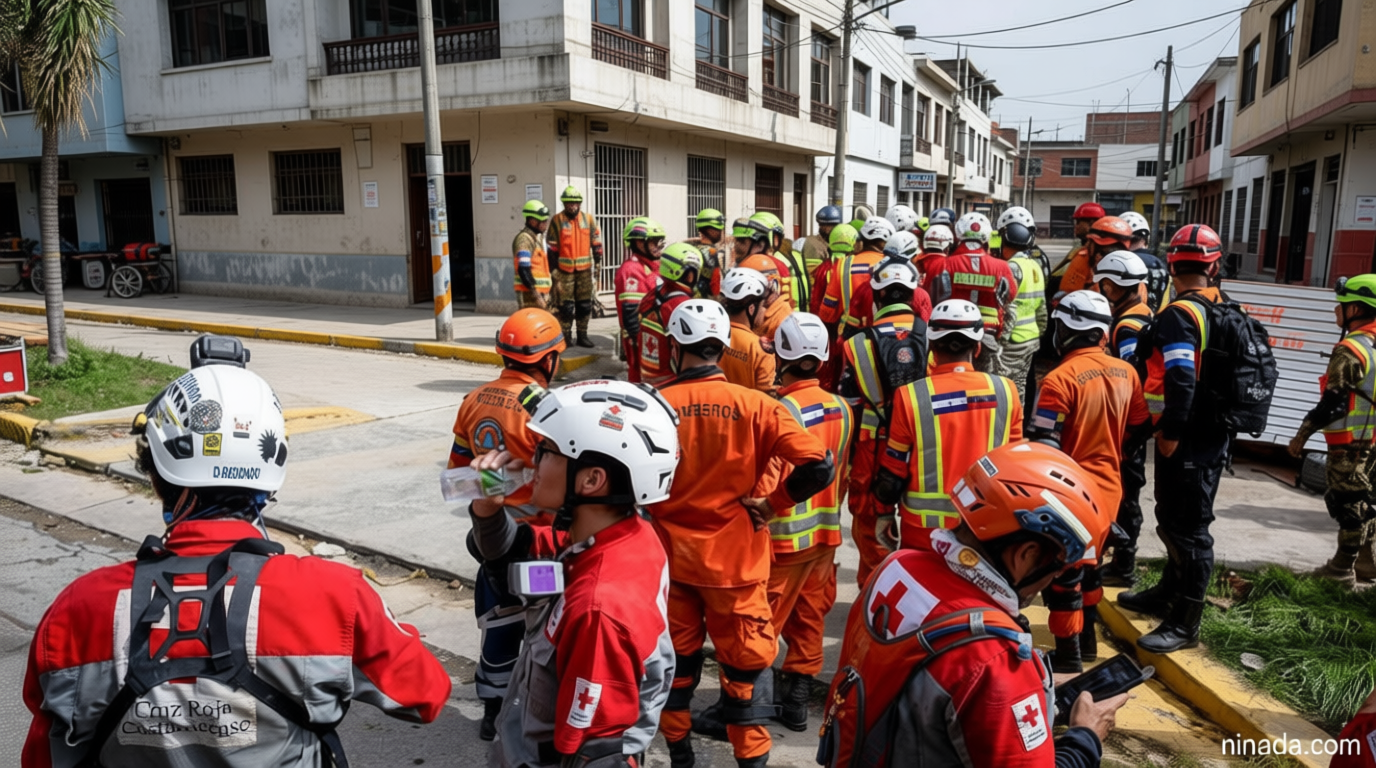
Teams from Venezuela, Chile, Costa Rica, El Salvador, Mexico, Portugal, and the United States formed a unified effort to extract Gil. The complexity of the operation was underscored by the unstable structure and the risk of further collapse, which required meticulous planning and the use of advanced equipment. A Chilean firefighter described the mission as “the most complex and technically difficult” they had encountered, highlighting the challenges of navigating the rubble and maintaining stability during the extraction process.
The Survivor’s Condition and Story
On the night of the rescue, a breakthrough occurred when rescuers inserted a small camera into the debris, revealing Gil alive and conscious. The footage showed him with one eye bloodshot, his face masked to protect against dust inhalation, and his voice steady despite the ordeal. “He has told us he does not even have a crushed nail,” reported Ricardo Arias of the Costa Rican Red Cross, emphasizing the survivor’s remarkable resilience.
Gil’s account of the days spent in the shelter provided a poignant glimpse into the survival experience. He described the physical and emotional toll of the situation, including the darkness, the sound of creaking concrete, and the fading hope of being found. Despite the traumatic circumstances, he remained in stable condition, receiving water and an intravenous drip during the rescue. Marco Antonio Franco of the Mexican Red Cross noted that Gil’s humor and determination were key factors in keeping rescuers motivated, as he humorously requested hydration drinks in his preferred flavors.
His steady conversation with the rescue teams also offered critical insights into the conditions within the collapsed building. Gil shared details about his family, his attempts to stay calm, and his belief that the structure would hold until help arrived. “He himself drives us on, telling us to carry on,” Franco said, reflecting on how Gil’s presence and words kept the operation focused and hopeful. This personal narrative added a human element to the broader disaster, underscoring the emotional resilience of those affected.
The rescue of Hernán Gil is now being celebrated as a milestone in the global response to the Venezuela earthquake. His survival, achieved after eight days of isolation, highlights the importance of international collaboration in disaster relief. As the search for other survivors continues, the incident has also sparked discussions about the need for improved building safety standards and emergency preparedness in the region. Meanwhile, the personal stories of those who endured the quake, like Gil’s, serve as reminders of the human spirit’s capacity to endure even in the face of overwhelming adversity.