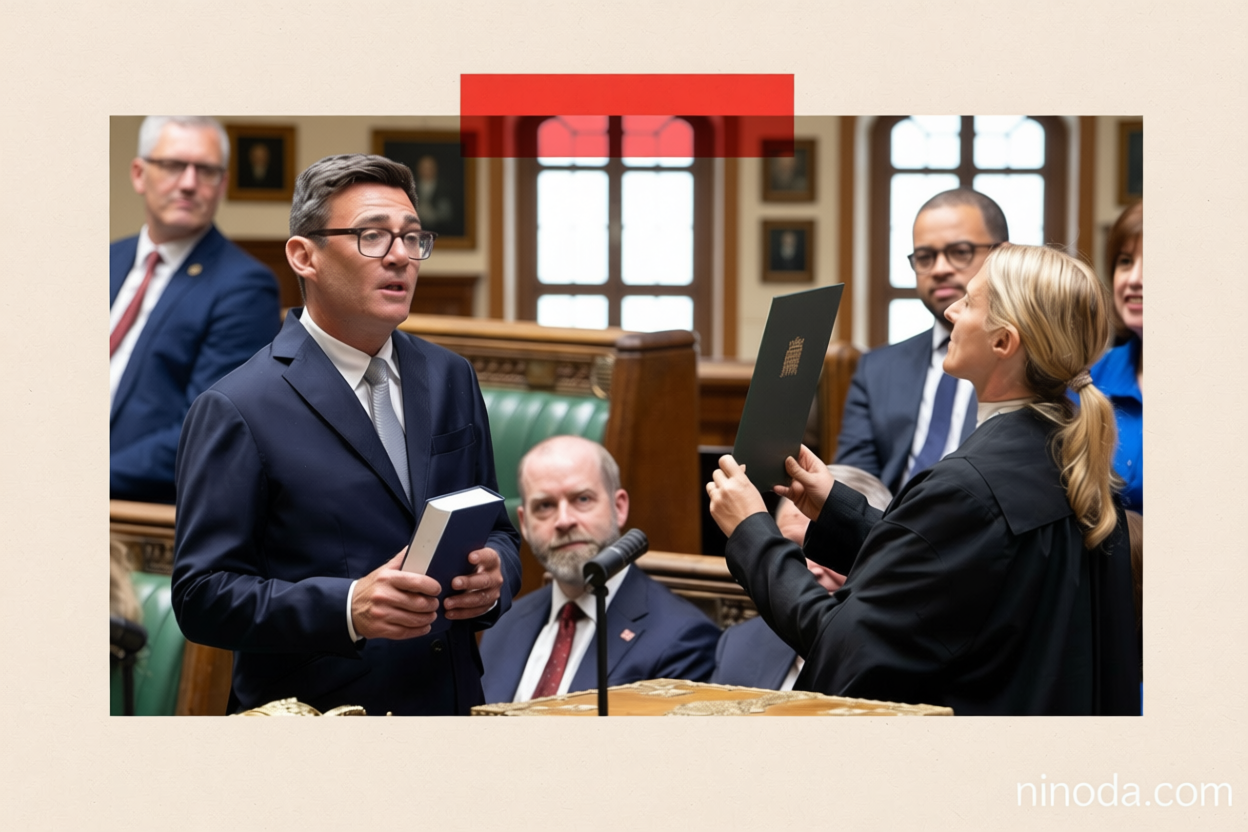
Reform asks NCA to investigate leaks of private financial information


Table of Contents
Reform UK Requests NCA Inquiry into Leaks of Private Financial Information
Ninoda.com – Reform asks NCA to investigate leaks of private financial information, as the party’s deputy leader, Richard Tice, has formally directed the National Crime Agency (NCA) to probe the disclosure of his personal financial data to the media. Tice’s request follows reports that the NCA shared Suspicious Activity Reports (SARs) with the Guardian, revealing payments to his organizations. The inquiry centers on whether the NCA breached confidentiality by leaking these records, potentially undermining public trust in financial transparency mechanisms.
The SARs Controversy and Reform’s Allegations
The Suspicious Activity Reports, a key tool used by the NCA to track potential money laundering, are typically shared only with authorized entities. Reform UK claims that the agency’s internal records were accessed by the media, raising questions about how sensitive data is handled. Tice argued that the NCA’s actions could be seen as a breach of the Proceeds of Crime Act, which criminalizes tipping off investigators about ongoing cases. The party’s stance emphasizes the need for stricter safeguards to protect individuals’ financial privacy while ensuring law enforcement accountability.
Understanding the NCA’s Role and Response
The National Crime Agency maintains that it does not confirm or deny the use of SARs outside of official channels. In a statement, the agency reiterated that sharing SARs without permission constitutes a “tipping off offence,” which could lead to legal consequences. However, the NCA also clarified that it regularly collaborates with other organizations, such as the police and financial regulators, to ensure the effective investigation of criminal activities. This highlights a tension between transparency and confidentiality in the NCA’s operations.
“The National Crime Agency does not confirm or deny the receipt of suspicious activity reports (SARs), nor comment on how any SAR is used. SARs are confidential, and breaching that confidentiality risks committing a tipping off offence under the Proceeds of Crime Act.”
Financial Transactions Under Scrutiny
Details of Tice’s financial dealings have been scrutinized alongside the NCA’s alleged leaks. Earlier reports by the Telegraph revealed that Tice’s firm, Tisun Investment, received an £80,000 loan from George Cottrell, a close associate of Reform UK leader Nigel Farage, in late 2024. Additionally, Fiona Cottrell, George’s mother, donated £1 million to Britain Means Business, a think tank linked to Tice, in June 2024. The same month, the organization transferred £500,000 to Reform UK, as recorded by Electoral Commission documents. These transactions are now under examination to determine if they were improperly disclosed.
George Cottrell and the Farage Controversy
George Cottrell, who has been central to the Farage political scandal, is accused of providing logistical and digital support to the former UKIP leader before his election as an MP. The Sunday Times reported that this assistance, which included coordinating media strategies and managing communications, occurred during the year prior to Farage’s parliamentary career. Under electoral rules, new MPs must disclose gifts or benefits received in the 12 months preceding their election if they are connected to political activities. However, gifts deemed “purely personal” are exempt from this requirement.
“New MPs are required to disclose gifts or benefits received in the 12 months before their election if they relate to political or parliamentary work. Gifts considered ‘purely personal’ are not subject to this disclosure obligation.”
Implications for Transparency and Accountability
The leaks have sparked a broader debate about transparency in political finance. Reform UK contends that the NCA’s involvement in the dissemination of SARs suggests a potential overreach, with private financial information being exposed without clear justification. Critics argue that such leaks could erode public confidence in the NCA’s ability to protect sensitive data, while supporters of the agency maintain that sharing information with law enforcement is essential for preventing financial crimes.
Political Reactions and Ongoing Investigations
As the Reform UK inquiry unfolds, political figures and analysts are weighing the implications of the NCA’s alleged data leaks. The controversy has intensified scrutiny on the relationship between the NCA and political entities, with questions about potential conflicts of interest. Meanwhile, the Electoral Commission continues to monitor the flow of funds to Reform UK, ensuring compliance with disclosure rules. The outcome of this investigation may influence future policies on financial transparency and the handling of sensitive information in political contexts.