Chris Mason: It’s far from certain whether by-election will strengthen Farage

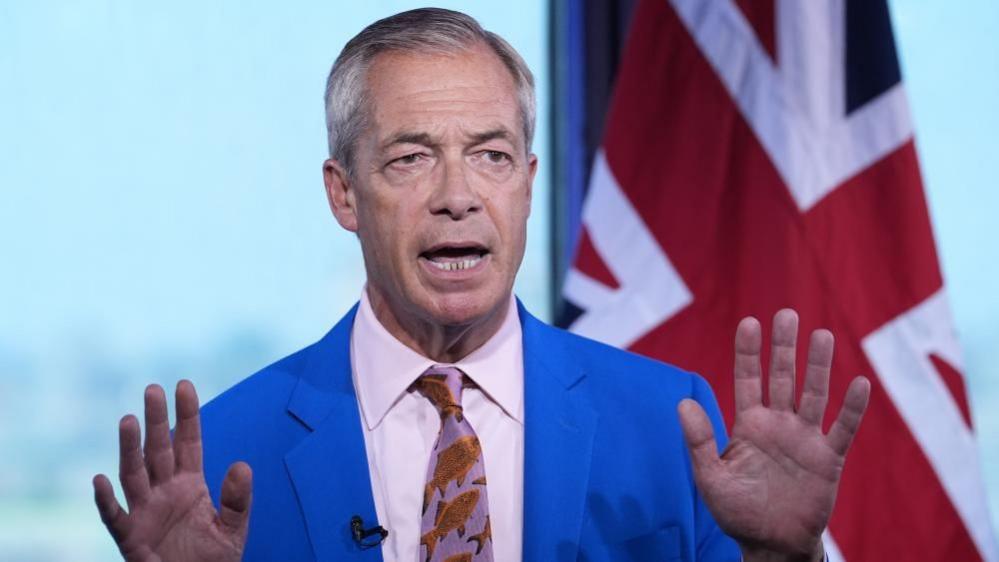
Chris Mason: By-Election’s Impact on Farage’s Influence Uncertain
Introduction
Ninoda.com – Chris Mason, a prominent political analyst, recently offered a critical perspective on the implications of the upcoming by-election in Clacton, Essex, for Nigel Farage’s political standing. The election, triggered by the resignation of the Conservative Party’s current representative, has become a focal point for debates about the future of UK politics and the role of key figures like Farage. While some speculate that the outcome could bolster his influence, Mason argues that the results remain unpredictable, highlighting the complexities of modern electoral dynamics.
The By-Election Context
The Clacton by-election, scheduled for [insert date], is being closely watched as a barometer for the Conservative Party’s resilience in the wake of recent political upheaval. Nigel Farage, the leader of the Brexit Party and a key figure in UKIP, has been a central player in the Conservative campaign, leveraging his reputation as a Brexit icon to attract support. However, Chris Mason points out that the race is not just a test of Farage’s political clout but also a reflection of broader voter sentiment in the region. With a diverse electorate and shifting party allegiances, the stakes are high, and the results could have ripple effects across the political landscape.
Chris Mason’s Analysis
Chris Mason, whose expertise in UK political trends has earned him a reputation as a trusted voice in media, emphasizes that the by-election’s outcome is far from guaranteed. In an interview with BBC News, he noted that while Farage’s candidacy has drawn significant attention, his ability to translate that interest into votes depends on several factors. These include the local issues dominating the campaign, the effectiveness of the Conservative Party’s messaging, and the turnout of key demographic groups. Mason also highlighted the importance of understanding the regional context, as Clacton’s electorate has historically leaned towards the Conservative Party, but recent shifts in support for Brexit-focused parties could change the narrative.
Voter Sentiment and Regional Dynamics
Chris Mason’s analysis underscores the evolving nature of voter preferences in Essex. The region, known for its strong Conservative base, has seen increased interest in alternative political movements, particularly those aligned with Brexit. This by-election presents a unique opportunity for Farage to demonstrate his electoral appeal beyond the UKIP sphere. However, Mason cautions that the presence of other candidates, including those from the Liberal Democrats and the Greens, could分流 support and complicate the race. He also mentions the role of local media and community engagement in shaping voter decisions, suggesting that the by-election may serve as a microcosm of broader political trends.
Broader Implications for UK Politics
The results of the Clacton by-election are expected to have implications beyond the immediate constituency. Chris Mason argues that the outcome could influence the trajectory of the Conservative Party’s strategy in future elections, particularly in the aftermath of the Brexit referendum and the subsequent political fragmentation. If Farage’s campaign succeeds, it may signal a growing influence for Brexit-aligned parties within the Conservative fold. Conversely, a loss could be seen as a setback for his political ambitions, underscoring the challenges of maintaining momentum in a highly competitive arena. Mason’s insights provide a nuanced view of how this single by-election might reflect larger shifts in voter behavior and party dynamics.
Chris Mason’s analysis also touches on the media’s role in shaping public perception of the by-election. With national outlets like BBC News covering the event extensively, the narrative surrounding Farage’s candidacy has the potential to sway voter opinions. However, Mason warns against overestimating the power of media influence, noting that local factors such as community concerns, candidate charisma, and grassroots campaigning often play a decisive role. He further suggests that the by-election may reveal tensions within the Conservative Party, as the incumbent’s performance is being scrutinized alongside the strategies of external candidates.
Conclusion
Chris Mason’s commentary on the Clacton by-election serves as a reminder that political outcomes are rarely straightforward. While the event has been framed as a potential boost for Nigel Farage, the analyst’s perspective highlights the uncertainty and multifaceted nature of the race. By examining the interplay of local issues, national politics, and voter behavior, Mason provides a comprehensive lens through which to view the by-election’s significance. As the campaign intensifies, the results will likely be analyzed through various political frameworks, with Chris Mason’s insights offering a balanced and informed perspective on the broader implications for UK politics.