Has World Cup signalled end of chaos at corners?

World Cup Signaled Shift in Corner Kick Refereeing?
Ninoda.com – Fifa’s head referee, Pierluigi Collina, urged coaches to prioritize blocking and holding tactics during the World Cup, aiming to curb excessive fouls in the penalty area. His directive came ahead of the tournament, emphasizing a stricter approach to decisions involving goalkeepers. The change in officiating has sparked discussions about its impact on the game’s dynamics, particularly in set-piece scenarios.
Arsenal’s Corner Tactic Echoes in World Cup?
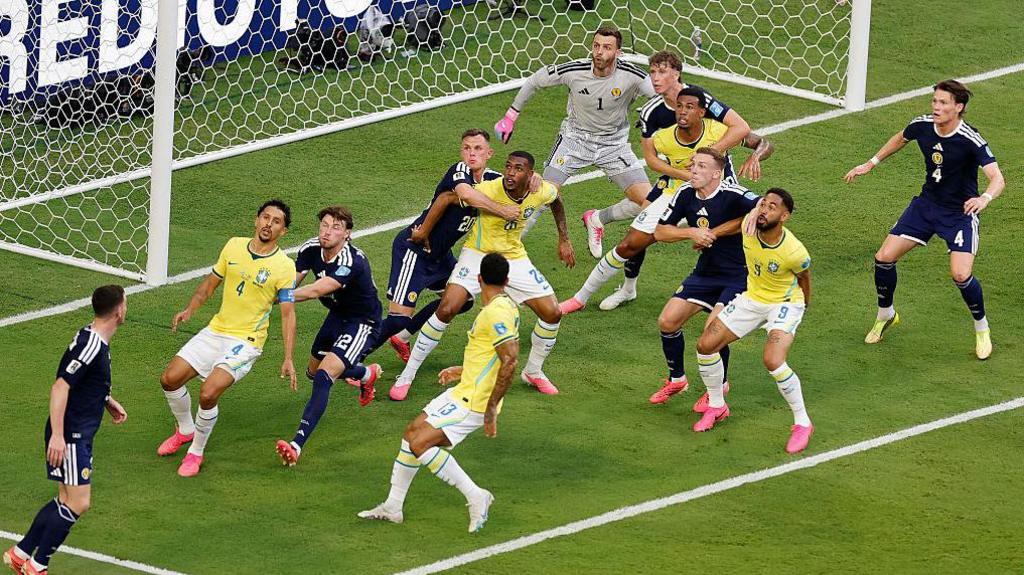
During Germany’s World Cup match against Paraguay, a goal by Jonathan Tah was disallowed after a VAR review. The referee ruled Waldemar Anton had blocked goalkeeper Orlando Gill, highlighting a focus on positioning and intent. This mirrors Arsenal’s strategy last season, where aggressive corner tactics led to 19 goals from set pieces, securing their Premier League title. Jurgen Klopp, the former Liverpool manager, noted the irony: “If the goal is illegal, then Arsenal won’t be English champions,” quipping about the disparity in officiating standards.
“At least they are consistent, but it’s the extreme opposite,” said former Germany midfielder Thomas Hitzlsperger on BBC One. “We watch the Premier League every week and this is so different. None of the goalkeepers are protesting. Fifa changed their approach and any contact is in favour of the keeper.”
Collina’s directive has reshaped how corners are managed at the World Cup. Previously, players would crowd the six-yard box, sometimes as many as 16, creating chaotic situations. Now, referees are more stringent, with fewer goals awarded from corners. The average rate of such goals in the World Cup stands at 0.34 per match, lower than the Premier League’s 0.49 and the Bundesliga’s 0.46, but higher than Qatar’s 0.20 from four years ago.
Training and Technology: A New Era?
Collina’s meticulous preparation for the World Cup includes a training camp in Miami, Florida, where 51 referees and 88 assistants undergo rigorous drills. Semi-professional players simulate real-game scenarios, helping officials grasp tactical setups. For instance, in France vs Morocco, referees practiced routines with two XIs to mimic the quarter-finalists’ strategies. This immersive approach ensures consistency, as officials receive immediate feedback on their decisions.
Collina believes real-world examples are crucial for training. “We cannot rely solely on diagrams,” he stated, underscoring the need for officials to adapt to varied team formations. While holding and blocking remain inevitable in contact sports, the focus now is on reducing deliberate disruptions. The VAR intervention in Germany’s case, though seen as lenient by some Premier League fans, aligns with Collina’s vision of stricter enforcement.
Will this transformation ripple into domestic leagues? The statistics suggest a potential shift. With FIFA’s attention to detail and training innovations, the value of corners may diminish, leading to a more structured approach to set pieces. The upcoming Premier League season could witness this change, as referees apply the lessons learned from the World Cup.