McGregor injured 69 seconds into UFC comeback

McGregor’s UFC Comeback Ends in 69-Second Defeat
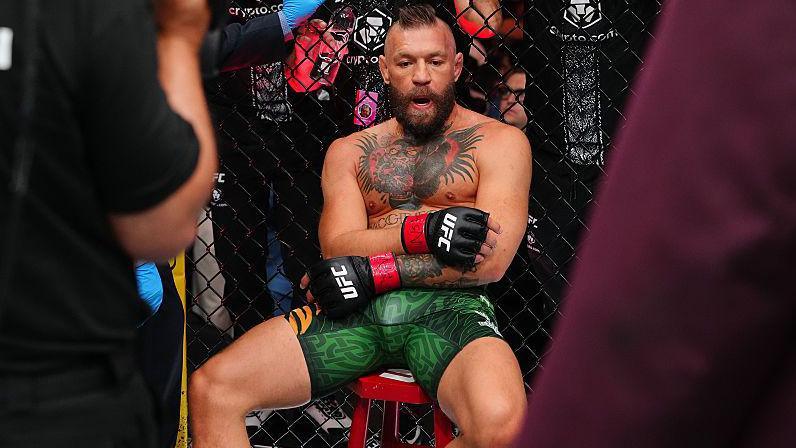
Ninoda.com – Conor McGregor’s highly anticipated return to the UFC octagon at UFC 329 was abruptly halted just 69 seconds into his fight against Max Holloway. The Irish superstar, known for his dominance in the featherweight division, suffered a significant knee injury during the opening exchanges, marking a pivotal moment in his career. The match, which was expected to showcase McGregor’s resilience, ended with referee Mike Beltran stepping in to stop the action after Holloway capitalized on the early vulnerability. This unexpected outcome has sparked discussions about McGregor’s ability to adapt to welterweight and his potential for future fights.
The Moment of Impact
The injury occurred when McGregor attempted his first roundhouse kick, a move that had been a hallmark of his previous performances. Despite his efforts to showcase his signature striking, the kick missed its mark, leaving him on the mat. Holloway, who had previously faced McGregor in 2013 and lost, saw an opportunity to avenge his earlier defeat. The 28-37 record of the Hawaiian fighter, combined with his aggressive style, made the outcome seem inevitable. “You guys are lucky because there will be a Holloway v McGregor 3,” Holloway said, hinting at a potential rematch that could redefine his career.
“We have to run it back one more time. We need one more,” Holloway remarked, acknowledging the significant hype surrounding the matchup. “I was looking forward to this. I was working hard to get to 170lb and fight this guy. For it to end like this, it sucks.”
McGregor’s injury not only ended his UFC comeback but also raised questions about his readiness for the welterweight division. This marks his seventh career loss and his fourth in his past five fights, with only one victory since 2016. The setback highlights the challenges of transitioning to a heavier weight class, where power and endurance play a critical role. Fans and analysts alike are now debating whether McGregor’s setback signals a decline in his performance or a temporary hiccup in a long-term comeback.
Holloway’s Rise and Challenges
Max Holloway, the former featherweight champion, made his welterweight debut at T-Mobile Arena in Las Vegas, where he faced McGregor. Known for his high-output striking and viral finishers, Holloway has carved a niche as a fan favorite, even as he adapts to a new weight class. His 2024 victory over Justin Gaethje at UFC 300 was celebrated as “KO of the century” by commentator Joe Rogan, underscoring his reputation as a technical and dynamic fighter. However, his recent forays into welterweight have prompted debates about his ability to maintain the same level of performance as before.
Holloway’s career has been defined by consistency, with 24 wins out of 33 UFC contests. His most dominant period came in the featherweight division, where he once held a record-setting 13-fight win streak. While his transition to welterweight is still in progress, this victory against McGregor could bolster his chances for a title shot in the lightweight division, where he is currently ranked fourth. Yet, the win also carries implications for his standing in the welterweight ranks, as it tests his adaptability and resilience in a more challenging weight class.
Despite his accomplishments, Holloway’s career has not been without controversy. In 2024, he was involved in a civil case where Nikita Hand secured damages for assault by rape, and he faced an 18-month doping ban. These incidents, while not directly related to his performance against McGregor, have shaped perceptions of his reliability and discipline. Nonetheless, UFC officials remain confident in his ability to attract attention and deliver compelling fights, which they believe is crucial for maintaining audience engagement.
Broader Implications for the UFC
The early injury to McGregor has broader implications for the UFC’s strategy in scheduling high-profile matchups. With the Irish fighter’s comeback cut short, the organization may need to reassess their approach to integrating him into the welterweight division. The decision to pair McGregor with Holloway, a seasoned contender, was designed to generate excitement, but the result has sparked debates about the risks of such high-stakes events. Analysts suggest that the UFC’s decision to expose McGregor to a new weight class without adequate preparation may have contributed to the injury.
McGregor’s injury also serves as a reminder of the physical demands of mixed martial arts. Even the most decorated fighters are susceptible to setbacks, and this defeat underscores the importance of injury prevention and training adjustments. Fans will be watching closely to see if McGregor can recover swiftly and return to the octagon, as his presence continues to be a major draw for the UFC. The event’s success in terms of viewership and media coverage may offset the disappointment of an early stoppage, reinforcing the organization’s reliance on McGregor’s brand.
In the aftermath of the fight, the UFC has expressed optimism about McGregor’s future, emphasizing his ability to captivate audiences despite the setback. The injury, occurring 69 seconds into his UFC comeback, has become a defining moment in the event’s narrative, with media and analysts dissecting the circumstances surrounding it. While McGregor’s recovery will be a key focus, the fight has already left a lasting impact, highlighting the unpredictable nature of combat sports and the challenges of maintaining peak performance across different divisions.