France superstars thriving thanks to Deschamps’ bold changes

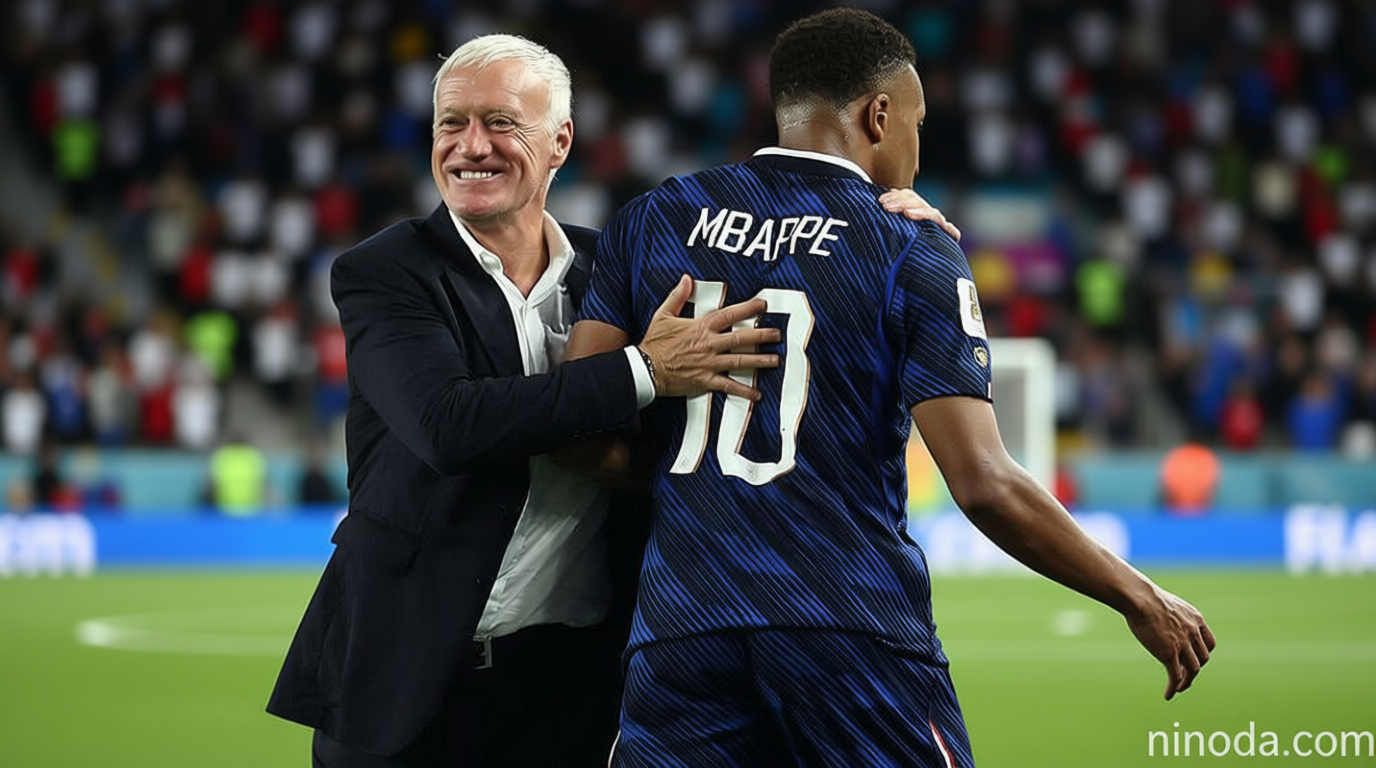
France’s Star Players Shine Under Deschamps’ Tactical Innovations
Ninoda.com – Didier Deschamps has shown an exceptional ability to harness the talents of high-profile stars like Kylian Mbappé. While it may seem straightforward to manage a team packed with elite athletes, the reality is far more complex. Many clubs have struggled to maintain cohesion when assembling squads of extraordinary ability or dealing with the egos of world-class players. Since taking charge of France in 2012, Deschamps has consistently evolved his tactics, ensuring the nation’s wealth of talent translates into success on the international stage.
A Dynamic Approach to World Cup Challenges
The coach’s adaptability has been particularly notable during major tournaments. In this World Cup, he has repeatedly modified his formations to optimize outcomes, a strategy that has proven effective in past competitions. This flexibility is evident in his current approach, where the team’s structure has shifted from its initial setup to address evolving needs. Deschamps’ ability to adjust mid-tournament has allowed France to remain competitive, fine-tuning their system to maximize chances of victory.
“You might therefore think managing such an elite group of players is an easy task – but this is not necessarily true.”
France’s attacking prowess, especially Mbappé’s, has been a focal point of Deschamps’ strategy. At 27, Mbappé has moved beyond his earlier role as a late-game finisher, now demanding a more central presence. This shift requires careful balancing, as the coach must integrate Mbappé’s playmaking abilities without compromising the team’s defensive stability. In qualifying, France experimented with a fluid 4-2-4 or 4-2-3-1 formation, allowing players like Hugo Ekitike and Antoine Dembélé to operate in versatile roles. The setup against Senegal mirrored this, with Doué replacing the injured Ekitike while maintaining Mbappé’s central positioning.
During the match against Senegal, defensive adjustments became critical. France adapted their shape to a 4-4-2, narrowing the gap between attackers and midfielders. However, this led to spacing issues, as Senegal exploited the distance between Mbappé and Dembélé and the midfield duo of Adrien Rabiot and Aurelien Tchouameni. Deschamps swiftly responded, reorganizing the team to address these weaknesses. In possession, Tchouameni dropped into a holding role, forming a back three that created numerical advantages in defense.
These changes reflect Deschamps’ ongoing efforts to refine France’s system. By aligning formations with players’ club roles, he ensures tactical consistency while fostering individual brilliance. The coach’s ability to blend innovation with pragmatism has once again positioned France as a formidable force in global football.