‘Extremely happy’ Deschamps gets the farewell game no-one wants

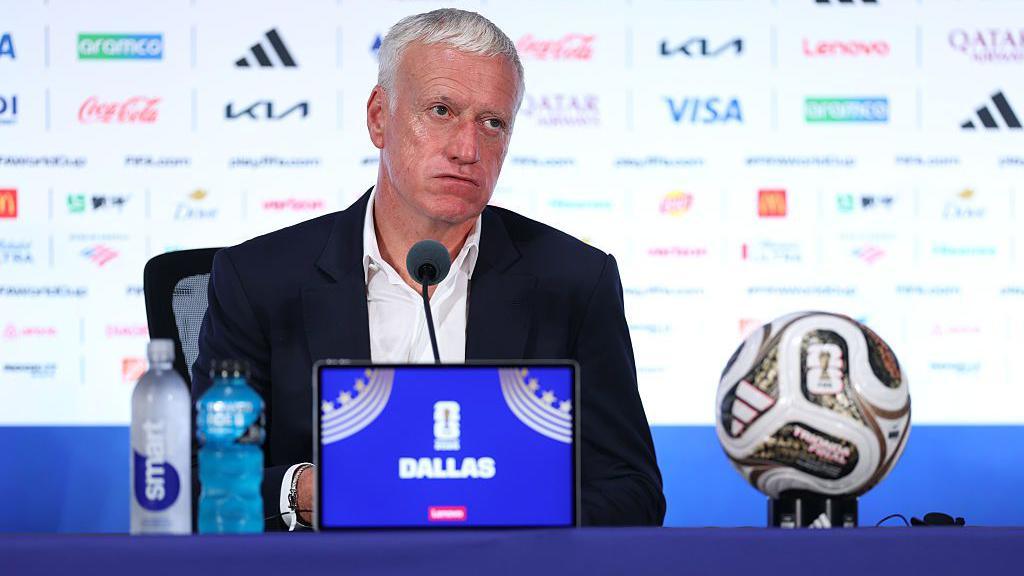
Extremely Happy Deschamps Embraces Farewell Game in World Cup Third-Place Play-Off
Ninoda.com – Didier Deschamps, the iconic captain of France’s national football team, concluded his 14-year tenure in a manner that feels oddly fitting—a third-place finish after a 2-0 defeat to Spain in the semi-finals. While the outcome didn’t align with his dream of a more triumphant exit, the coach’s satisfaction with his legacy remains undimmed. Deschamps, who had previously captained France to a World Cup victory in 1998 and later led the team to glory as a manager in 2018, now faces his final game with a blend of pride and nostalgia. This farewell, though not the one he envisioned, underscores the depth of his contributions to French football.
A Bittersweet Exit
The performance in the third-place play-off against Spain revealed a stark contrast between France’s earlier dominance and their final display. Despite their attacking prowess that carried them through the tournament, the team struggled to maintain their usual intensity, managing only 10 shots and an expected goals tally of 0.3. This marked the lowest offensive output in a World Cup match for France since their 2006 campaign. The underwhelming result sparked debate about whether they had lived up to their status as favorites, with critics suggesting that the gap between their potential and execution was glaring.
“They haven’t shown up. I was expecting more. There was huge expectation for France to win the World Cup,” remarked Patrick Viera, a former France midfielder. “Collectively, we were really bad.”
“When you don’t do what you’re supposed to do in a World Cup semi-final, you don’t win,” admitted Kylian Mbappe. “Our goal was to press them high, but we failed to stop their controlled rhythm. They are better at controlling the game.”
Legacy of a Tactical Visionary
Deschamps’ retirement after this summer marks the end of an era for French football. As the manager who set a World Cup record with 26 games in charge, surpassing the previous mark held by Helmut Schön, he has left an indelible mark on the sport. His leadership shaped France’s path to glory, including their consecutive quarter-final appearances in four tournaments—a feat only three teams have achieved before. While the semi-final exit may not match his ambitions, the consistency of his tactical approach and the development of young talent like Mbappe, Ousmane Dembele, and Michael Olise have solidified his place in history.
“It’s not time to talk about the future,” Deschamps said post-match. “I am extremely happy. I am very proud of everything we’ve done to reach this stage and win a World Cup. Today is not such a moment.”
His words reflect a coach who prioritizes collective achievement over individual glory. Even as the team fell short of their ultimate goal, Deschamps’ ability to mentor generations of players and maintain a cohesive playing philosophy has made this farewell a fitting chapter in his storied career.
The Weight of Expectation
France’s World Cup campaign was built on a foundation of expectation. Entering the tournament as one of the favorites, they carried the burden of history and the hopes of a nation that had waited 20 years for their first title since 2007. The pressure was palpable, especially in the final stages, where a single slip could define their legacy. Yet, the third-place play-off against Spain highlighted the challenges of maintaining peak performance under such scrutiny. Despite the loss, the squad’s resilience and the blend of experience with emerging stars ensured that their story would be remembered for years to come.
The semi-final defeat to Spain, a team known for their tactical discipline and precision, served as a reminder of the high standards set by Deschamps. While the French team had a chance to secure a higher position, their inability to capitalize on opportunities underscored the fine line between triumph and near-miss. Still, the tournament will be remembered for its thrilling matches, iconic moments, and the enduring spirit of the French squad. Deschamps’ farewell, though not as grand as he hoped, is a testament to the team’s journey and the coach’s ability to lead with vision and heart.
As the final whistle blew, Deschamps’ “extremely happy” demeanor highlighted his acceptance of the outcome. The World Cup, a stage where legends are made, has once again given the French team a chance to shine, even in defeat. This chapter of his career, though ending with a third-place finish, adds to the narrative of a coach who has consistently brought out the best in his players. His retirement marks a transition in French football, but his influence will continue to shape the nation’s