False nines or firing forwards – England’s potential life after Kane

England’s Future Without Kane: A Tactical Dilemma
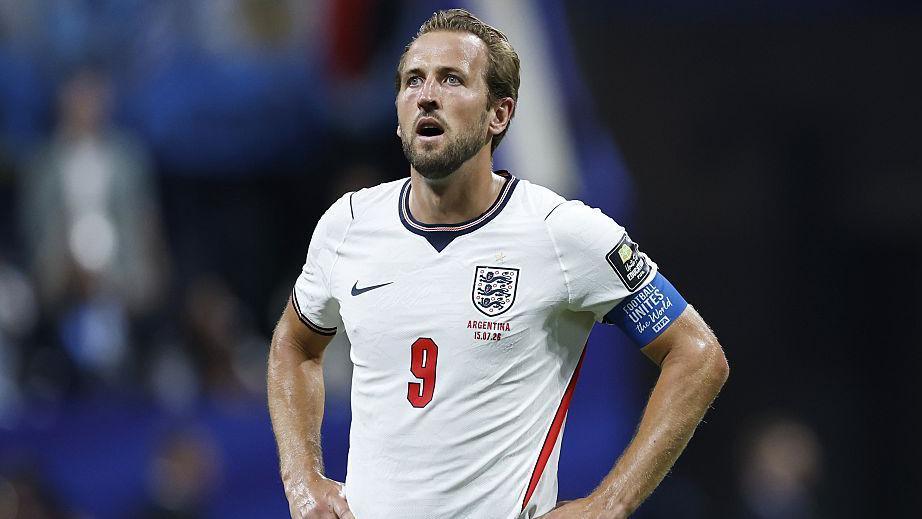
Ninoda.com – England’s captain, Harry Kane, faces an uncertain future as the 2030 World Cup draws closer. At 36, he may still be playing when the tournament kicks off, but the question of his longevity looms large. Kane’s recent performance in the 2026 World Cup semi-final against Argentina—where England fell 2-1 in Atlanta—has sparked debates about his place in the team’s long-term strategy.
“It’s too early to talk about that,” said England captain Harry Kane, when asked if he would still be around for the 2030 World Cup.
Kane’s dominance in the tournament, with six goals and key contributions alongside Jude Bellingham, underscored his central role in England’s attack. Yet, as the Three Lions’ campaign ended in disappointment, the spotlight turned to succession planning. With 85 international goals in 124 appearances, Kane has long been the nation’s record scorer, but his age and workload raise questions about England’s options post-retirement.
The Need for Alternatives
England’s attack appears heavily reliant on Kane, with few reliable replacements in sight. During the 2026 World Cup, forwards like Ollie Watkins and Ivan Toney saw minimal action, with Watkins playing just six minutes and Toney getting a handful of minutes in stoppage time. This lack of depth could become a critical issue as Kane’s career winds down.
While Dominic Calvert-Lewin and Dominic Solanke are viable options, both are in their late 20s. The 2024-25 Premier League season highlighted a concerning trend: only three English forwards scored 10+ goals, including Watkins, Jarrod Bowen, and Liam Delap. Delap, 23, showed promise during his time at Ipswich, but his move to Chelsea in a £30m deal has yet to yield consistent results, with just one league goal in his first season.
Kane’s Developmental Journey
Kane’s rise to prominence was not immediate. Unlike Wayne Rooney or Michael Owen, who broke through as teenagers, he honed his craft through loan spells at Leyton Orient, Millwall, Norwich City, and Leicester City. It wasn’t until the 2014-15 season, at 21, that he seized his opportunity at Tottenham, scoring 21 Premier League goals and 32 in all competitions under Mauricio Pochettino.
Thomas Tuchel’s reliance on Kane during the 2026 World Cup—substituting him only twice—revealed a possible lack of confidence in alternatives. This approach, while effective in the short term, may strain Kane’s body as the tournament progressed. His absence from open-play scoring in three matches after a notable double against DR Congo raised concerns about his sustained performance.
A New Era for England’s Attack
With Kane potentially exiting the squad by 2030, England must prepare for a new era. The transition from a veteran striker to emerging talent will be crucial. While Delap’s potential remains a glimmer of hope, his development at Chelsea has been modest. If no breakthrough occurs, the team’s reliance on Kane’s experience could become a double-edged sword.
Kane’s legacy is undeniable, but the challenge lies in ensuring England’s attack remains competitive beyond his era. The nation’s success in the 2026 World Cup, despite the semi-final loss, may serve as a template for future strategies. However, the path forward will depend on nurturing young strikers and diversifying the team’s attacking options to avoid repeating past struggles with depth.