
Diamonds and ‘cab to orbit’: Rocket aiming to transform India’s space ambitions takes off

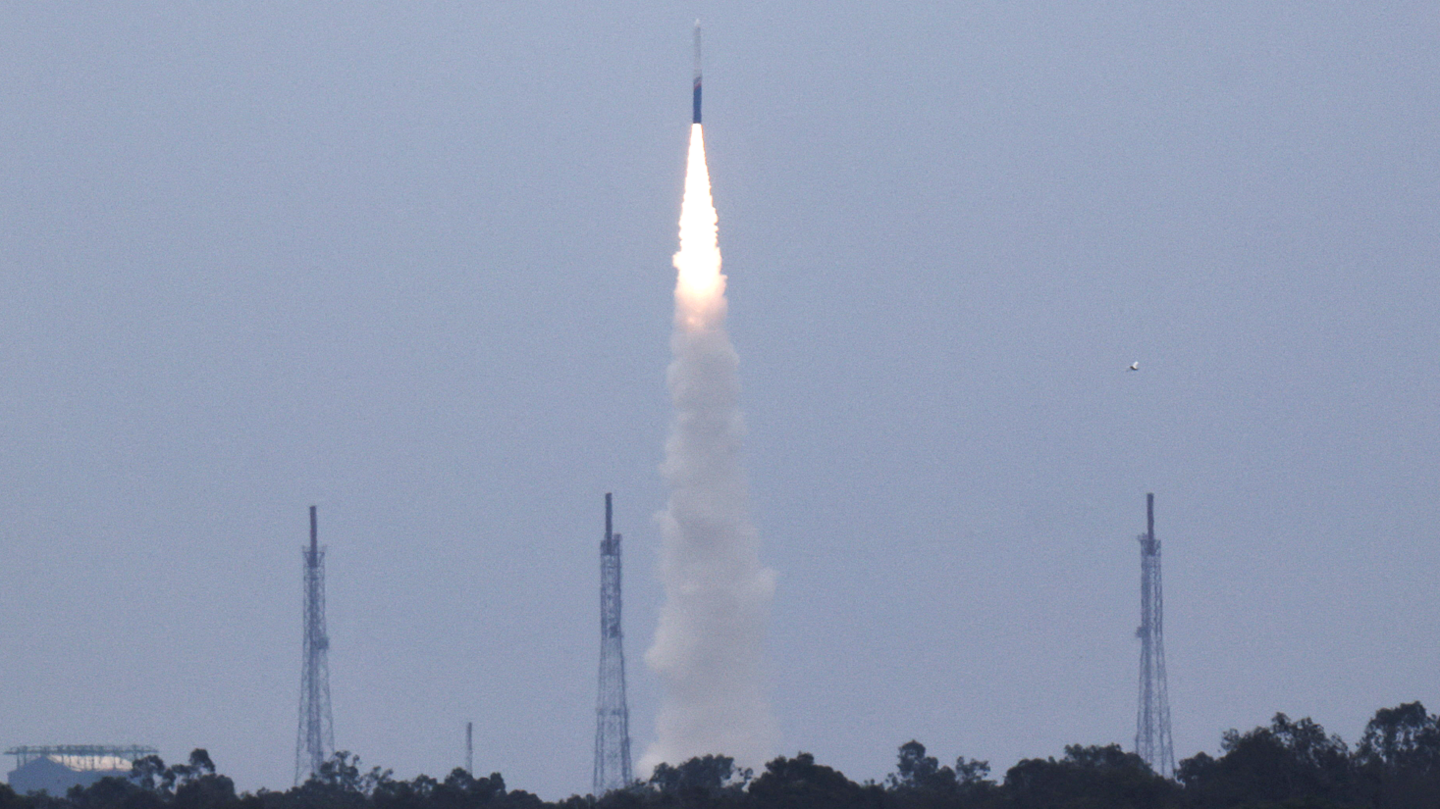
Diamonds and Cab to Orbit: India’s Space Ambitions Take Off
Ninoda.com – India’s space sector took a giant leap forward as Skyroot Aerospace, a private rocket company, achieved a historic milestone with its first orbital launch. The mission, dubbed “Diamonds and Cab to Orbit,” symbolically bridged the gap between terrestrial treasures and celestial exploration. The Vikram-1 rocket, developed by the firm, successfully reached Low Earth Orbit (LEO) from the Indian Space Research Organisation’s (ISRO) Sriharikota facility, marking a significant breakthrough in the nation’s growing private space industry. The seven-story vehicle ascended to an altitude of 280 miles (450km) within 16 minutes, launching at 12:05 India time [06:35 GMT], and showcasing India’s emerging capabilities in space technology.
A New Era in India’s Space Industry
Skyroot’s successful launch places India among the world’s leading nations in the private space race, joining the United States and China as the third country with a private firm capable of orbital missions. This accomplishment not only highlights the company’s engineering prowess but also underscores the potential for India to become a global player in space exploration. The firm, which has secured a $1.1bn valuation and is now the first space tech unicorn in India, has demonstrated how private enterprise can complement and accelerate national space initiatives. The mission, named Aagman (meaning “arrival” in Sanskrit), carried six payloads, including scientific instruments, satellites, and symbolic artifacts, reflecting the diversity of India’s space ambitions.
Symbolism and Payloads: Blending Culture and Technology
The payloads aboard the Vikram-1 rocket were as much a statement of cultural pride as they were a testament to technical innovation. Among them was a striking diamond lotus, known as “Cosmic Bloom,” crafted by Cosmos Diamonds. The design drew inspiration from the iconic nursery rhyme “Twinkle, Twinkle, Little Star,” which references “a diamond in the sky,” making the payload a powerful metaphor for the mission itself. Alongside the lotus, miniature gold sculptures of CV Raman, the Nobel physicist, and APJ Abdul Kalam, the aerospace pioneer, were also included. These items paid homage to India’s scientific heritage and its vision for the future. The rocket’s capacity to carry up to 350kg of cargo was highlighted by co-founder Pawan Kumar Chandana, emphasizing the versatility of the vehicle for various space applications.
While the symbolic payloads captured public imagination, the mission’s practical implications were equally significant. Skyroot’s approach to space transportation, likened to a “cab to orbit” model, aims to democratize access to space by offering flexible, on-demand launch services. This concept contrasts with the traditional, large-scale rocket programs that often require months of waiting for a launch slot. Chandana explained that the company’s focus on small-lift vehicles allows for tailored solutions, catering to specific missions without the need for extensive customization. Such a model is gaining traction globally, with companies like Rocket Lab in the US pioneering similar strategies. Skyroot’s success could inspire a new wave of innovation in India, positioning the country as a hub for cost-effective and efficient space missions.
From Vision to Reality: Skyroot’s Journey and Challenges
Skyroot Aerospace was founded in 2018 by former ISRO colleagues Pawan Kumar Chandana and Naga Bharath Daka, who left their government roles to pursue space innovation. Their vision was to create a private space company that could rival global giants while maintaining a distinctly Indian identity. The launch of Vikram-1 represents the culmination of years of research, development, and collaboration with ISRO. However, the journey has not been without challenges. As one of the few private firms in India’s space sector, Skyroot has had to navigate regulatory hurdles, financial constraints, and the high expectations of a rapidly evolving industry. The successful mission, though, has opened doors for further expansion and commercial viability.
With India’s space sector now open to private companies since 2020, the landscape has transformed dramatically. Over 400 startups have emerged in the field, but Skyroot stands out as the most successful, holding the only unicorn status among them. This distinction is a reflection of its rapid growth, innovative business model, and the strategic alignment with national goals. The company’s ability to secure a place in the global space market while maintaining a homegrown identity positions it as a key player in the future of space exploration. As Skyroot continues to refine its technology and expand its offerings, it is set to redefine India’s role in the space industry, blending cultural symbolism with cutting-edge engineering.
Future Goals: Scaling Up and Expanding Horizons
Looking ahead, Skyroot has ambitious plans to scale its operations and solidify its position in the space market. The company intends to conduct two test flights this year, with the aim of transitioning to full commercial operations by 2024. According to Chandana, the Hyderabad-based firm is already capable of building one rocket monthly, a testament to its efficient production processes and commitment to meeting demand. This scalability is crucial for establishing a sustainable space economy in India, where private companies are playing an increasingly vital role in complementing ISRO’s efforts.
The “cab to orbit” concept is not just about launch frequency but also about accessibility and affordability. By targeting niche markets and offering specialized services, Skyroot aims to make space travel more approachable for a broader range of clients. The success of the Vikram-1 mission has already sparked discussions about the potential for private space firms to take on larger projects, such as lunar exploration or deep-space missions. As India’s space ambitions grow, the integration of private and public sectors will be critical. Skyroot’s achievements could serve as a blueprint for other startups, demonstrating how innovation and collaboration can drive progress. The company’s journey, from a bold idea to a reality in orbit, marks the beginning of a new chapter in India’s space history.