Indian activist on hunger strike for 20 days forcibly taken to hospital

Indian Activist on Hunger Strike for 20 Days Forcefully Removed to Hospital
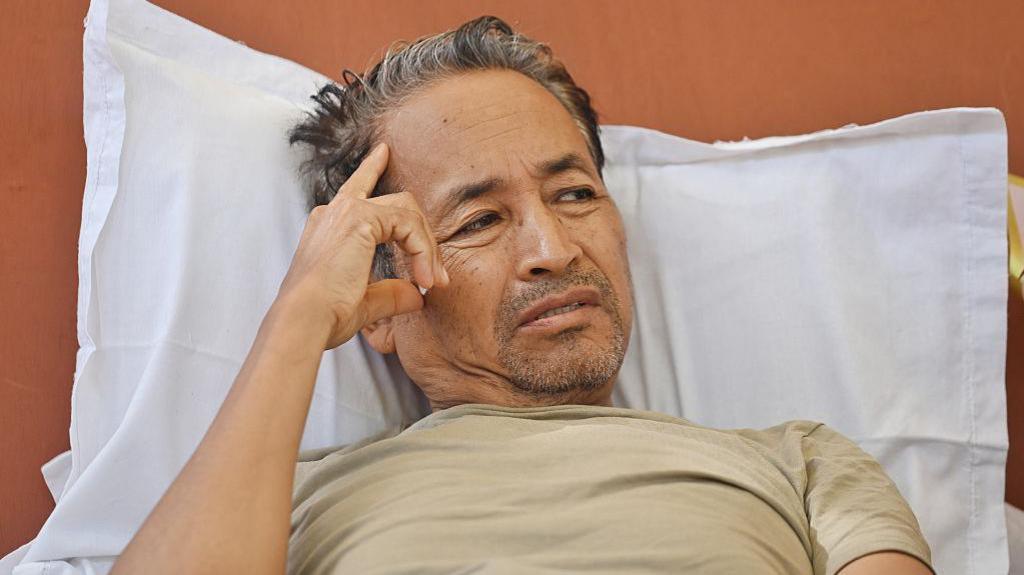
Ninoda.com – In a dramatic turn of events, the Indian activist on hunger strike, Sonam Wangchuk, was taken to Safdarjung Hospital in Delhi after being forcibly removed from his protest location during the height of a political standoff. The activist, who had been fasting for over two weeks, had lost more than 9 kilograms and was visibly weakened by the physical demands of his protest. His wife, Gitanjali Angmo, later posted on X, emphasizing the need for her and the medical team to approve any treatment, stating,
“Nothing should be administered to him orally or intravenously without taking consent from me, his family, and his doctors who have been monitoring his health for the past 20 days.”
Health Conditions and Medical Concerns
The incident sparked widespread concern about the health of the Indian activist on hunger strike. Wangchuk, a 59-year-old educator and activist, had been part of a hunger strike movement demanding accountability for exam irregularities. His abrupt removal by police and paramilitary forces on a Saturday morning raised questions about the urgency of the medical intervention. Witnesses reported that officers had overwhelmed the protest stage, covering Wangchuk with bedsheets before transporting him to the hospital. The presence of an ambulance shortly after underscored the gravity of the situation, as his condition deteriorated rapidly during the transfer.
The Political Context of the Hunger Strike
Wangchuk’s hunger strike was part of a broader campaign led by the Cockroach Janta Party (CJP), a satirical group that had emerged in May to protest paper leaks in India’s top examinations. The movement gained traction as students and educators rallied against perceived corruption in the education system. The activist’s arrest and hospitalization came after a Delhi High Court order was issued on Thursday, instructing police to move him to a government facility for health monitoring. Deputy Commissioner of Police Sachin Sharma confirmed that the action was taken “in compliance with [a court] order” and “based on health conditions and medical advice.”
Wangchuk had resisted ending his hunger strike despite pressure from authorities, demonstrating his resolve to draw attention to the cause. Speaking at Jantar Mantar, a 300-year-old observatory repurposed as a protest site, he had once declared,
“I’ve grown weak from the outside but I’m strong from within.”
This statement highlighted the emotional and physical toll of the hunger strike movement, which had become a symbol of public discontent.
Public Response and Continued Protests
The forced removal of the Indian activist on hunger strike ignited a wave of public outrage. Social media platforms saw a surge in discussions about the incident, with many calling it a “human rights violation” and a “symbolic attack on civil disobedience.” Activists and supporters gathered at the hospital, demanding transparency in the medical procedures and the release of the hunger striker. Meanwhile, the CJP continued its protests, with members vowing to keep the momentum alive even in the face of adversity.
Abhijeet Dipke, the founder of the Cockroach Janta Party, took over as the de facto leader of the hunger strike movement, promising to continue the protest. “If they think that taking Wangchuk away will end this movement, they are mistaken,” Dipke said. “We will remain here, and will march to parliament on 20 July.” His remarks added a layer of humor and determination to the cause, as he joked that his “ghost would join the march” if he died before the event. This blend of seriousness and wit resonated with the public, reinforcing the movement’s credibility and reach.
Political Demands and Future Implications
As the hunger strike gained national attention, demands for accountability grew louder. The CJP has called for the resignation of Education Minister Dharmendra Pradhan, citing his responsibility for the cancellation of a key medical entrance exam in early May. The movement has also extended its focus to Prime Minister Narendra Modi’s administration, with protesters asserting that his government must address the systemic issues highlighted by Wangchuk’s plight.
“Until now, we were demanding Dharmendra Pradhan. Now, we also demand Modi to resign.”
The incident has raised broader questions about the treatment of protesters and the use of hunger strikes as a tool for political expression. With the Indian activist on hunger strike now in a hospital, the movement’s next steps remain uncertain. However, the rallying support from students, educators, and activists suggests that the cause is far from over. The continued use of social media as a platform for organizing and amplifying their message indicates a shift in how protests are conducted in modern India, blending traditional methods with digital activism to sustain momentum.