
He made history in Congress – then the Supreme Court changed its mind

He made history in Congress – then the Supreme Court changed its mind
A Teen’s Struggle and a City’s Hope
Ninoda.com – In a quiet moment on a Tuskegee University campus, 19-year-old De’Mari Benham faced a medical emergency when a glass door shattered, cutting his arm and causing blood to flow freely. Transported by a friend in a vehicle, he arrived at the local fire department, where responders provided temporary care. Despite the urgency, Benham opted to delay treatment, citing both the distance to the nearest hospital and financial constraints. “I decided not to go,” he explained. “It’s far, and I just simply don’t have the funds.”
Advocacy and a Federal Push for Change
Tuskegee, a small Alabama town with fewer than 9,000 residents—over 80% of whom are African American—lacks a general hospital or 24-hour emergency clinic. The fire department, though critical, operates in a building not suited for its purpose. “We get calls, crazy calls, for all kinds of things,” said Dondrell Hopson, the fire department’s captain. “Treating bullet wounds. Guys bleeding out.”
“This means a lot,” Benham added. “It’s a common problem.”
The Political Shift
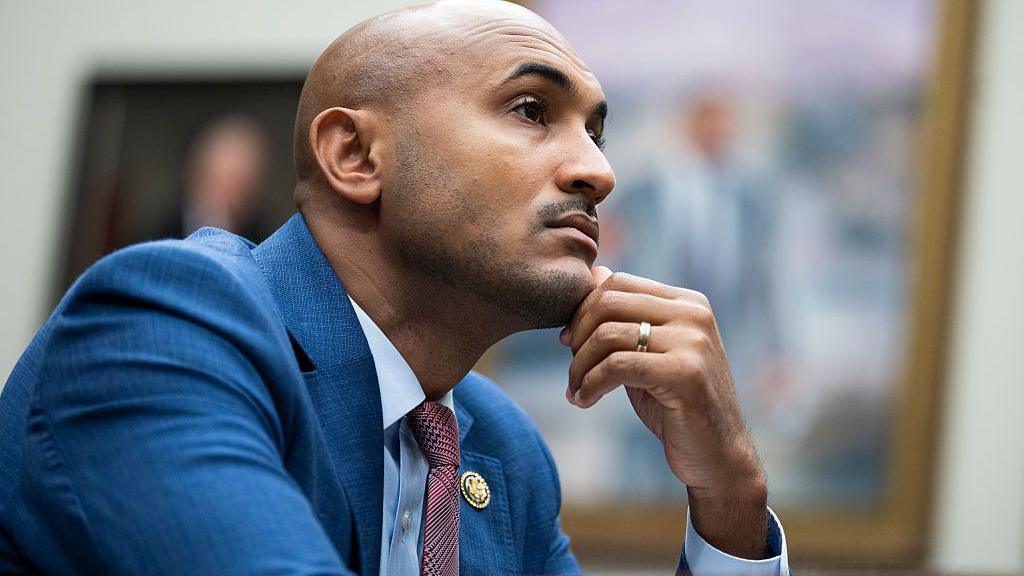
Shomari Figures, the first Black representative for Tuskegee in modern US history, aimed to address these challenges after his 2024 election to the House of Representatives. Within a year, he secured $1 million from the federal government to construct a civic centre in Tuskegee. The facility will serve as a storm shelter and house both the police and fire departments. However, this progress has been overshadowed by a recent Supreme Court decision.
A Supreme Court Ruling and Its Consequences
In April, the US Supreme Court weakened a key provision of the Voting Rights Act, reducing protections for minority voters. This ruling enabled Southern states, led by Republicans, to redraw congressional boundaries, potentially eliminating majority-Black districts. Such changes could reshape congressional dynamics in November and influence President Donald Trump’s agenda for the remainder of his term.
“All of our issues, we do depend on federal funding,” Tuskegee Mayor Chris Lee stated. “It’s very important that we have someone who has our back.”
Redistricting and Historical Context
Redistricting, the process of adjusting electoral boundaries every decade, often favors the ruling party. In 2023, the Supreme Court had previously invalidated Alabama’s congressional map, which diluted Black voting power by splitting their population across districts. A revised map created two majority-Black seats, but recent shifts threaten that progress. Before Figures’ election, Tuskegee was part of a predominantly white, conservative district represented by Republican Mike Rogers, who did not respond to the BBC’s request for comment.
“I cannot even remember seeing our congressman before,” Lee remarked. “We’re really just at the tip of the iceberg of seeing the real impact.”
With Figures now defending a redrawn district that is white-majority, the community’s hopes for continued federal support hang in the balance. Research indicates that around 83% of Black voters consistently back Democrats, while non-Hispanic white voters tend to align more with Republicans. This political realignment could determine the fate of Tuskegee’s future in the upcoming midterm elections.